

Singapore households’ net worth up in Q1 with rising property prices; liabilities fall

Jessie Lim
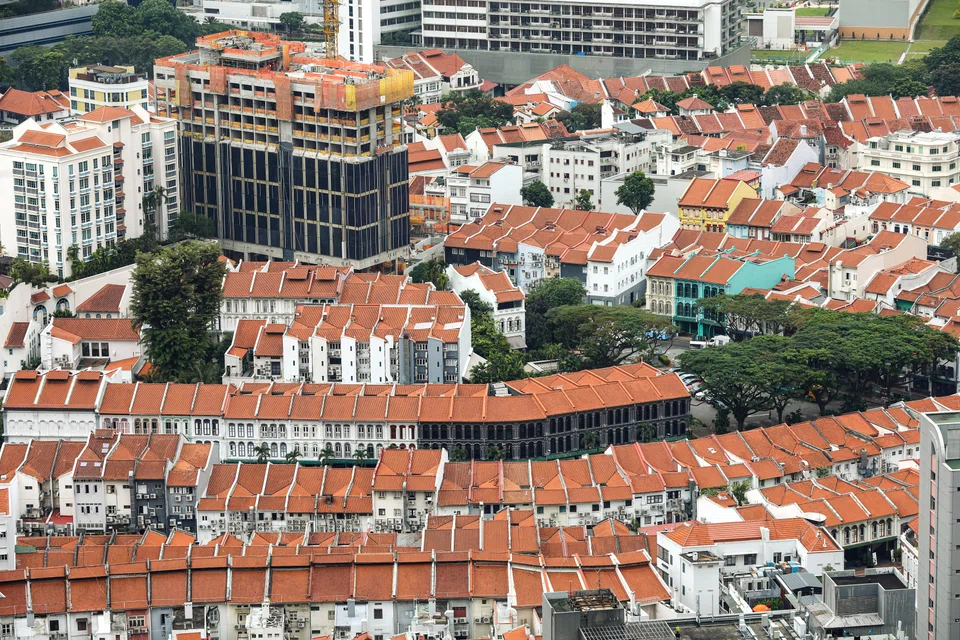
HOUSEHOLD net worth in Singapore grew at a faster pace in the first quarter of 2023, outpacing growth for most of 2022, as rising residential property prices fed into higher values for residential property assets.
And government data showed that, amid the current higher interest rate environment, household liabilities fell in Q1, pointing to households actually cutting back on debt.
Quarterly data on the household sector balance sheet, released by the Department of Statistics Singapore (Singstat) on May 30, showed that household net worth – that is, assets less liabilities – climbed 8.2 per cent year on year to S$2.6 trillion at the end of Q1 2023.
This was a larger increase than in the previous quarter, when household net worth rose 6.7 per cent year on year to S$2.6 trillion as at end-2022. It also outpaced the 7.6 per cent growth in Q3 of 2022, and 7.5 per cent growth in Q2 that year.
The boost was driven by residential assets, which grew in value faster than financial assets (which include deposits, stocks and life insurance). Residential assets rose 11.7 per cent year on year to S$1.3 trillion in Q1, faster than the 9.7 per cent year-on-year increase in the fourth quarter of 2022. Financial assets rose 3.8 per cent year on year to S$1.7 trillion in Q1, a larger increase than the 3.2 per cent year-on-year increase in Q4 2022.
The year-on-year rise in residential asset value mirrored growth in the private property market, where residential prices were 11.4 per cent higher in Q1, year on year. Public housing prices rose 8.8 per cent year on year, and the rise in households’ HDB assets tracked that, rising by 9.7 per cent year on year.
As the Q1 numbers show, residential property asset growth at 11.7 per cent outpaced the 2.5 per cent mortgage growth. This translates into greater wealth for those who already own property assets, and widens the wealth gap between property owners and those who do not own or have not bought homes, said provost’s chair professor Sing Tien Foo of the Department of Real Estate at the National University of Singapore.
Singstat figures indicate that residential properties made up 44.1 per cent of household assets as at the end of Q1, a bigger share of the pie than in the previous quarter, when they accounted for 43.7 per cent of household assets.
The other 55.9 per cent of household assets were held in financial assets, which include currency and deposits, shares and securities, life insurance, Central Provident Fund savings and pension funds. Most of the financial assets were up year on year except life insurance, which fell 0.5 per cent in Q1.
Meanwhile, household liabilities, which comprise mortgage loans and personal debt such as car loans and credit cards, fell by 0.02 per cent on a yearly basis to S$359.2 billion in Q1. Quarter on quarter, liabilities fell 0.5 per cent in Q1, at a slower pace than the 0.9 per cent decline in Q4.
In the first quarter, mortgage loans stood at S$263.5 billion, growing at a slower quarterly rate of 0.2 per cent in the first quarter from 0.7 per cent in the fourth quarter of 2022. However, mortgage loans in Q1 were still up 2.5 per cent year on year.
Personal loans fell by 2.3 per cent quarter on quarter to S$95.7 billion, and were down 6.5 per cent year on year.
Savills Singapore’s executive director of research and consultancy Alan Cheong said that the decline in household liabilities was likely due to higher interest rates deterring households from taking on more debt. Many appear to be turning more conservative ahead of economic headwinds.
“Households who have the wherewithal are paying down their mortgages as they see their monthly interest expenses rise sharply,” he said.
The three-month compounded Singapore Overnight Rate Average (Sora) rose from 3.03 per cent in January to 3.63 per cent in June, although the rate of growth has slowed, Prof Sing noted.
Floating-rate mortgages are pegged to the Sora rate; fixed-rate mortgages have an unchanged interest rate. However in Singapore’s context, the rate is not fixed for the full term, but only for the initial period. It then reverts to an adjustable rate, he added.
Lee Nai Jia, PropertyGuru Group’s head of real estate intelligence, data and software solutions, said that the growth in mortgage liabilities could indicate a potential trend of residents seeking higher-value housing.
He said: “Interestingly, the increase in these liabilities is relatively subdued, suggesting that homeowners are leveraging equity proceeds to balance their borrowing costs.”
Even though household balance sheets have strengthened with rising property prices, Chua Hak Bin, regional co-head of macro research at Maybank, cautions that the increase in property prices are only “paper gains”, while higher mortgage costs reduce monthly cash flow and savings.
He said: “Property prices are lofty and buyers should be cautious and not overcommit.”
Households may already be cutting back on consumption, with residential property assets accounting for 442.4 per cent of personal disposable income in Q1, down from the 436.5 per cent share in Q4 last year.
Paul Wee, vice-president of PropertyGuru Finance, said: “A decrease in consumption seems to be the chosen strategy for many households.
“This trend is evidenced by a 4.3 per cent quarter-on-quarter decline in credit or charge card loans, potentially indicating a cutback in discretionary spending in response to inflation, and possibly a drop from a high base due to pent-up spending during revenge travelling in December.”
TRENDING NOW

Motoring tycoon Peter Kwee is back in court: Here are his previous legal battles

Demand, tech capabilities position Apac and AI as Skyscanner’s next growth frontiers: CEO Bryan Batista

Beyond the greenback, Vietnam’s big borrowers turn to Asian-currency bonds

Nvidia’s outlook cut to stable by Moody’s on governance concerns

