

Singapore industrial rents inch up 0.5% in Q2 amid macro uncertainty: JTC
The overall occupancy rate rises 0.2 percentage point from the previous quarter

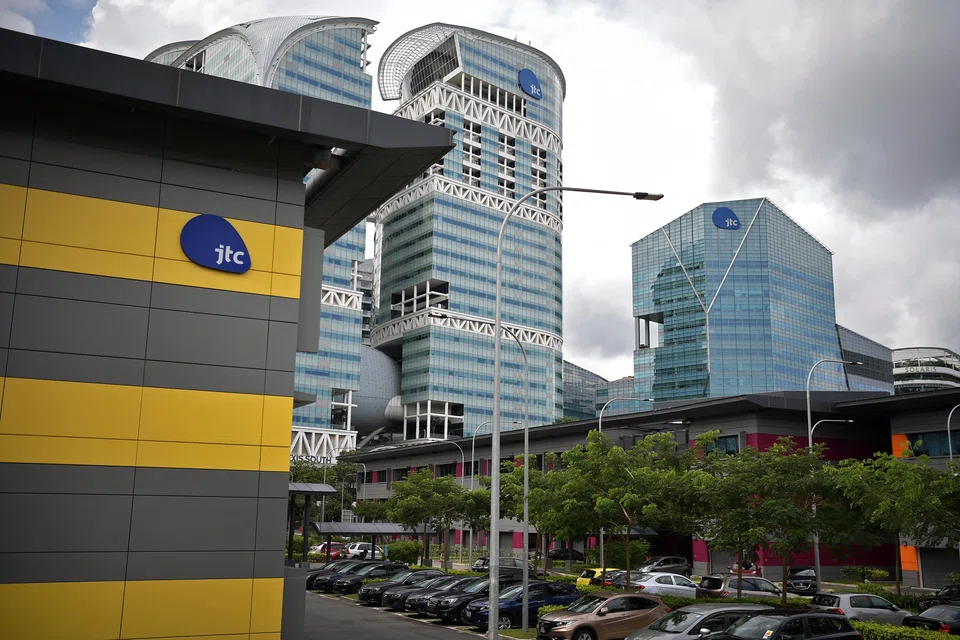
[SINGAPORE] Singapore’s industrial property market continued to show resilience in the second quarter of 2026, with overall rents and prices inching upwards despite macroeconomic uncertainties.
Based on the quarterly market report released by JTC on Thursday (Jul 23), the rental index for all industrial space rose 0.5 per cent quarter on quarter and 2.1 per cent year on year in Q2. The price index similarly tracked upwards, gaining 0.6 per cent quarter on quarter and 3.8 per cent year on year.
While most property segments registered rental growth of between 0.5 and 0.7 per cent in the quarter, the business park segment bucked the trend.
Single-user and multiple-user factory spaces led the rental growth, expanding 0.7 per cent and 0.6 per cent quarter on quarter, respectively.
Warehouse rents also rose 0.5 per cent over the same period. In contrast, rentals in the business park segment declined slightly by 0.1 per cent on the quarter. However, they remained 0.4 per cent higher on a year-on-year basis.
A JLL research report on the quarter said: “Despite headwinds from rising freight costs tied to Middle East conflicts, Q2 2026 demand remained stable, underpinned by continued healthy appetite for high-specification logistics/warehouse facilities across key growth sectors.”
Occupancy edges upward
The overall occupancy rate improved slightly, rising 0.2 percentage point from the previous quarter to 89.1 per cent. Compared with the same period the year before, occupancy was up by 0.3 percentage point.
“The increase was led by the business park and multiple-user factory segments, which saw higher take-ups from companies in the professional, scientific and technical activities and general manufacturing industries,” JTC said.
For business parks, occupancy jumped 1.2 percentage points quarter on quarter to 77.9 per cent. For multiple-user factories, occupancy rose 0.3 percentage point quarter on quarter to 90.5 per cent.

Occupancy of the single-user factory segment marginally increased 0.1 percentage point to 89.3 per cent. Meanwhile, the warehouse segment remained unchanged quarter on quarter at 89.4 per cent.
Transaction volumes
Overall rental transaction volume fell 4.8 per cent compared to the previous year. Transaction volume for industrial properties, estimated based on caveats lodged, also fell 8.4 per cent year on year.
In the quarter, JTC allocated a total of 46,100 square metres (sq m) of ready-built facility space to industrialists.
Total returns for ready-built facilities stood at 91,100 sq m during the same period. Of those returns, 29,600 sq m was high-rise space and 54,500 sq m was land-based factory space.
About 66 per cent of these returns were attributed to natural lease expiries or companies consolidating operations.
Outlook on upcoming supply
JTC data indicated that about 400,000 sq m of new industrial space is slated for completion in the second half of 2026.
About 53 per cent of this upcoming supply comprises single-user factory space, which is typically developed by industrialists for their own use. Warehouses constitute the remaining 47 per cent.
Between 2027 and 2030, the market can expect an average annual supply of 1 million sq m of industrial space. By comparison, the average annual supply and demand over the past three years were around 700,000 sq m and 600,000 sq m, respectively.
JLL noted that “supply constraints persisted in Q2 2026, with just one new completion – Tiong Nam Logistics’ owner-occupied facility at 25 Senoko Loop”.
“While demand for high-specification facilities should remain resilient, escalating geopolitical conflicts may heighten occupier cost sensitivity, limiting rental growth in the second half of 2026.
“Capital value growth could still outpace rental growth and tighten yields by year-end, supported by sustained investor demand for quality logistics/warehouse assets and Singapore’s attractiveness as a safe investment haven,” JLL added.
Decoding Asia newsletter: your guide to navigating Asia in a new global order. Sign up here to get Decoding Asia newsletter. Delivered to your inbox. Free.
Copyright SPH Media. All rights reserved.
TRENDING NOW

Malaysian king buys stake in Singapore-listed mining firm expanding into rare earths

Grab CEO’s wife Chloe Tong on life with Anthony Tan and finding her purpose

Once staunchly pro-China, Malaysian Chinese businesses are now distancing themselves from Beijing
Longer wait times expected as S’pore healthcare institutions report system disruptions

