

Singapore private home prices rise 0.3% in Q1, easing from 0.6% in Q4: URA flash data
Prices inch up even as market activity softens, with sales volume falling nearly 40% to 4,401 units as at mid-March

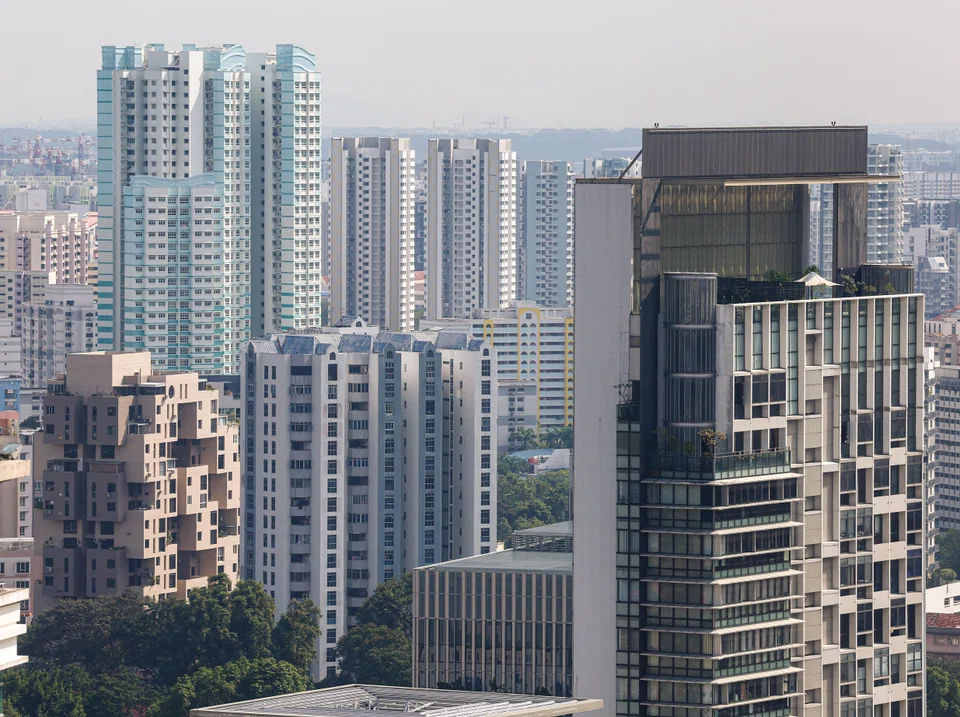
[SINGAPORE] Private residential prices rose more slowly in the first quarter of 2026, increasing 0.3 per cent over the previous three months, flash estimates released by the Urban Redevelopment Authority (URA) showed on Wednesday (Apr 1).
This is the slowest quarterly growth in six quarters, PropNex chief executive Kelvin Fong noted. It follows a 0.6 per cent increase in Q4 last year, and a full-year price growth of 3.3 per cent in 2025.
Sales volume fell almost 40 per cent to 4,041 units as at mid-March, from 6,699 units in the previous quarter. This was even as the number of units launched rose nearly 20 per cent to an estimated 3,149 units, including executive condominiums (ECs), from Q4’s 2,632 units.
New sale transactions likewise dwindled by 60 per cent to 1,294 units, excluding ECs, ERA Singapore’s chief executive officer Marcus Chu said.
Yet with lower transaction volumes, demand for homes remained robust, with the six projects marketed in the quarter achieving an average take-up rate of 72 per cent at launch, said Nicholas Mak, Mogul.sg chief research officer. In his view, this may explain why the price index still edged up despite softer market activity.
Leonard Tay, Knight Frank research head, added that Q1’s final figures, which will be published on Apr 24, could be slightly higher due to “brisk activity” in the latter half of the month – mainly from the launch of Pinery Residences and Rivelle Tampines EC.
Both projects had take-up rates of nearly 93 per cent during their launch weekends at an average price of S$2,546 per square foot (psf) and S$1,893 psf, respectively.
Slower Q1 sales due to Chinese New Year lull
“Developers have also remained bullish in the two government land sales tenders that closed in March – Lentor Central and Dover Drive which both received benchmark top bid prices,” said Tricia Song, CBRE research head for South-east Asia.
Christine Sun, Realion (OrangeTee & ETC) Group chief researcher and strategist, attributed the slower Q1 sales to the festive Chinese New Year lull in February.
The slowdown in sales was most evident in the city fringe or Rest of Central Region (RCR), with 1,174 units of landed and non-landed homes sold thus far, 55 per cent lower than Q4’s 2,606 units, Sun noted.
In the suburbs or Outside Central Region (OCR), volumes fell 29.7 per cent to 1,788 units, and that of the prime Core Central Region (CCR) fell 17.9 per cent to 1,187 units.
While demand is expected to remain firm, sales will moderate from a high base of 10,815 units in 2025, largely on fewer launches and the normalisation of pent-up demand after above-trend volumes last year, said Song.
Broad-based gains across regions
By market segment, non-landed private residential prices rose 1 per cent quarter on quarter in Q1, swinging from a 0.2 per cent fall in the prior quarter.
The gains were broad-based across all regions.
In the CCR, prices were up 0.4 per cent, reversing from a 3.5 per cent decrease previously.
Prices in the RCR inched up 0.9 per cent, after registering an increase of 0.7 per cent in Q4. OCR prices climbed 1.3 per cent, from a 1 per cent increase in the preceding three months.
Meanwhile, prices of landed private homes were down 1.8 per cent quarter on quarter in Q1, from a 3.4 per cent increase previously.
PropNex’s Fong pointed to the CCR as a bright spot in Q1, with projects such as River Modern and Newport Residences posting strong launch sales.
EC segment a standout performer
The EC segment was another standout performer, Fong said, supported by robust demand from first-time buyers and public housing upgraders despite higher overall prices. As at late March, the median price gap between new non-landed homes in the OCR and new ECs was 20 per cent, partly due to higher land and construction costs.
The strong EC sales in Q1 bode well for upcoming launches in Sembawang, Woodlands and Bukit Panjang later this year, he added.
Tay from Knight Frank reckoned that the coming months are “fraught with much uncertainty” stemming from the conflict in the Middle East, which could have spillover effects on several industries and the labour market.
“While domestic demand for private residential homes continues to be strong, homebuyers are keeping an eye on how events in the Middle-East will affect job security and their ability to purchase new homes,” he said.
Buyers are also wary that interest rates might rise, Tay added.
Transaction activity to pick up
Nonetheless, analysts believe that transaction activity is likely to pick up as more new projects are released for sale.
The OCR segment is likely to continue leading launch activity, with upcoming projects such as Vela Bay in Bayshore, Tengah Garden Residences and Lentor Gardens Residences helping to sustain sales, said Mohan Sandrasegeran, SRI head of research and data analytics.
Mak predicts that private home prices may grow at a “modest pace” of 1 to 2 per cent this year, before returning to a price growth of 3 to 5 per cent in 2027 when “new residential projects built on land acquired at record prices” are launched.
Authorities also said they intend to augment the country’s low birth rate by granting between 25,000 and 30,000 individuals citizenship, and another 40,000 individuals permanent resident status annually over the next five years.
This will “drive up housing demand, which will subsequently inflate real estate prices”, said Mak.
Decoding Asia newsletter: your guide to navigating Asia in a new global order. Sign up here to get Decoding Asia newsletter. Delivered to your inbox. Free.
Copyright SPH Media. All rights reserved.
TRENDING NOW

Once staunchly pro-China, Malaysian Chinese businesses are now distancing themselves from Beijing

Looking beyond looming CEO succession, should UOB potentially pursue a transformative merger?

Could stablecoins be the future of money?

Grab CEO’s wife Chloe Tong on life with Anthony Tan and finding her purpose

