

As Singapore rejuvenates ageing buildings, where does adaptive reuse fit?
Industry players say adaptive reuse works only when buildings are suitable and the economics make sense

[SINGAPORE] Across Singapore’s property market, owners are investing in ageing assets to meet changing tenant expectations, improve sustainability performance and maintain competitiveness.
As owners seek to extend the life of ageing buildings, adaptive reuse is one of several strategies available. Whether it is pursued, however, ultimately depends on whether a building can be converted and whether the business case stacks up.
The strategy involves repurposing a building for a different primary use while retaining much of its existing structure. By contrast, an asset enhancement initiative (AEI) upgrades or refreshes a building while preserving its existing use, whereas redevelopment replaces it entirely, said Melissa Luki, director of economics and property at real estate consultancy Cistri.
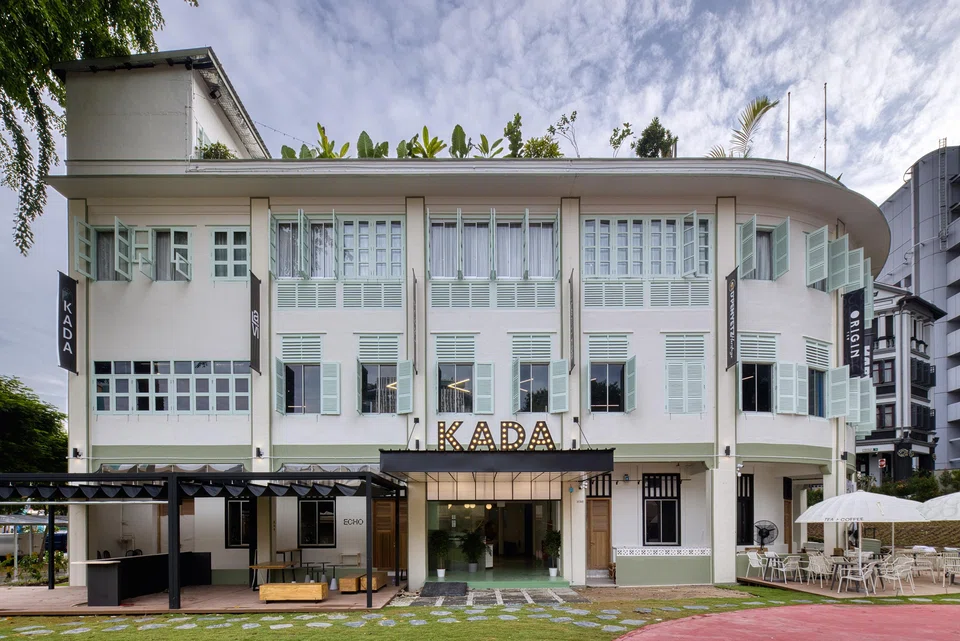
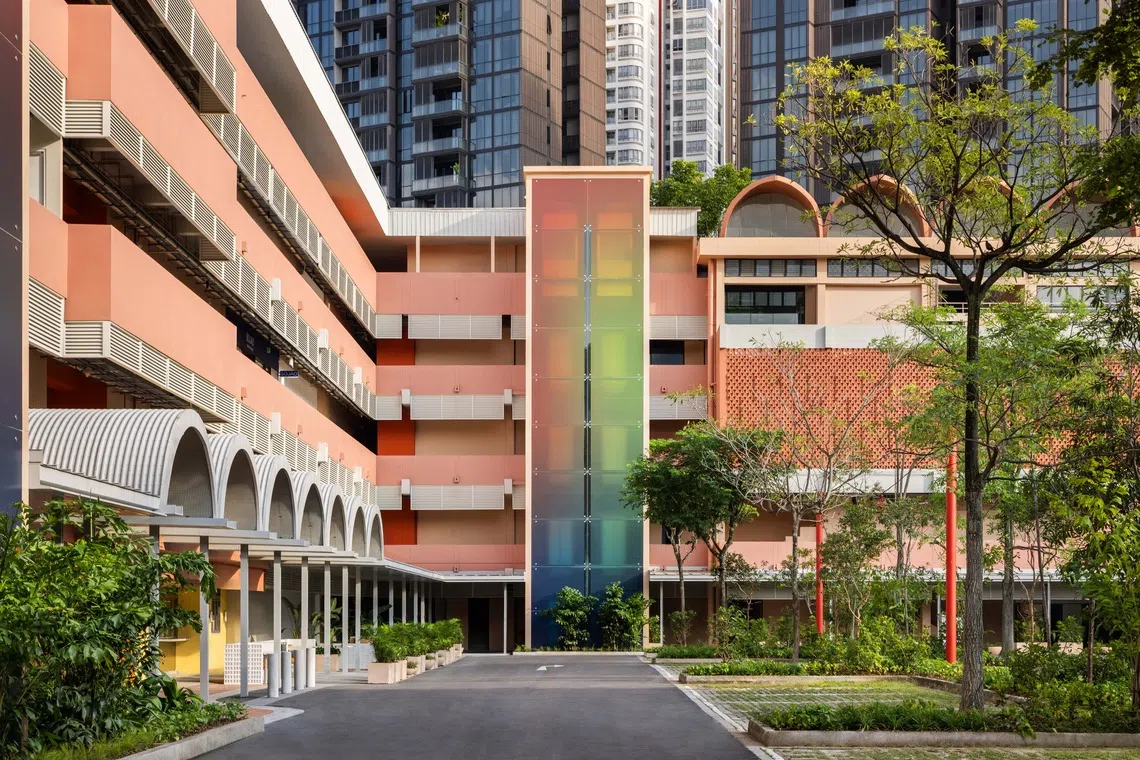
Examples include the former St Andrew’s Mission Hospital, now Kada, a mixed-use development housing cafes, fitness studios and co-living spaces; and the former Nan Chiau High School, which is now home to New Bahru, a creative cluster and lifestyle destination.
Adaptive reuse in Singapore remains largely state driven, with government agencies leading many permanent and interim reuse projects. Private-sector participation is more common in conserved shophouses, where owners have pursued uses such as offices, retail and heritage hotels, she added.
Dr Sing Tien Foo, provost’s chair professor at the National University of Singapore Business School’s department of real estate, said adaptive reuse can help preserve the economic value of ageing buildings while supporting urban renewal by conserving buildings with architectural, cultural and heritage value, and reducing the environmental impact of new construction.
Still, he cautioned that Singapore will need to strike a balance between conservation and land intensification, given its land constraints.
How owners choose
Rather than defaulting to one approach, developers assess each ageing asset on its own merits, weighing factors such as location, physical condition, commercial viability, planning parameters and environmental impact.
The former Clifford Centre, now The Clifford at Raffles Place, was redeveloped because its ageing specifications and mechanical and electrical systems limited refurbishment options, said SingLand’s head of sustainability and product development Heng Chin Hong.
In contrast, SingLand retained Singapore Land Tower’s original structure and undertook an extensive AEI after concluding that retaining the building made commercial and environmental sense.
CapitaLand Development (CLD) has taken a similarly project-specific approach, said Chew Peet Mun, managing director of investment and development at CLD Singapore.
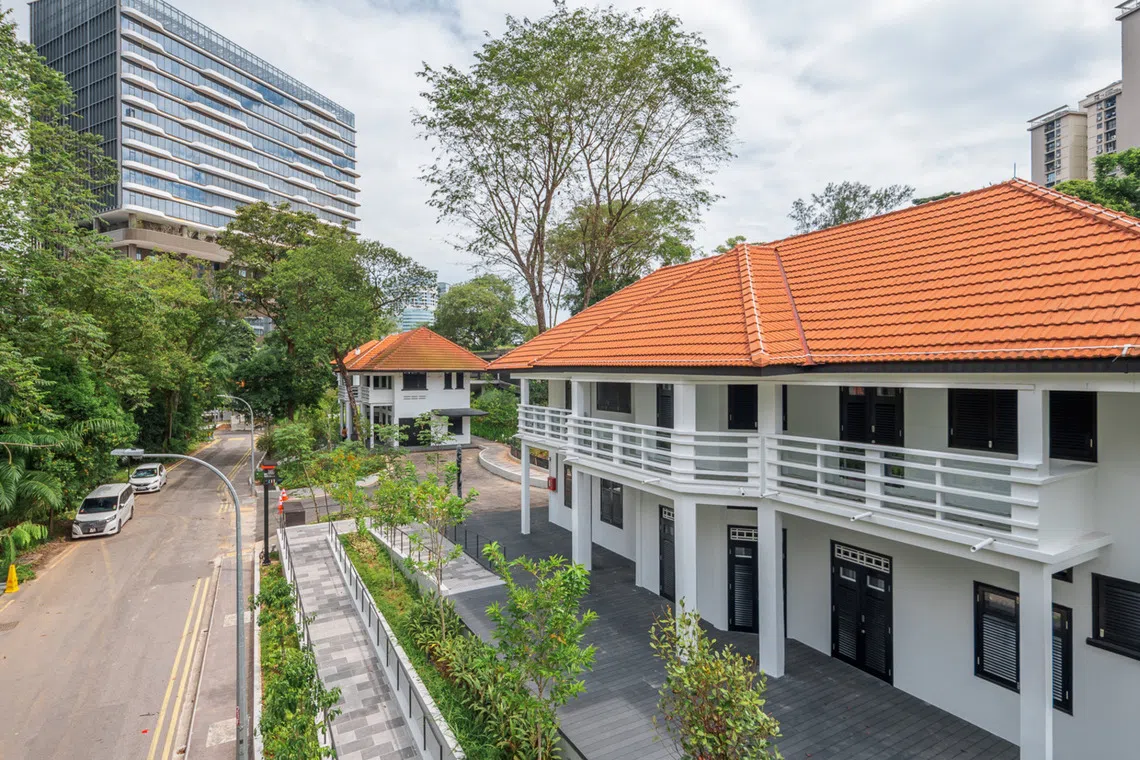
Plaza Singapura is undergoing an AEI, while Rochester Commons combines redevelopment with adaptive reuse of Rochester Park’s conserved black-and-white bungalows as offices and dining concepts. Singapore Science Park, meanwhile, is being redeveloped into an integrated innovation district.
Why adaptive reuse remains selective
Still, adaptive reuse remains only one part of Singapore’s broader asset rejuvenation wave, said analysts.
Projects remain largely concentrated in conservation buildings, hospitality assets and selected pilot developments, said Knight Frank’s Leonard Tay.
Catherine He, head of research at Colliers, said a growing focus on embodied carbon and demand for alternative asset classes such as co-living and hospitality were creating more opportunities for adaptive reuse. She cited projects such as Bukit Timah Fire Station and Coliwoo Resort Changi.
Even so, CBRE Singapore’s head of strategic asset solutions Kabi Subramaniam said adaptive reuse remains “typology-dependent”, with structural constraints limiting its viability for ageing high-rise commercial buildings.
The Urban Redevelopment Authority’s Central Business District Incentive (CBDI) and Strategic Development Incentive (SDI) schemes offer gross floor area (GFA) bonuses of 25 to 30 per cent for owners who redevelop or repurpose qualifying buildings of at least 20 years old into integrated mixed-use developments.
“The schemes were designed in part to incentivise the adaptive reuse of ageing CBD towers as mixed-use developments. But in practice, some projects under these schemes still end up as demolish-and-rebuild rather than conversions,” he said.
Citing AXA Tower and Fuji Xerox Towers as examples, he added: “The reasons are structural. Older high-rise office buildings may have inefficient floor plates, low floor-to-ceiling heights and core configurations that make residential or hotel conversion technically difficult and financially less attractive.”
The policy calculus
While some older offices have “good bones” that make conversion to living assets feasible, Wee Su Lin, head of asset management for South-east Asia, Greater China and South Korea at PGIM Real Estate, said: “The economics are unforgiving”.
Office-to-residential conversions typically cost around two-thirds as much as redevelopment, but extensive mechanical and electrical retrofitting requirements mean margins remain thin.
While the CBDI scheme encourages the rejuvenation of ageing CBD buildings through bonus GFA, “the same land betterment charge (LBC) is levied on a given CBDI project regardless of whether the developer opts for full redevelopment or adaptive reuse”.
“In other words, the developer who chooses the lower-carbon, lighter-touch path is charged no differently from the one pursuing full redevelopment, making the commercial case for adaptive reuse harder to justify. That is where a more differentiated framework could meaningfully tilt the calculus toward reuse,” said Wee.
Cistri’s Luki said: “LBC rates are largely standardised by location and end use. Given that adaptive reuse projects are often bespoke and subject to property-specific conservation requirements, there is often a question as to how closely their development economics align with those of a new-build project of the same end use.”
But she added that bonus GFA incentives can improve project viability by creating additional development value to help offset conservation and adaptive reuse costs. She noted that in the case of Golden Mile Complex, additional floor area supported the conservation outcome.
Still, Prof Sing noted that the LBC serves a broader public purpose by capturing part of the land value uplift to fund public infrastructure and long-term land-use planning.
Gaining momentum?
Whether adaptive reuse becomes a more significant feature of Singapore’s property market over the next decade will depend largely on government policy and its long-term vision for the country’s ageing building stock, said Knight Frank’s Tay.
While discussions have largely centred on commercial real estate, he noted that similar questions will eventually arise for Singapore’s public housing stock, with about 45 per cent of existing HDB flats, built between 1971 and 1990, set to progressively approach lease expiry after 2070.
Dr Sing reckoned that adaptive reuse will remain an important urban renewal strategy in Singapore. However, as many buildings with significant architectural value have already been conserved, he believes the next phase of adaptive reuse could extend beyond preserving physical and architectural features to place greater emphasis on the heritage and historical significance of buildings and places.
PGIM’s Wee believes the commercial case for adaptive reuse will continue to strengthen, as Singapore’s planning discipline and growing emphasis on mixed-use precincts create opportunities to repurpose well-located buildings while persistently high construction costs make retaining and reusing sound existing structures increasingly attractive.
“As that reality sets in and the incentive framework is hopefully refined, the deliberate reuse of good buildings should increasingly become the more rational commercial choice.”
TRENDING NOW

Malaysian king buys stake in Singapore-listed mining firm expanding into rare earths
Family offices ‘kept captive’ by relationship managers turn to independent advisers, direct deals

Once staunchly pro-China, Malaysian Chinese businesses are now distancing themselves from Beijing

Could stablecoins be the future of money?

