

Singapore retail rents fall 0.6% in Q1 as vacancy rate remains flat: URA
Analysts expect prime retail rents to rise by 1 to 4% in 2026

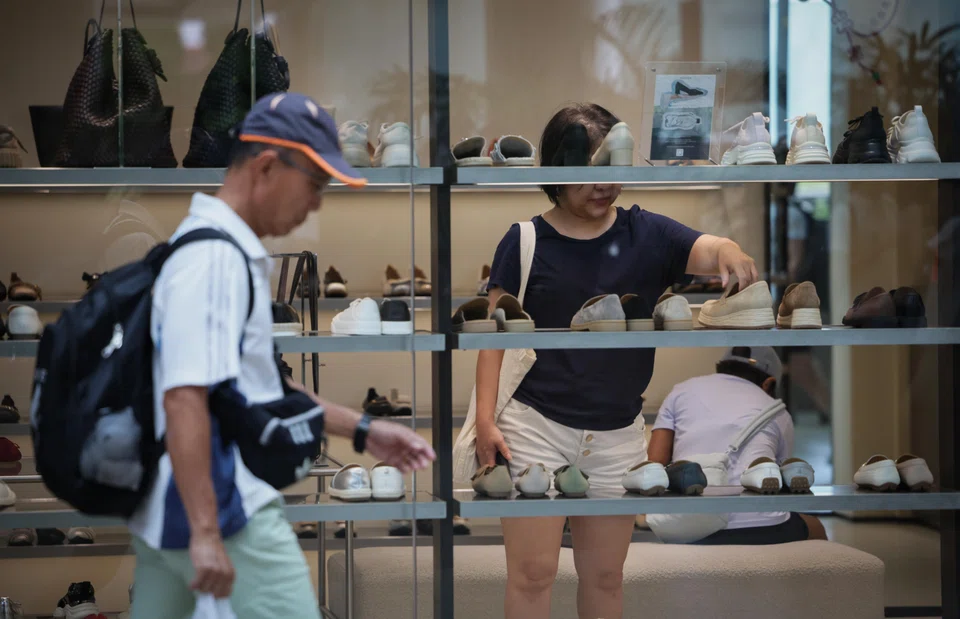
[SINGAPORE] Rents of retail space in Singapore’s central region dipped 0.6 per cent in the first quarter of 2026, reversing from the 0.6 per cent increase in the fourth quarter of 2025.
The decline was largely driven by a sharper drop in rents in the fringe area, which fell 1.5 per cent quarter on quarter, compared with a 0.2 per cent dip in the central area, said Wong Shanting, director and head of research at Newmark Singapore. Still, islandwide prime floor rents rose 0.5 per cent on quarter, at the same pace as Q4 2025, CBRE data showed. Based on Knight Frank’s prime retail basket, rents were up 3 per cent year on year in Q1.
“While prime mall spaces continue to track rental growth in spite of the challenges in the retail sector, other non-mall formats or secondary malls in less popular locations might be facing rental growth constraints,” said Leonard Tay, head of research at Knight Frank Singapore.
Islandwide, the retail vacancy rate was flat in Q1, after falling 0.6 percentage point in the previous quarter, indicated figures released by the Urban Redevelopment Authority on Friday (Apr 24). The amount of occupied retail space grew by 6,000 square metres (sq m), a significantly smaller increase than the 34,000 sq m expansion in Q4.
Some landlords are calibrating expectations and becoming more attuned to tenants’ operating pressures, supporting them through mall-coordinated promotional activities and marketing initiatives, said Tay. “This shared interest focuses on sustained occupancy against the alternative of pre-terminated leases and vacant spaces,” he added.
Leasing momentum in the suburbs continued to outperform, with the Outside Central Region (OCR) registering the highest net absorption of about 140,000 square feet (sq ft), extending the positive net absorption of about 205,000 sq ft in the previous quarter, said Tricia Song, head of research for Singapore and South-east Asia at CBRE.
Vacancy rates in the OCR submarket tightened to 4.1 per cent in Q1, from 4.4 per cent in the previous quarter.
Wong Xian Yang, Cushman & Wakefield’s head of research for Singapore and South-east Asia, said that leasing activity in the suburbs was driven by steady backfilling.
Large-format vacancies, including former Cathay Cineplexes locations, were taken up by cinema operators such as Golden Village. Demand was also underpinned by F&B concepts such as casual Japanese-style steakhouse Steak 99, and beauty and wellness brands such as Elemis London.
SEE ALSO




Orchard retail net demand remained negative at 32,000 sq ft in Q1, with vacancy rates edging up to 7.1 per cent from 6.8 per cent in the previous quarter, he added.
Prices of retail spaces rose 2.2 per cent in Q1, up from the 1.7 per cent increase in the previous quarter.
Retail stock increased by 10,000 sq m in Q1, compared with the decrease of 4,000 sq m in the previous quarter.
As at end-Q1, there was a total supply of about 605,000 sq m gross floor area of retail space in the pipeline, compared with the 560,000 sq m GFA of retail space in the pipeline in Q4.
Knight Frank’s Tay said while the direct impact of the Middle East conflict has yet to be fully felt, a prolonged disruption could add to cost pressures for retailers and weigh on consumer sentiment.
“The immediate knee-jerk reaction to the events unfolding in the Middle East would likely result in certain international and local brands delaying or reassessing new store roll-outs, leading to longer leasing decision cycles despite underlying demand remaining intact for the moment,” he explained.
“Foreign brands planning to expand out of their domestic markets using Singapore as a launchpad might grow cautious and reticent should the conflict remain unresolved.”
Still, with tourism spending expected to rise amid a strong pipeline of meetings, incentives, conventions and exhibitions, as well as concerts, and retail space supply set to increase over the next few years, analysts expect prime retail rents to grow by 1 to 4 per cent.
Decoding Asia newsletter: your guide to navigating Asia in a new global order. Sign up here to get Decoding Asia newsletter. Delivered to your inbox. Free.
Copyright SPH Media. All rights reserved.
TRENDING NOW

Companies still in search of AI use cases with worthwhile ROI, says Broadcom’s CEO

Malaysian king buys stake in Singapore-listed mining firm expanding into rare earths

Once staunchly pro-China, Malaysian Chinese businesses are now distancing themselves from Beijing
Singapore’s wealth management success should extend to everyday families

