Singapore’s built environment sector on track to hit green targets: BCA chief

Jessie Lim
Jessie Lim

Published Thu, Dec 28, 2023 · 05:00 AM
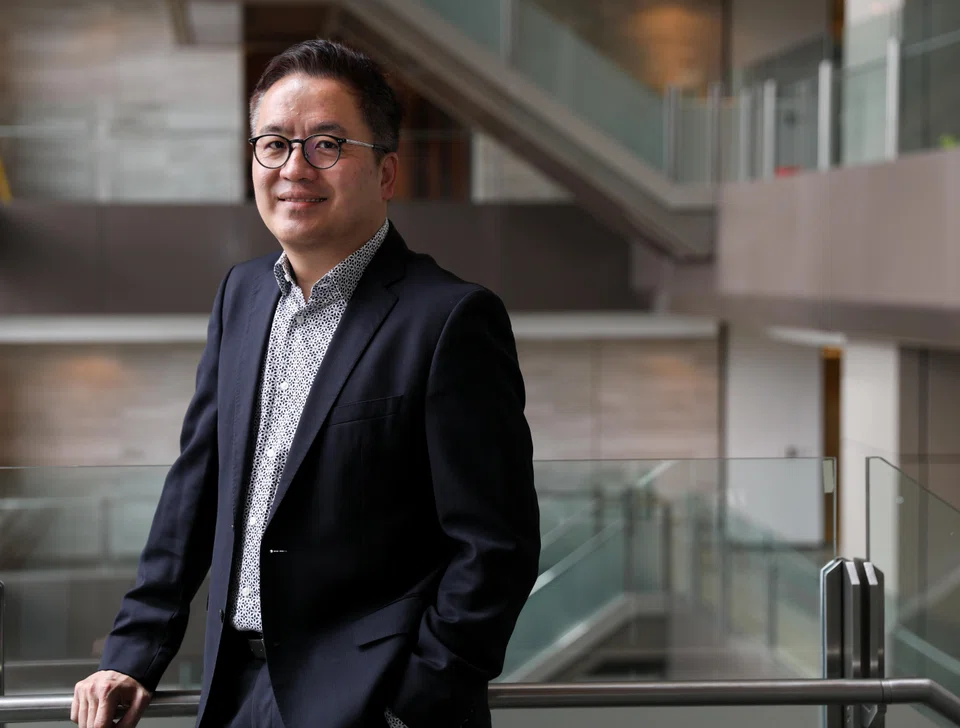
    • Kelvin Wong, CEO of the Building and Construction Authority, says when buildings are energy efficient, developers reap the benefits of lower energy costs.
    • Kelvin Wong, CEO of the Building and Construction Authority, says when buildings are energy efficient, developers reap the benefits of lower energy costs. PHOTO: CHERYL ONG, BT

    SINGAPORE’S best-in-class buildings have achieved about 71 per cent improvement in energy efficiency compared to 2005 levels, but Building and Construction Authority (BCA) chief executive officer Kelvin Wong foresees that hitting the 80 per cent target will be a technical challenge. 

    One of three targets in the Singapore Green Building Masterplan, this goal involves pushing the boundaries of energy efficiency through research and innovation. The other two goals are to green 80 per cent of all buildings by gross floor area (GFA) by 2030, and have 80 per cent of new developments to be Super Low Energy (SLE) buildings from 2030. 

    Speaking to The Business Times, Wong said: “The first milestone I think we are on track to achieving. The second milestone, we are also quite confident of reaching.”


    As at Jun 30, 2023, close to 55 per cent of buildings by GFA have been greened and about 14 per cent of new developments are SLE, based on a 12-month rolling average between July 2022 and June 2023. 

    To be certified as SLE, a building must consume 40 per cent less energy based on prevailing building codes. 

    However, due to the limited rooftop space that buildings have as well as Singapore’s heavy cloud cover, the city-state’s solar energy efficiency is “not so high”, said Wong.

    “With all the technology that we can deploy today, the energy efficiency of most (such) buildings is only about 71 per cent more efficient than 2005 (levels).”

    “Now we are calling for proposals on collaborative research with the industry, to see how can we find new technical ways to achieve that efficiency.” 

    For instance, an additional S$45 million has been set aside to fund the Green Buildings Innovation Cluster 2.0 programme, a research development and demonstration programme for energy-efficient technologies and innovations, such as enhanced building ventilation and smart building systems. 

    The programme has supported deployments of innovative technologies in DBS Newton Green and Keppel Bay Tower, which are among Singapore’s best-in-class buildings in terms of energy performance. 

    BCA also introduced the S$63 million Green Mark Incentive Scheme for Existing Buildings 2.0 in June 2022, which provides funding to building owners to retrofit their buildings to be more energy efficient. 

    However, in some cases, retrofitting may be suboptimal, said Wong. 

    He said: “In terms of old buildings, there are unique challenges. There are challenges with retrofitting... because the older buildings may not be optimised in terms of space. Especially in land-scarce Singapore, when we need to increase the amount of usable space, some of the old buildings may not be optimised...

    “For many of the refurbishment projects, the industry is leveraging on environmental sustainability consultants to help look at the project and see where they can conserve effectively and reuse, and where they cannot.” 

    When buildings are energy efficient, developers also reap the benefits of lower energy costs, Wong said.

    “We have demonstrated that the energy-efficient buildings or SLE buildings are cost effective. The returns on investment for new commercial buildings that are certified SLE can be derived within a time frame of about four to six years.”

    Reducing their carbon footprint has also aligned with the interests of tenants and helped corporations attract talent. “It’s hard to measure, but it’s highly significant,” Wong said.

    To transform and grow the built environment sector, adopting technology and attracting the young generation are key, said Wong.

    He said: “We are highly encouraged because increasingly, many more industry partners that we are working with have transformed how buildings are built.”

    Digital platform solution Podium, for instance, has accelerated the design process, enabling buildings to be built better, faster and more sustainably. 

    Wong said: “Based on a certain land area, land design and the outcome the developer wants, such as the number of rooms, (it) is able to put all these requirements and autogenerate many different permutations of the possible building design based on standardised components.”

    “Some of these innovations are related to data and artificial intelligence, and I think that is the space that appeals to a younger generation of talent,” he added. 

    Developing quality jobs supported by a competent Singapore core is part of the vision of the Built Environment Industry Transformation Map, which was launched in 2022 and will guide the sector to transform the way buildings are planned, designed, constructed, operated and maintained. 

    BCA is working with construction companies such as Woh Hup and TeamBuild to redesign jobs, which will also help to reduce unskilled labour, said Wong. 

    For instance, Teambuild is training its staff to be familiar with building information modelling, following which their job responsibilities are expanded and redesigned to incorporate their new skills. Staff are also trained to use robots on site to reduce their reliance on manual labour.  

    Wong said: “Singapore is an ageing population, and this means a declining local workforce. We should not and cannot plan on the basis of depending on an ever-growing population of foreign unskilled labour. Therefore, the built environment sector must meet the challenge of transforming itself, make the jobs more productive and more appealing to the young Singaporeans.”

    Still, many companies have ramped up the number of workers deployed to catch up on project timelines, Wong noted. 

    This year, almost 40,000 homes are expected to be completed across the public and private residential markets – the highest number of home completions in the last five years. 

    “We are still in the catching-up phase because of the delays resulting from Covid-19. Hopefully, we are at the tail end of this catching up.”