

Singapore’s prime residential market gears up with 2,500 new homes to be launched in 2025
The new residences in five projects in the prime CCR will be a major boost in supply from the 680 units marketed last year and 630 units in 2023

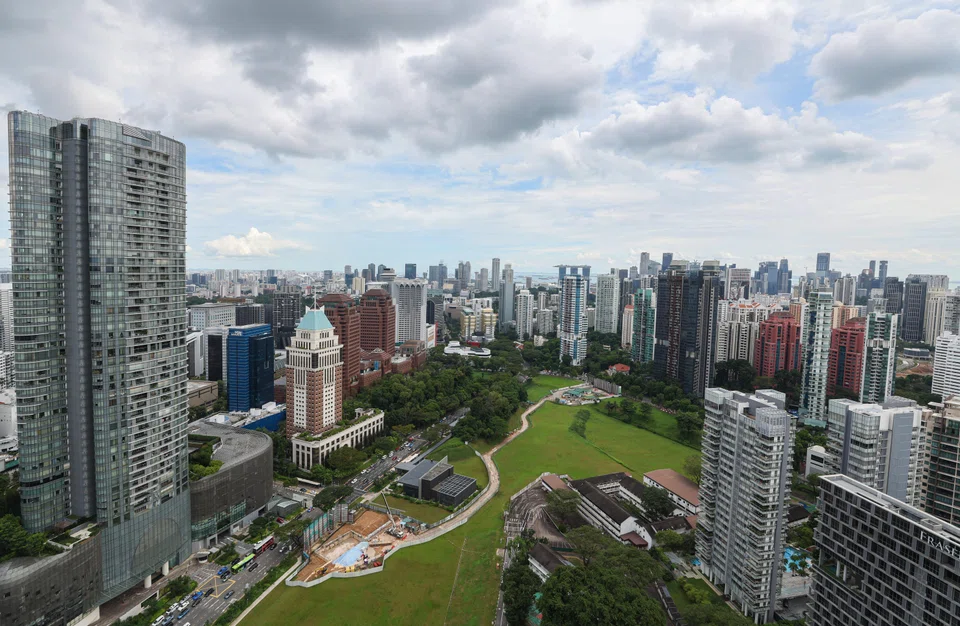
[SINGAPORE] The clouds that darkened the outlook for Singapore’s prime residential sector may be lightening, with activity stirring as a slew of new projects hit the market this year.
About 2,500 new homes in five projects in the prime Core Central Region (CCR) are expected to be launched in 2025, a major boost in supply from the 680 units marketed last year and 630 units in 2023.
Developers pulled back launches as demand dried up in the two years after steep stamp duty hikes were introduced in April 2023. Foreign buyers – subjected to the highest 60 per cent additional buyer’s stamp duty (ABSD) rate – retreated rapidly, and prices lagged as sales shrank.
Transactions in the CCR, comprising the prime districts 9, 10, 11, and including Sentosa and the Downtown Core, are seen as a proxy for demand for high-end and luxury homes.
With the burst of new launches, the CCR is expected to take centre stage for the remainder of 2025, said Chia Siew Chuin, JLL head of residential research, research & consultancy. Attention could shift away from the Rest of Central Region (RCR) and Outside Central Region (OCR) where recently launched projects saw strong take-up.
Chia noted that the CCR recorded a 0.6 per cent quarterly price increase in Q1 despite only one new project being marketed – Aurea at Golden Mile. “The price growth was supported by value-oriented local buyers attracted to prime locations as price gaps across market segments narrowed,” she added.
As CCR prices stagnated, prices in the other regions continued to escalate upwards.
Latest Q1 flash estimates indicated that prices of non-landed private homes in the CCR rose 6.3 per cent since Q2 2023, versus the 8.2 per cent increase in the RCR and 14.7 per cent jump in the OCR. The overall price index rose by 10.2 per cent in that time.
Prices are starting to recover after a slight dip in Q2 2024. CCR non-landed home prices rose 2.6 per cent in the last quarter of 2024, and inched up another 0.6 per cent in Q1, according to flash data released early in April.
Mohan Sandrasegeran, SRI research and data analytics head, reckons that the gradual roll-out of new projects in Singapore’s prime areas could slowly lift prices further.
But sales at upcoming projects are likely to be mixed, said analysts.
Buyers will mostly be locals, selectively scouting for an “ideal home” or for investment, said Leonard Tay, head of research at Knight Frank. “Demand for prime luxury properties that were previously or traditionally sought after by globally mobile high-net-worth individuals and families is not expected to return in a significant fashion.”
With the CCR buyer pool now largely limited to price-sensitive local buyers, developers will need to price competitively, said Wong Xian Yang, Cushman & Wakefield research head.
JLL’s Chia cited tiered pricing strategies as an example, with more aggressive prices for the initial batch of units launched to encourage early uptake and prices increasing as sales momentum builds.
She predicts that upcoming CCR projects may be priced between S$2,800 and S$3,300 per square foot (psf). In comparison, caveats data showed that new condo sales in the CCR clocked a median unit price of S$3,162 psf in 2024. In the year thus far, this figure stood at S$2,724 psf.
Macro-conditions, market sentiment and launch timing will be key in this current climate, she added. “At this juncture, developers may be re-evaluating their launch schedules and pricing strategies amid rising trade tensions.”
Knight Frank’s Tay said those in neighbourhoods with established amenities and communities are likely to fare better. The Orchard area, for instance, has not had a new launch for a while; and “depending on pricing, there should be interest”.
New downtown CBD projects may have limited appeal to families with their lack of school options and fewer amenities for daily necessities, said Chia.
Savills Singapore’s executive director of research and consultancy Alan Cheong pointed out that typical buyers of CCR homes – that is, wealthy foreigners who obtained permanent residency, new citizens and “upper-class locals” – form a small pool that is unlikely to grow.
Uncertainty and talk of recession following US President Donald Trump’s recent tariffs may also dampen sentiment, Cheong said. “However, the 60 per cent Additional Buyer’s Stamp Duty (ABSD) is an even greater turn-off, and this barrier shuts down the arguments as to why foreigners should buy private residential properties here.”
Tay added that foreign professionals and expats have also turned to the leasing market due to the “prohibitive” ABSD. “They are unlikely to return to the buying market any time soon, especially with rents no longer rising and, in some instances, easing.”
With the higher ABSD still in place, “wealthy families and individuals are likely to take the longer route towards residency by becoming PRs and new citizens”, Tay added.
On the other hand, Huttons Asia chief executive officer Mark Yip predicts that more foreign buyers will be in “flight to safety” mode amid tariff uncertainties, particularly those from the US as they are accorded the same tax status as Singapore citizens.
Shrinking price gap
At the same time, analysts believe that more local buyers may start to eye the CCR as suburban prices catch up. PropNex chief executive Ismail Gafoor noted that on a psf basis, the price gap between condominiums in Singapore’s prime areas and that of the city fringe and suburbs was at its narrowest in late-March – 4.1 per cent between the CCR and RCR; and 20.6 per cent between the CCR and OCR.
In the past year alone, the price gap between the average unit price of new non-landed homes in the CCR and that of the RCR contracted from 23.9 per cent or S$608 psf, to 12.6 per cent or S$340 psf. For the OCR, the price gap shrank from 40.5 per cent or S$979 psf, to 30.2 per cent or S$702 psf.
Price growth in the CCR has also lagged behind the RCR and OCR since authorities raised ABSD rates in 2023, said Tay. This makes resale properties in the CCR – especially freehold ones in attractive locations – increasingly good value propositions in comparison, he said.
CCR resale properties also offer lower average unit prices and larger spaces compared to new projects, said JLL’s Chia.
Still, CCR properties are often larger than those in the OCR and RCR, and even if the psf price gap has narrowed, “the absolute quantum for a larger CCR home is still beyond the reach of many salaried workers here”, Savills Singapore’s Cheong pointed out.
Chia expects high-end condo prices to remain elevated, thanks to higher construction costs. They may rise further if supply chains for construction materials are disrupted due to escalating global trade friction.
TRENDING NOW

Nvidia CEO Jensen Huang’s confession engulfs chip giant in spying controversy

China recruited exec at Singapore data centre firm to spy on Nvidia CEO Jensen Huang: US intelligence

Higher rates, weaker spending: Is the Philippines entering stagflation?

Could Japan trigger the next global financial crisis?

