

Skyscrapers rising next to vacant towers mark new City of London
Property firms mull over how to refill or sell hundreds of ageing offices amid twin blows of Brexit, pandemic
 Add BT as a preferred source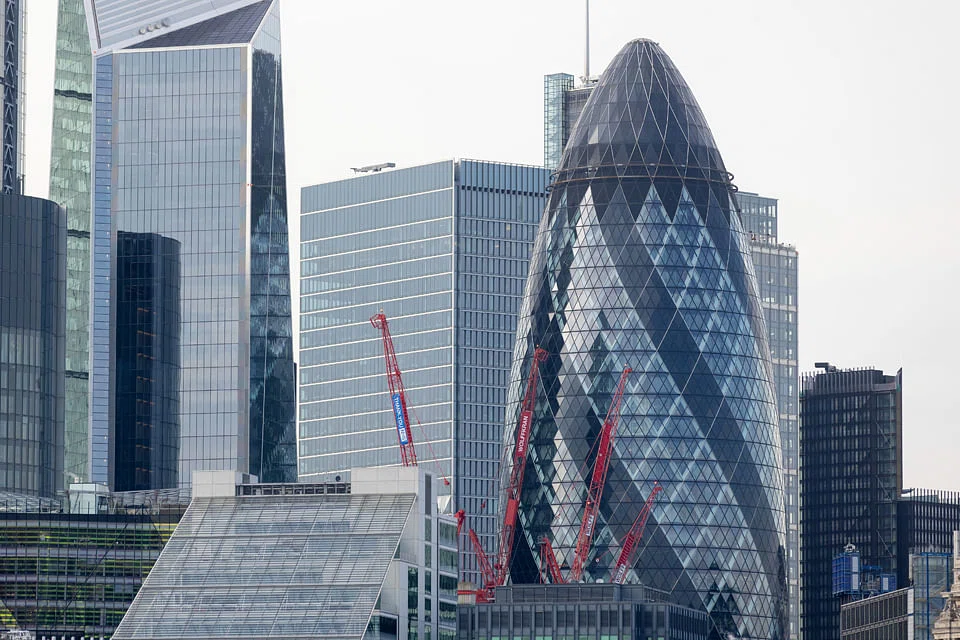
DeeperDive is a beta AI feature. Refer to full articles for the facts.
London
WHEN the Gherkin tower opened 17 years ago, its skyline-defining silhouette heralded a new era in the low-rise City of London. Now, a spate of new planned skyscrapers threaten to erase it from view and relevance.
As one of the Gherkin's main residents weighs a move, even iconic buildings risk struggling to keep or replace tenants in London's premier financial district. While the pandemic is emptying City offices at the fastest pace in more than a decade, it has not slowed the coming wave of towers. That carries a warning for landlords: if there is a return to the office, it will not be to drab buildings that only feature endless rows of desks.
It all augurs another period of change for the City, a geographical area of just over 2.6 square kilometres with a 2,000-year track record of reinvention. For property firms that have seen the district as a cash cow for decades, the challenge is daunting: how to refill, revamp or sell hundreds of ageing offices vulnerable to the twin blows of Brexit and the pandemic.
In a financial hub that draws more international capital than any other, the fate of the older buildings could hit the fortunes of some of the world's biggest real-estate investors, from China Investment Corp to Norway's sovereign wealth fund and Malaysia's biggest pension fund.
"Would I buy an existing investment property in the City of London today? Probably not," says John Ritblat, the octogenarian former chairman and chief executive officer (CEO) who built British Land into one of London's biggest landlords over nearly four decades. But if "you can build on cost, on time and let a new office appropriately, that is still a very good bet".
Navigate Asia in
a new global order
Get the insights delivered to your inbox.
Several developers are taking that bet. Three skyscrapers are currently being built within 91 metres of the Gherkin, with the same number approved nearby - some of the 18 major towers at various stages of the planning process in the City, data compiled by Bloomberg and the City of London Corporation show.
One of the Gherkin's biggest tenants, law firm Kirkland & Ellis, is weighing a move to one of those new buildings, people briefed on the matter said. The Gherkin, owned by the family of late billionaire Joseph Safra, was one of only four City buildings higher than St Paul's Cathedral when it was finished - that number could leap closer to 40 this decade.
The Gherkin's "advanced design continues to be the benchmark by which others are measured", said a spokesperson for J Safra Group. "The tenants enjoy these benefits and remain committed to long-term growth within the building."
The zeal of developers starkly contrasts with the debate about the future of the office that has raged since Morgan Stanley boss James Gorman predicted one with much less real estate in April last year. Even now, sceptics are still forecasting a far different era for the City and rival financial district Canary Wharf, after banks that were already offloading space accelerated their downsizing and wealthier employees fled to the country with dreams that working remotely might just last forever.
As firms entice workers back with promises of more flexibility, developers are betting on top rents for the best new buildings as tenants pay more for offices that suit their post-pandemic needs. There aren't many in London that currently tick that box, and a recent lull in construction means those brave enough to start now should have even less competition when their projects complete in a few years' time.
"We have made the most money developing new buildings out of crises," said Simon Carter, current CEO of British Land. "We had a big development programme after the global financial crisis which people had a negative reaction to at the time, but which proved to be very successful." The landlord is not wasting time. It recently won consent for a new 38-storey skyscraper at Broadgate, the office campus long regarded as the embodiment of the late-1980s "Big Bang" that followed Margaret Thatcher's shake-up of financial markets. During the pandemic, the firm also agreed to redevelop another Broadgate building that will be partly leased to real estate broker Jones Lang LaSalle.
Both projects replace outdated blocks vacated by lender UBS and inter-dealer broker TP ICAP Group. Great Portland Estates has embarked on its biggest programme of London office developments, committing about £900 million (S$1.7 billion) to new projects including two large blocks in the City.
Reinventing tired office blocks might be in the DNA of developers like British Land, but it is a new frontier for many of the pension funds, insurers and ultra wealthy investors who have banked on City buildings for their steady rental income and store of value. The challenge for owners is that the pandemic has accelerated the pace at which buildings have become obsolete, said Savills CEO Mark Ridley. That is because potential customers want the most up-to-date air conditioning, elevators and space that can adapt to the more flexible demands of a post-Covid world, where the role of the office refocuses on collaboration and innovation - which means less carpet and cubicles, and more communal areas and break-out rooms.
"In the short term, I think there are quite a lot of pretty awful office buildings that will struggle because they just don't fit the modern agenda," said Nick Leslau, a veteran real-estate investor who made money from buying London offices cheaply after the financial crisis and then selling out to Blackstone Group. "There will be pressure on rents because it is inconceivable that there will not be companies walking away from large spaces."
The shift is well underway. City office vacancies have soared about 70 per cent during the pandemic to more than 12 million square feet (sq ft), said Savills, as the coronavirus spurred employers to rethink their real-estate needs. That is the equivalent of two dozen empty Gherkins. The exodus is forcing the owners of some older buildings to think more radically. When Goldman Sachs Group moved its UK headquarters in 2019, the bank vacated 1.3 million sq ft of buildings on or near Fleet Street, the area that once housed London's newspaper industry.
After weighing a refurbishment of the largest of those offices, its owner - billionaire Joseph Lau's Chinese Estates Holdings - has instead opted for a major redevelopment in a bid to find a new tenant. The pressure on older buildings has also coincided with the halt to the expansion of WeWork, once an obvious saviour for landlords with big empty buildings as it hoovered up millions of square feet of vacant space.
British Land sees a far more diverse future for the City, with Broadgate tenants now including the likes of game manufacturer Product Madness and cybersecurity firm Mimecast Ltd.
While the City is stirring back to life, the district is far from resembling its pre-pandemic days of pavements thronging with workers. "I don't think it is going to go back to the same way it was," said Mridul Kalikota, owner of the V69 coffee kiosk beneath Commerzbank's City headquarters, who serves the handful of traders that have come to the office throughout lockdown. "A lot of these people are six-figure guys, they have nice home offices." BLOOMBERG
Decoding Asia newsletter: your guide to navigating Asia in a new global order. Sign up here to get Decoding Asia newsletter. Delivered to your inbox. Free.
Share with us your feedback on BT's products and services
TRENDING NOW

From 1MDB to ‘corporate mafia’: Is Malaysia facing a new governance test?
Higher costs, lower returns: Why are Singaporeans still betting on real estate?
South-east Asian markets account for 8.8% of global capital inflows from 2021 to 2024: report

Richard Eu on how core values, customers keep Singapore’s TCM chain Eu Yan Sang relevant

