

Some Chinese financiers cold-shoulder Beijing's property rescue call: sources
 Add BT as a preferred source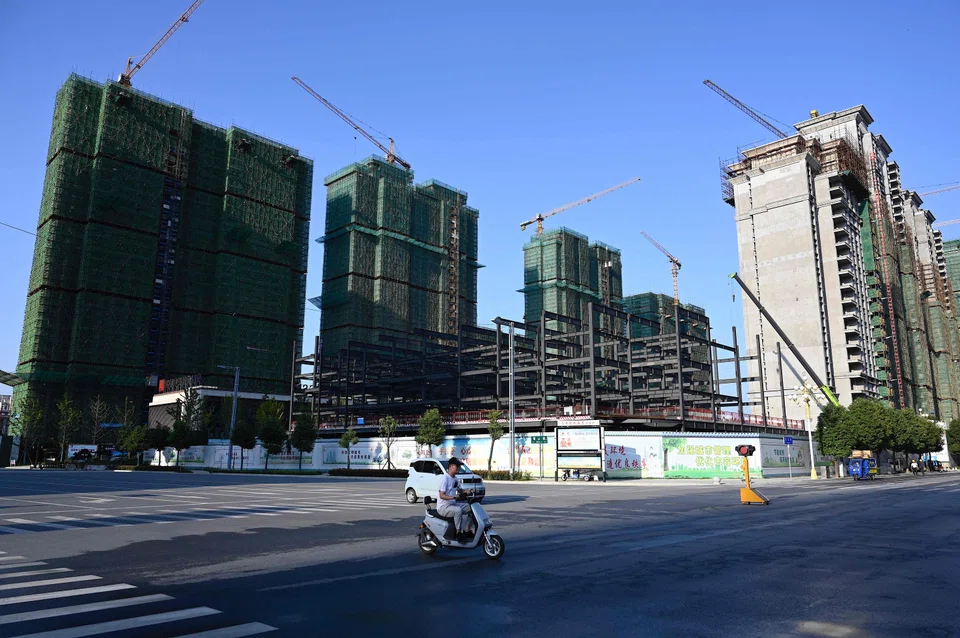
SOME of China’s state-backed financial institutions are pushing back on Beijing’s calls to support the embattled property sector due to concerns about the impact of such exposure on their balance sheets, 7 people with knowledge of the matter said.
Without explicit financial backstop from Beijing, senior executives at some of the institutions are wary of engaging with cash-strapped developers and later dealing with potential losses of their own, said 2 of the sources.
Signing off on financial support to struggling developers has become a concern as employees are increasingly held accountable by authorities for poor lending and investment decisions, said the 2 sources.
China’s property sector – which accounts for about a quarter of the economy – has been lurching from crisis to crisis since the summer of 2020 as a result of regulators stepping in to cut excess leverage in the sector, which led some developers to default on their debts and struggle to complete projects.
Property investment, home sales and new construction are plummeting as the troubles scare off potential buyers.
Last week, Reuters reported that China’s banking regulator was scrutinising property sector loans at some local and foreign lenders to assess systemic risks as the real estate sector’s debt crisis worsens.
The reluctance of some Chinese lenders shows the challenges and limited options for Beijing to help revive the sector.
Chinese authorities have held multiple closed-door meetings in recent weeks during which banks and other financial institutions including securities companies were encouraged to support fundraising by developers, the 2 sources said.
Although the People’s Bank of China (PBOC) has been nudging state-backed financial firms to support fundraising by stronger developers, it has so far refrained from issuing specific orders, said 2 separate sources.

Officials at 2 state banks and 3 state-backed asset managers said they have been trimming their holdings of property bonds since early this year despite several rounds of regulatory “window guidance” – verbal instructions from regulators to mainly Chinese companies – they received to support the sector.
All the sources declined to be identified for this story due to the sensitivity of the matter.
The PBOC and the China Banking and Insurance Regulatory Commission (CBIRC) did not respond to Reuters requests for comment.
While banks rapidly expanding loan exposure to developers would be a moral hazard for Beijing which unveiled policies to rein in ballooning leverage 2 years ago, authorities this year have guided strong builders to also issue onshore bonds to restore normalcy in fundraising activities.
Loans granted by Chinese banks to developers in July dropped 36.8 per cent on year, while capital raised from offshore bond markets plunged 200 per cent, Reuters calculations of the National Bureau of Statistics (NBS) data showed.
Onshore bond issuance in July, however, rose 4.2 per cent from June to 32 billion yuan (S$6.5 billion), said researcher CRIC. Top issuers during the month were mostly state-owned or backed developers, including China Vanke and China Jinmao.
The issuance of onshore bonds is expected to rise – stock prices of developers and some of their bonds rebounded last week after media reported that Beijing would guarantee new onshore bond issues by a few, better-quality private firms.
As part of that move, Longfor Group Holdings on Tuesday (Aug 23) announced the launch of an up to 1.5 billion yuan bond offering. More are expected in the coming days.
Chinese financial firms are typically major subscribers to these new offerings by local companies. This time, however, some of them are not looking to buy new notes even from developers that have relatively better balance sheets.
“We can’t afford riding out the volatility before maturity. It will mess up our books,” said a credit analyst with a Shanghai-based and state-backed asset manager, talking about interest in new bonds from developers.
“Analysis does not work any more, because pessimism has grabbed the market … anything related to property is a no-go,” said the credit analyst, who declined to be identified as they are not allowed to speak to the media.
Longfor declined to comment.
Huarong Asset Management Company, one of China’s 4 large state-owned bad loan managers, has been tasked with looking at some stalled property projects, but has passed over many, said an official involved in those decisions.
“We need to have some comfort that we’ll get repaid at least some of our funds,” the official said, adding that the banking sector regulator would be visiting their offices this month to assess property risks.
Huarong did not respond to requests for comment.
Some developers are also finding that state reassurances on stabilising the sector do not necessarily translate into more bank funding, as they scramble to finish apartment construction to placate homebuyers threatening to stop paying mortgages.
An industry source close to developers said issuing bonds now was not easy as it is hard to find buyers, and many investors were trying to sell their holdings. Banks also may not have enough purchase quota for all the issuers, the source added. REUTERS
Decoding Asia newsletter: your guide to navigating Asia in a new global order. Sign up here to get Decoding Asia newsletter. Delivered to your inbox. Free.
Share with us your feedback on BT's products and services
TRENDING NOW
Why China is tightening controls on overseas stock trading

Xi Jinping has just rewritten the rules of US-China rivalry

‘Even a CEO’s job can be replaced by AI’: DBS CEO Tan Su Shan bets big on agentic AI

‘Whole deck of cards just toppled’: FoodXervices’ Nichol Ng on how a 92-year-old family business unravelled – and what’s next

