

South Korea unveils package to boost housing supply, support young buyers
Construction project financing support to rise to at least US$33.7 billion
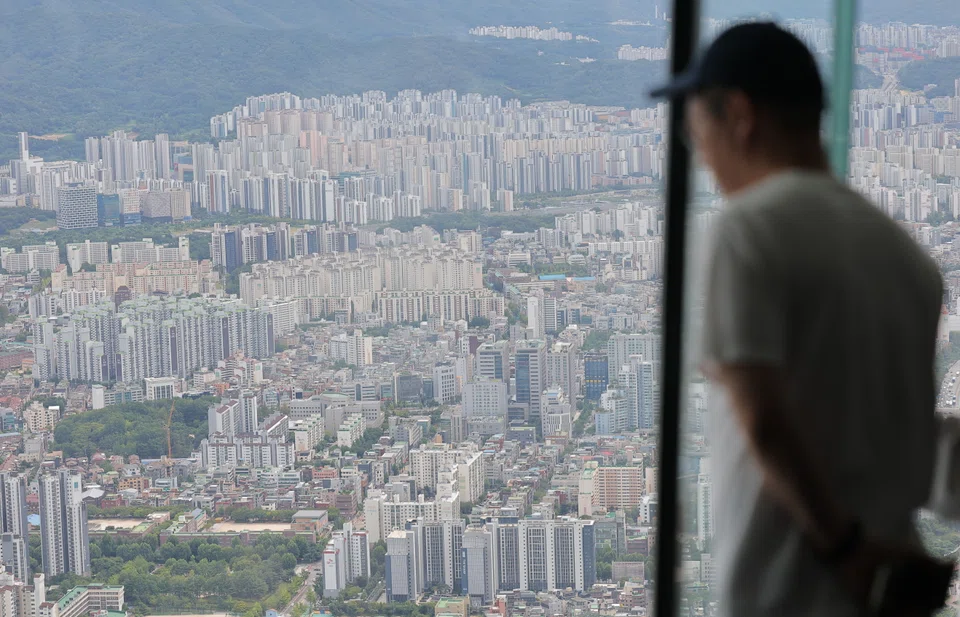
[SEOUL] South Korea said on Thursday (Aug 13) that it would raise financial support for construction projects and ease regulations for young homebuyers as part of efforts to stabilise a red-hot housing market.
Earlier this month, the government of President Lee Jae-myung proposed higher taxes on wealthy homeowners. Lee’s approval ratings have been falling on rising house prices and stock market volatility.
“The real estate bubble has reached a level that can no longer be left unchecked,” Lee said during a meeting with his top aides on Thursday. “If this situation continues, we could face what happened in a certain country – the so-called ‘lost decades’.”
He added: “We must concentrate all available means and capabilities on solving the real estate problem – a ticking time bomb that threatens people’s lives and the country’s future.”
Thursday’s measures are aimed at “stabilising the property market by stimulating housing supply and through a comprehensive financial package for young people and those with actual demand”, the Financial Services Commission (FSC) said in a statement.
The FSC noted that it would raise policy support for financing construction projects to 47.8 trillion won (US$33.72 billion) or more, from a planned 26.3 trillion won, to boost housing supply.
The FSC also announced financial support measures, such as new policy loans, for young people and newlyweds who buy a house to live in, while maintaining or tightening restrictions on speculative demand.
South Korea, one of the world’s most indebted countries, has complex borrowing rules in place in a bid to curb household debt. The FSC said that it would manage debt growth at around 3 per cent this year, up from the previous target of 1.5 per cent.
In a Gallup Korea poll released on Friday, Lee’s approval rating declined to an all-time low of 44 per cent, down seven percentage points from the previous survey released in July.

The decline in support was pronounced among young voters, with only 30 per cent of the respondents in their 20s backing Lee.
Support for Lee’s Democratic Party also fell three percentage points to 41 per cent, while support for the main opposition People Power Party increased to 25 per cent from 23 per cent during the same period.
The latest survey also showed that 40 per cent of respondents want the government to intervene less in the housing market, while 27 per cent said that the authorities should do more. REUTERS, BLOOMBERG
Decoding Asia newsletter: your guide to navigating Asia in a new global order. Sign up here to get Decoding Asia newsletter. Delivered to your inbox. Free.
Share with us your feedback on BT's products and services
TRENDING NOW

Two Singapore-listed palm oil firms named in Greenpeace report on Indonesian plantation fires

Singapore Airlines flight returns to San Francisco after ‘unruly’ passenger incident

Singapore looking into which companies responsible for haze-causing fires: PM Wong

Deluge IPO 3.86 times subscribed ahead of SGX debut

