The space premium: A value proposition for larger homes
Data shows that while small-format units are more palatably priced, more spacious condos may offer better price growth potential
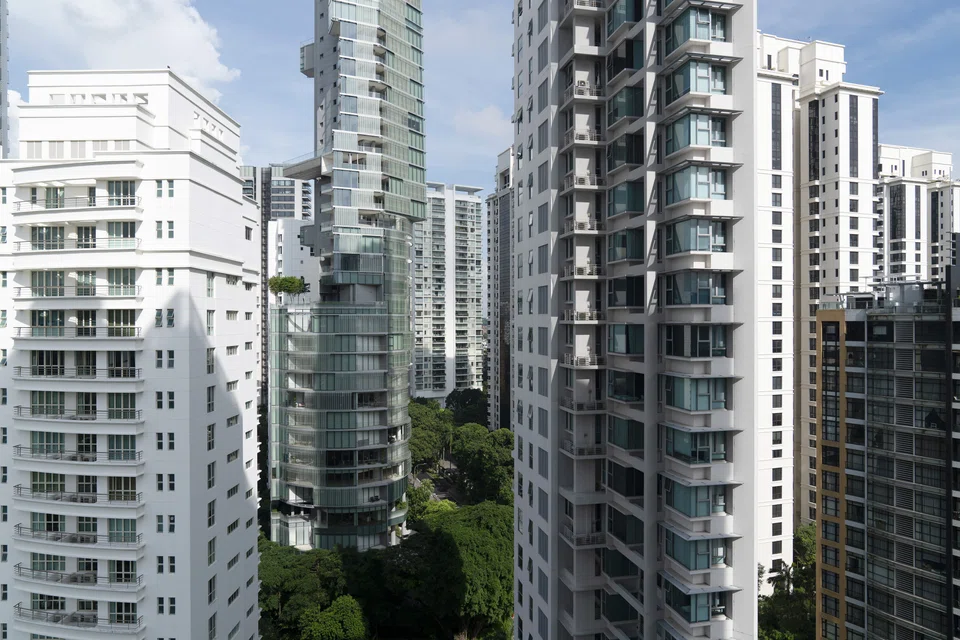
[SINGAPORE] For prospective homeowners and investors in land-scarce Singapore, location, product concept and tenure influence the appeal and price tag of a residential asset, but size is emerging as a strong factor of demand for homebuyers with different investment objectives.
As borne out by Urban Redevelopment Authority (URA) data between 2015 and November 2025, the average size of new residential developments has declined gradually over the years.
Based on Knight Frank’s analysis of caveats lodged from 2015 to November 2025 (excluding dwelling units of above 200 square metres as these transactions constitute less than 4 per cent of records), the average strata floor area of new non-landed home transactions measures less than 900 square feet, compared to resale ones which span an average of 1,038 sq ft.
This is the likely result of developers grappling with elevated development costs, regulatory tightening and maximising every square metre to retain margins.
Smaller units, lower price quantums
Correspondingly, homebuyers have gravitated towards smaller homes. The same URA data shows that smaller units, which are more palatably priced, typically get snapped up first.
We believe buyers are typically attracted to the lower investment outlay required, which overrides liveability considerations and the prospect of capital growth.
This was demonstrated by the sales performance of the recently launched developments of River Green and Promenade Peak in the River Valley/Zion Road enclave. Both were made available in the market in August 2025; and being located just a 10-minute walk from each other, they exhibit comparable locational attributes.
The size of a standard two-bedroom unit in River Green starts at 49 sq m and is priced below S$1.5 million, which can be viewed as a value buy compared to Promenade Peak, which offers bigger units – its two-bedders measure at least 61 sq m and are priced from S$1.78 million.
As expected, River Green achieved better sales at its launch weekend, with an 88 per cent take-up rate, while Promenade Peak sold 54 per cent of the project at its launch.

Are small units the best investment options?
It has been commonly observed that “smaller units, lower price quantums” has been the pricing strategy of many developers to drive saleability and returns.
This raises an important consideration: Shouldn’t the liveability aspect of homes – most often influenced by spatial size – be a bigger purchase driver?
What defines “better value” for private homes? We looked at value in terms of space premium and price growth.
Space premium can be defined as the difference – in unit price per sq ft (psf) terms – between bigger and smaller non-landed units, while price growth measures the extent of price appreciation for different size bands of dwelling units over time.
From our analysis of unit price data of non-landed private homes across all regions from 2015 to November 2025, the data suggests that shrinking average sizes of new apartments and the proliferation of smaller units might have indirectly contributed to better investment prospects for the larger homes.
In the Core Central Region (CCR), unit psf prices of bigger 90 to 120 sq m units were on average 3.1 per cent higher than smaller 50 to 70 sq m units in 2025. This is a reversal of the price trend from 10 years ago, when the average unit price of 90 to 120 sq m units was 3.7 per cent lower than smaller units.
Over the same period, our analysis found that the compound annual growth rate (CAGR) of bigger units outpaced smaller ones – a trend observed across both primary and secondary market transactions.
For new sale transactions in the CCR, unit prices of 50 to 70 sq m non-landed homes grew 3.5 per cent per annum, while larger 90 to 120 sq m units had a higher growth rate of 4.2 per cent.
Back in 2015, average unit prices of bigger units were typically lower than smaller ones, due to the latter’s lower investment quantum. But in recent years, this pattern has also shifted for some new launch projects, with larger format non-landed homes being sold at higher unit prices and at a faster pace.
This signals homebuyers’ and occupants’ preference for more space, possibly attributed in part to the pandemic, which led many to evaluate the role that space plays in quality living.
A similar price growth trend was observed in the Rest of Central Region (RCR) and Outside Central Region (OCR). For smaller units measuring 50 to 70 sq m, new sale prices grew 6.3 per cent a year to reach an average of S$2,813 psf in the RCR, while OCR unit prices rose 6.8 per cent a year to S$2,326 psf between 2015 and November 2025.
In comparison, new sale prices of bigger 90 to 120 sq m units grew 6.6 per cent a year in the RCR, and 7 per cent a year in the OCR.
Show of appreciation for bigger homes
While the RCR and OCR had a relatively consistent volume of new launches in recent years, the CCR experienced a dry spell from 2022 to 2024 before a rebound in 2025.
Interestingly, our analysis of URA caveats data reflects that bigger units fetched higher price growth in most popular districts in Downtown Singapore.
While the price appreciation trend was not evidently represented in the Central Business Districts (D1 and D2), it was broadly observed that the price growth of bigger units was more significant for most districts (see table below).
This suggests that both developers and buyers are starting to acknowledge the importance of “space” and pricing a premium for “bonus” square footage.
Launches in 2025 with relatively larger and more spacious units in the central districts include Aurea (D7), Upperhouse at Orchard Boulevard (D10) and The Robertson Opus (D9). All three are mixed-use developments with generally bigger unit sizes compared to similar bedroom formats, and close to MRT stations and daily essentials.
These projects offered noticeably larger-sized units than River Green (D9) and Penrith (D3), which were launched in the same year. Two-bedroom apartments in Aurea, Upperhouse and The Robertson Opus span a generous average of 60 sq m and more, an increasing rarity for new launches in prime districts.
With data suggesting that larger residential units within the city centre can offer long-term higher investment returns, it is clear that space remains a strong currency in land-scarce Singapore.
Alice Tan is head and Chalene Liu is assistant manager, consultancy, at Knight Frank Singapore
Decoding Asia newsletter: your guide to navigating Asia in a new global order. Sign up here to get Decoding Asia newsletter. Delivered to your inbox. Free.
Share with us your feedback on BT's products and services