

Sun, sand and no inheritance tax fuel property boom in Mauritius
 Add BT as a preferred source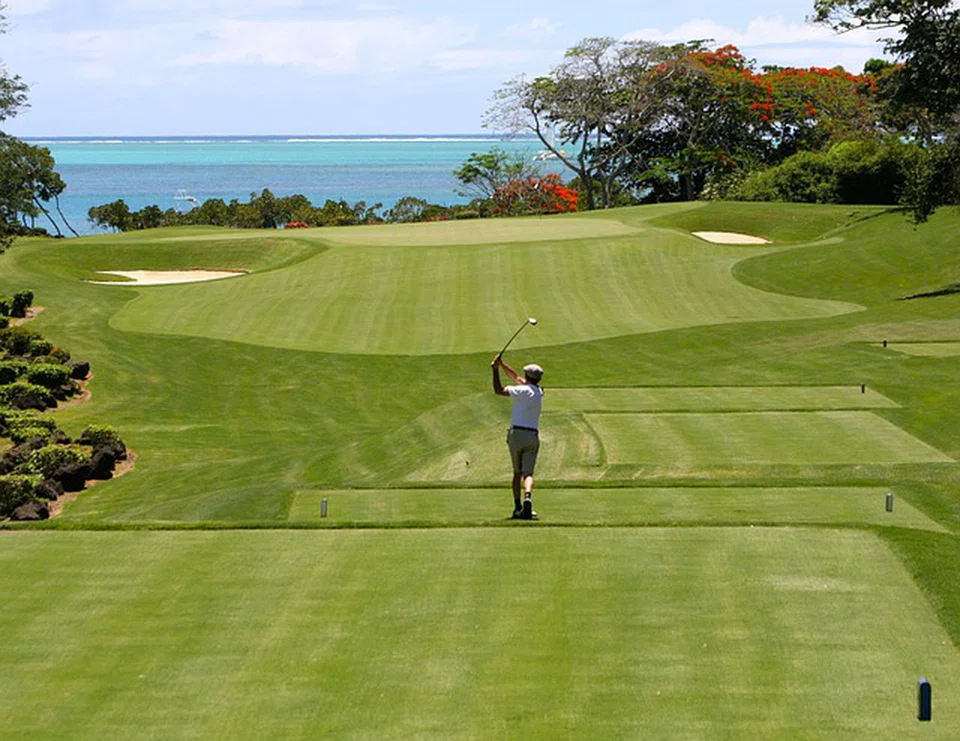
WITH its long stretches of white-sand beaches, blue lagoons and lack of inheritance tax, the Indian Ocean island of Mauritius has long been a beloved destination for high-net-worth individuals in search of seclusion.
Now, a new player is upping the ante for leisure-seekers. Kerzner International, developer of Atlantis The Royal – the ultra-luxury Dubai hotel that recently hosted Beyonce in a US$100,000-a-night suite – is investing about US$100 million in 52 ultra-exclusive villas on Mauritius’ eastern coast. Prices for properties on the former nine-hole golf course range from US$2.8 million for a two-bedroom unit, to US$14.4 million for a seafront villa.
Interest has been robust, with more than 80 per cent of all available units in final negotiations, the developer said in January. Only “a few units” with the four-bedroom configuration have yet to be sold.
Property is a key source of direct investment in Mauritius, which relies mostly on tourism and manufacturing exports for foreign currency. Between 2014 and mid-2022, foreign direct investment in high-end property totalled 63.3 billion Mauritian rupees (S$1.8 billion), or roughly 40 per cent of all inflows, said the Bank of Mauritius. As real estate has boomed, that number has been steadily ballooning. Last year, the finance ministry projected that property sales helped push inflows to 25 billion Mauritian rupees.
Located 1,930 km off the eastern coast of Africa and a four-hour flight from Johannesburg, the former Dutch, French and British colony has been a hotspot for high-end tourists for 70 years. Foreigners were banned from buying property in Mauritius until 2002, when the government rolled out the Integrated Resort Scheme (IRS), which offered residency to any foreign buyer who spent at least US$375,000 on a luxury residence or “development scheme”.
The first investor to bite was Medine, which owns 10,000 ha of land in western Mauritius and set up the Tamarina Golf Estate and Beach Club. The Tamarina now includes 119 villas, a restaurant, a boutique hotel and an 18-hole golf course, and is, according to Joel Bruneau, managing director for the property cluster, “the one fully-sold and fully-completed IRS estate on the island”.
Among the newer entrants in the market is Heritage Villas Valriche, which sold its first villa in the south-west of the island in 2007, and is now in its final phase of expansion with the construction of 46 new units. In total, said chief executive officer (CEO) Anton de Waal, the project has attracted 13 billion Mauritian rupees in foreign direct investment.
More than two decades on, foreign buyers play an outsized role in the local economy, drawn by breathtaking natural vistas, strong airline connections and a favourable tax regime. Property sales have fuelled the tourism and hospitality sector, which employs about 100,000 people – or 19 per cent of the workforce – in this 1.26-million-person country, where the average minimum wage is 13,075 Mauritian rupees a month, and youth unemployment stood at nearly 25 per cent in the third quarter of last year.
While France has historically been the main source of buyers, that may not be the case for long, said Jyoti Jeetun. The CEO of the privately-held Mont Choisy Group said: “Over the last few years, we have seen growing numbers of South Africans looking to invest or relocate to Mauritius.” She added that social unrest could be a reason.
De Waal, of Heritage Villas Valriche, said that his clientele is made up of “about 30 per cent French, 30 per cent South African, 15 per cent from the United Kingdom”. The rest is a mix, he added, “including five Mauritians”.
As demand for luxury villas in Mauritius has grown, it has kicked off something of an amenities arms race, said Arnaud Lagesse, the chief executive of IBL, the largest business group in the island nation. And with new entrants like Kerzner showing up, property developers must be “even more creative in their offerings”.
Villa Charlotte, a US$10.5 million property in the Anahita estate on the eastern coast, showcases the new heights of luxury. In addition to the main residence, the 905 sq m six-bedroom estate features staff accommodations, an entrance garden and a “treatment” suite arrayed around a 25 m infinity pool fringed with palm trees. Marble was flown in from Italy for the master bathroom, said David Rich-Jones, chief executive and founder of Richstone Properties, which owns the residence. The villa, he added, reflects “an obsession with details and design”.
Only a few minutes away by golf cart is the well-tended Tamarina course. One morning at the end of November, managers rushed to allocate carts to a growing line of players, who sheltered at the restaurant to avoid the light summer drizzle.
Professionally-designed golf courses, which are scattered across Mauritius, are another draw for the international elite. The Ile Aux Cerfs Golf Club, planned by two-time Masters champion Bernhard Langer, is located on a private islet of the same name off the coast of the main island. Anahita Golf, by prize-winning South African golfer Ernie Els, is in the seaside village of Trou d’Eau Douce. And Peter Matkovich signed off on the Mont Choisy Le Golf course in the north and Heritage Villas Valriche’s Le Chateau Golf Course in the village of Bel Ombre.
Thierry Vallet, interim chief executive of AfrAsia Bank, noted that golf courses are a win-win for both developers and investors. For developers, they offer “unmatched global visibility” when tournaments are hosted. The winner of last year’s AfrAsia Bank Mauritius Open went home with 170,000 euros (S$242,100). For investors, living in a development attached to a golf course brings perks such as security services and landscaped views.
While developers are putting increasingly lavish properties up for sale, the market is also expanding, said IBL’s Lagesse. “Even though we still see that there is a market for high-end villas – over US$1 million – we have noticed that demand has moved towards more practical and safe investments in what we can define as a mid-range market between $US300,000 and US$750,000.”
Citing sales data for the Azuri Ocean & Golf Village, a smart-city development on the north-eastern coast of the island, he added: “In this segment, the market is booming.”
This has been true despite the usual challenges of island living – earlier this month, a cyclone disrupted golf schedules and flights in and out of the island. Nonetheless, as Jeetun of the Mont Choisy Group, put it: “Mauritius has reinforced and broadened its position as a world-class lifestyle destination.” BLOOMBERG
Decoding Asia newsletter: your guide to navigating Asia in a new global order. Sign up here to get Decoding Asia newsletter. Delivered to your inbox. Free.
Share with us your feedback on BT's products and services
TRENDING NOW
Orchard plot, Jurong East EC, Raffles Town Club site among 10 new housing parcels in H2 GLS plan
Singapore among countries facing proposed US levy of at least 10% over forced labour imports

Johor property old hand KSL readies family handover amid market boom
Land for 4,745 private homes supplied in H2 2026 GLS confirmed list, including Jurong Lake District white site

