

Supply chain shocks, labour and power constraints weighing on Apac building boom: report
Delivery is now the most pressing challenge as Middle East conflict pushes global supply chain risk to its highest since 2022

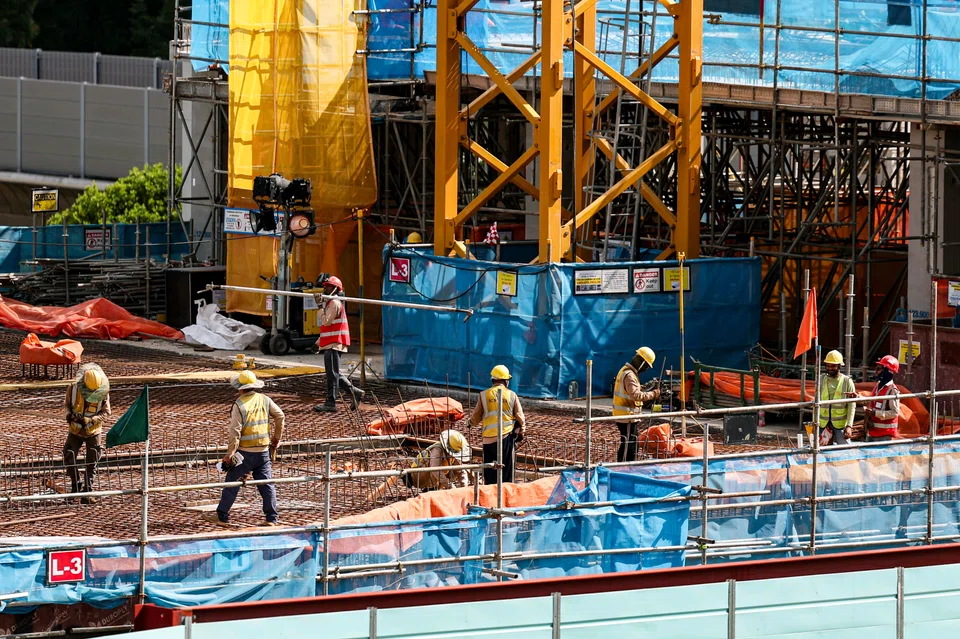
[SINGAPORE] The Asia-Pacific’s construction boom is facing mounting execution pressures, with supply chain disruptions, labour shortages and power constraints emerging as key bottlenecks, a new report by construction consultancy Linesight found.
This has made delivery risk the industry’s most pressing challenge to navigate, even as construction demand in the region remains among the strongest in the world, said Scott Halyday, Linesight regional director for South-east Asia.
According to the Wednesday (Jun 24) report, the Apac region entered 2026 in a “relatively strong position” before the Middle East conflict disrupted its momentum, pushing the global supply chain pressure index to its highest level since July 2022.
External demand has provided an important buffer, Linesight noted, with strong global demand for technology goods – including semiconductors and artificial intelligence-related equipment – supporting export growth across Malaysia, Singapore, Taiwan, South Korea and China.
But higher oil and gas prices have fuelled inflation, widened trade and fiscal pressures, and weakened the outlook for the import-dependent region, it added.
In Singapore, for instance, construction output is expected to rise by 4.5 per cent in 2026, with medium-term annual growth of around 4 per cent up to 2030.
Linesight attributes this growth to manufacturing and major transport and energy programmes, driven by projects including Changi Airport Terminal 5, the Marina Bay Sands expansion, new hospitals and rail extensions.
Meanwhile, construction inflation is estimated to range from 3.5 to 4.5 per cent, with import reliance exposing the market to “regionwide conflict-related pressure” on oil, freight and key commodity input costs.
Resource constraints are also intensifying, pushing contractor prices higher and tightening subcontractor capacity as multiple large projects “move forward at pace”, Linesight said.



The consultancy expects construction inflation to remain elevated at 5 to 6 per cent across the Causeway, driven by global commodity costs, and domestic subsidy and labour pressures.
But the market is still predicted to lead growth in Apac this year, with a projected 6.5 per cent increase in construction output.
Similarly, Linesight estimates India’s construction industry to have expanded by 7.2 per cent in 2025, with output projected to increase by 6.4 per cent in 2026 and an average of 6 per cent annually from 2027 to 2030.
The country now leads the Apac region in data centre development, supported by US$114 billion worth of projects in the pipeline.
However, the rapid pace of development is straining delivery capacity, with skilled labour shortages, limited contractor capacity and weak contract enforcement affecting project schedules, Linesight added.
On the rise
Linesight noted that commodity prices were also on the rise amid the Middle East conflict, and expected to remain highly sensitive to the scale and duration of geopolitical tensions.
Copper prices rose by 9 to 18 per cent quarter on quarter across Apac markets in the first quarter.
In the second quarter, copper prices are expected to rise by another 1 to 6 per cent, but Singapore and Malaysia are likely to experience the lower end of this range, the consultancy said.
It believes prices could ease by 1 to 5 per cent across Apac in the third quarter.
Steel rebar prices likewise rose across most Apac markets in Q1, by 1 to 5 per cent quarter on quarter, due to seasonal restocking following year-end slowdowns, firmer scrap and billet input costs and pockets of marginal improvement in construction activity.
Singapore was the sole market where prices dropped 2.8 per cent from a supply and demand mismatch, noted Linesight.
Other commodities such as steel flat, stainless steel, aluminium, cement, concrete and diesel saw quarter-on-quarter price increases across most markets in Q1.
These are expected to stay elevated in Q2 amid cost pressures, though some such as diesel are predicted to ease in the second half of 2026.
Longer and costlier procurement timelines are further raising delivery risks, with lead times for critical long-lead equipment remaining significantly extended globally in 2026.
Some equipment lead times have more than doubled since 2021, while cost indices for major equipment categories are forecast to rise to between 1.08 and 1.19 by Q4 2026, from a baseline of one in Q1 2024.
Capacity pressures are also mounting across the global data centre supply chain.
A survey by Linesight found that 25 per cent of suppliers are already operating above 80 per cent capacity utilisation, while half expect utilisation to exceed 80 per cent by 2027.
More than half of suppliers also expect utilisation rates to rise further from current levels.
This has made power, utilities and supporting infrastructure increasingly critical to project viability, especially in digital infrastructure, where governments are playing a bigger role in managing capacity extension, Linesight said.
“Certainty in delivery now depends on how well we manage labour, supply chains and power constraints,” said John Butler, Linesight managing director for Apac and Gulf Cooperation Council.
“Those who build strategic partnerships, engage early and plan with precision will be best placed to deliver at scale.”
Decoding Asia newsletter: your guide to navigating Asia in a new global order. Sign up here to get Decoding Asia newsletter. Delivered to your inbox. Free.
Copyright SPH Media. All rights reserved.
TRENDING NOW

Government to bring forward raising of retirement age, give employers more financial support to create flexi-load jobs

If Europe goes to war, the fallout will be felt in East Asia

Indonesia stocks suffer worst plunge in nearly 30 years as MSCI proposes standalone status

Vietnam’s northern provinces, not Hanoi or Ho Chi Minh City, are powering near 10% GDP growth

