

The survival of co-working rests on building a community
Operators could use social networks to add value for users in co-working communities in the post-Covid world.
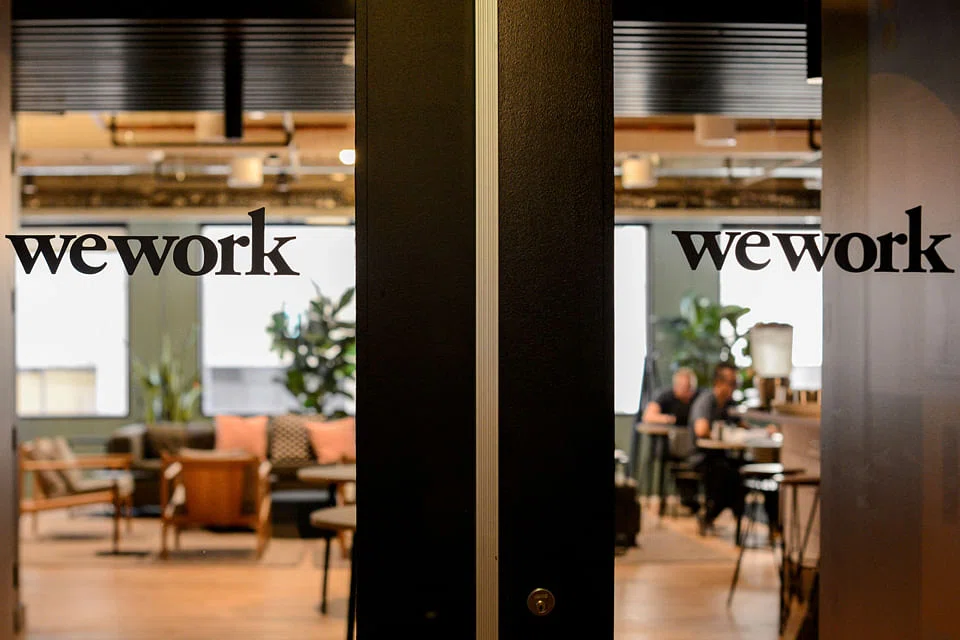
THE failed initial public offering (IPO) of WeWork in 2019 has put the co-working model in the limelight, and also led some to cast doubt on the financial sustainability and viability of the shared space concept.
The co-working operators faced a double whammy following Covid-19 that has disrupted economic and social activities. The question is: how will they adapt?
The co-working space operators exploit technologies to improve the matching of short-term office space demand of different users to available space, so as to optimise the utilisation of space.
The mode of operations of co-working operators, whether run by a third-party independent operators, such as WeWork, or as an affiliated subsidiaries of office landlords, such as Distrii by CDL and The Work Project by CapitaLand, usually involves taking long-term leases on bulk office space in office buildings in the CBD (central business district) or near the near city fringe.
Co-working model
This co-working model works based on the assumption that "the whole is more than the sum of its parts".
They sub-divide the space into hot-desking and dedicated spaces, and sublet these spaces to users on short-term leases. They give users the flexibility in terms of lease duration, square footage and type of space.
Users pay monthly charges for a hot-desking space at between S$125 and S$750 per month depending on the access rights of few days to unlimited access in a month.
They use shared amenities and equipment, like private meeting rooms, lounges, printers and pantries.
Co-working operators are not just providers of flexible working space; they also create a community that facilitates co-localisation of individuals, start-ups and executives from multi-national companies, who work independently in the shared office space.
Before Covid-19, it is an essential for co-working operators to organise social events to help their members to connect, collaborate and get inspired by other members in the community.
Co-working spaces have tripled the demand of net lettable office space since 2015 to 3.7 million square feet (sq ft), contributing to more than 30 per cent of the demand for Singapore's office spaces as of the third quarter of 2019, according to Colliers International.
WeWork is the largest co-working operator in Singapore with 850,000 sq ft of net co-working spaces in Singapore. Together with IWG plc and JustGroup, these three co-working operators constitute about 51 per cent of the market share by net lettable co-working space in Singapore.
Changing needs
The pandemic has hastened the adoption of technologies by firms to enable them to implement social distancing and work from home during or even after the Covid-19. However, the work practices are likely to stay even with the discovery of effective vaccines for Covid-19 virus.
Business activities are unlikely to go back to the pre-Covid-19 norm. People are accustomed to connecting with business partners, clients and investors via the online channels, such as Zoom and Google Meet, instead of the usual face-to-face meeting. The technology-induced changes in work practices will have structural and permanent impact on demand for office space in the long run.
At the macro level, three trends are likely to emerge in commercial real estate market with more prevalent use of technologies by people in workplaces.
First, de-densification will drive firms to downside their current office space in the Central Business District (CBD) to avoid having workforce concentrated in one location. Some office space will be converted to other uses creating more diversified and mix-uses in the CBD.
Second, decentralising workplaces to fringe offices that are close to home could reduce commuting time; and at the same time, more face-to-face interactions with clients, collaborators and service providers can be moved to online platforms.
Third, the demand for data centres will increase to support cloud-based data storage, management and communications.
These three major trends will put downward pressure on the new supply of office space, which may trigger rethinking of the future of the CBD.
Remodelling co-working
With public health consideration prioritised in the post-Covid world, the co-working operators will face some restrictions in organising social events for their members to connect, co-share and collaborate. There is an urgency for co-working operators to reinvent and remodel their spaces to stay relevant and keep up with changing work practices.
First, firms that are disrupted by the Covid-19 pandemic are hesitant to commit to new long-term leases. They will source for alternative short-term spaces to support their split team and "business continuity plan" arrangements.
Through strategies of de-densification, decentralisation and distributed work spaces near home, co-working operators can provide "plug and play" and ready-to-use alternative workspaces for these firms.
Besides, they also need to remodel spaces to support Covid-proof working environment, such as having more dedicated offices compared to shared desks, and converting some open spaces into private spaces.
Second, unlike landlords of office buildings, co-working operators are not pure "brick and mortar" players. Their strength lies in forming a social network of communities of independent workers, start-ups and freelancers in their co-working spaces.
Matching them to investors and other professional and advisory services may benefit freelancers and new start-ups, who have no established track records. Likewise, by allowing investors and venture funds to access to the networks of new and viable business ideas, co-working operators can build these communities beyond social interactions into creating business opportunities.
Third, co-working operators can leverage on technologies to support small enterprises and new start-ups to grow their business via online platforms after Covid-19.
By integrating shared physical spaces with virtual office, they can also reach out to other tech firms that do not require physical spaces but seek to build their online presence in new markets and get connected with other business communities.
Strict social distancing measures has hindered co-working operators from organising social events during and after Covid-19. Co-working operators could engage the communities more pro-actively via online networking sessions through Webinars.
Future of co-working spaces
Providing flexible leases and spaces alone is not enough to avert market risks facing co-working operators, but merely addresses the short-term needs of firms.
Commercial landlords can easily convert part of their office spaces into flexible and scalability spaces to minimise leasing risks of tenants in the post-Covid market.
For example, Guocoland has already planned for flexible office spaces in its new Guoco Midtown development at Beach Road.
Some landlords have partnered existing co-working operators and others have set up their own brands of co-working spaces to offer different solutions to tenants.
What makes a difference between co-working operators and commercial office landlords, then, is the social networks in co-working communities.
Co-working operators could use the networks to add value for users in co-working communities in the post-Covid world.
For the co-working operators that are not able to change and reinvent fast enough, Covid-19 could be that last straw.
The views and opinions expressed herein are those of the authors and do not represent the views and opinions of NUS or any of its subsidiaries or affiliates.
TRENDING NOW

From legacy to launch: Francis Yeoh and Yeoh Pei Xien on family unity and YTL’s next‑gen ventures

Things to know about DBS’ incoming chairman Anthony Lim
Wealthy Indonesians snap up government bonds as yields near 8%: OCBC

From local AI partnerships to global opportunities: How MNCs help Singapore firms scale

