

Swedish household lending growth hits all-time low on rates
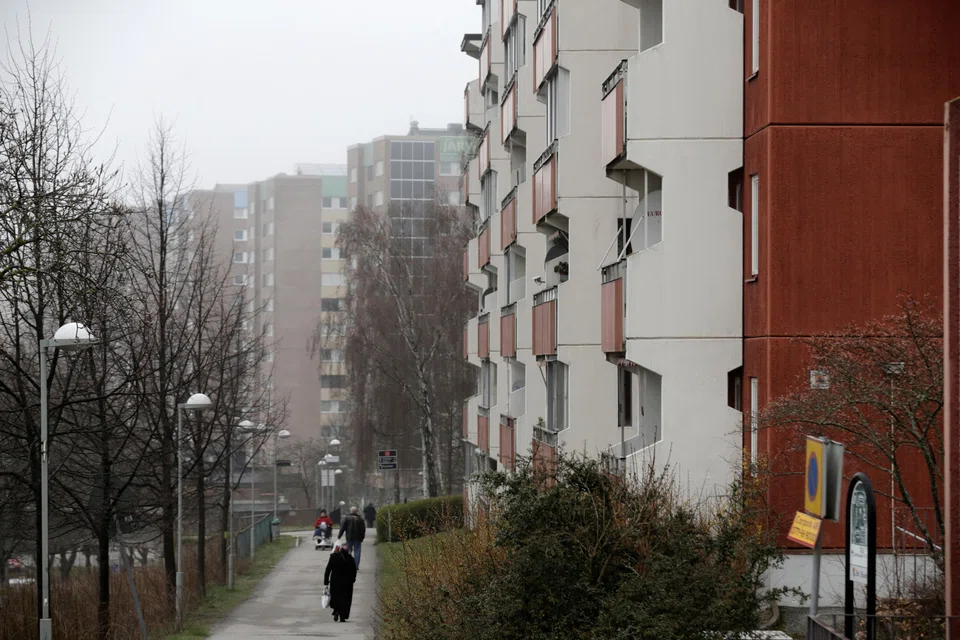
THE pace of borrowing by Swedish households slowed to a record low as rising credit costs weigh on loan demand, suggesting the nation’s embattled housing market may face further problems.
Lending to households grew by 1.1 per cent in June, the lowest annual increase since Statistics Sweden began collecting the data in 2006. Lending growth has slowed for more than a year and the indicator has been hitting record lows since November.
With interest rates at their highest level in almost 15 years, Swedish households are paring back on borrowing. Mortgages accounted for 83 per cent of all new loans, the office said in a statement on Thursday (Jul 27).
“Looking at seasonally adjusted monthly changes, credit growth has been standing still for a second month in a row now,” said Michael Grahn, chief economist for Sweden at Danske Bank. “This cannot be a good sign for either households or the housing market.”
The data comes as a year-long slide in Swedish housing prices has been replaced by a slight rebound in the last few months, a development that most analysts and the central bank consider temporary. With the Riksbank projected to raise its benchmark rate to 4 per cent in coming months, most forecasters expect housing prices to renew the decline for a peak-to-trough drop of about 20 per cent from early 2022.
In a separate statement, Sweden’s National Institute of Economic Research said that manufacturing confidence declined this month to its lowest level since the pandemic, while the consumer confidence indicator continued to improve for a seventh month.
Decoding Asia newsletter: your guide to navigating Asia in a new global order. Sign up here to get Decoding Asia newsletter. Delivered to your inbox. Free.
Share with us your feedback on BT's products and services
TRENDING NOW

Singapore updates renewable energy certificate standard to tackle greenwashing; unveils new solar efforts

Director of PR firm sacked for secretly recording internal meeting loses wrongful dismissal claim

Indonesia says gas export cuts to Singapore remain within contract terms
Time for MAS, SGX to scrutinise issue managers

