Taller towers – but fewer homes – coming up in NY
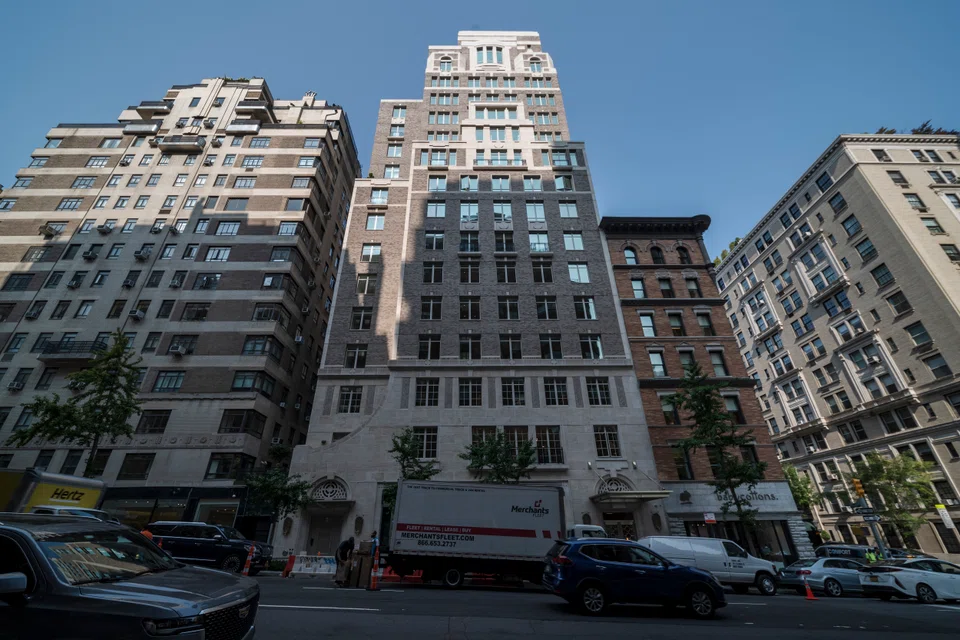
IN New York where space is at a premium, developers tear down residential buildings to create new ones that climb higher and higher into the sky – projects that could create thousands of apartments to help alleviate the city’s affordable housing crisis.
But on the Upper East and Upper West sides of Manhattan, a bundle of high-rise, low-density towers represent a contradiction: big towers with few units, sometimes fewer than the buildings they replace. Urban planners say the developers are squandering the precious few sites left in the borough’s high-density neighbourhoods, where substantially more units could be built.
At 15 West 96th Street, a developer is building a 22-storey tower with 21 condo units, although zoning would have allowed 66 units at the location, a zoning analysis showed. At 200 East 75th Street, a new 18-storey high rise will have 36 luxury apartments, although the building could have had as many as 144 units through zoning rules. At 1165 Madison Avenue, a developer could have built 88 units, but a new tower there is 13 storeys and has 11 units, including a more than 13,000 square foot, four-storey unit that sold for more than US$65 million.
Such projects have a cumulative effect. From 2010-20, the Upper East Side lost more housing units than any other community district in the city, primarily through the combination of smaller apartments and demolitions, according to the Department of City Planning.
The builders argue that the cost of land and construction is too high for almost anything but luxury condominiums, without new tax incentives or more favourable zoning. Still, there are steps the city and state could take, housing proponents said, that could encourage or require developers to do more.
“In a city that’s desperate for housing, all kinds of housing, how can you allow a builder to build fewer units?” asked Gale Brewer, a City Council member for the district that includes the Upper West Side and a former Manhattan borough president. “The idea that these people can get away without building anything affordable is mind-boggling to me.”
Two of every 3 households rented their home in the city in 2021, the New York City Housing Vacancy Survey found, so there is an extraordinary demand for rental apartments.
Some of the buildings being torn down may have been crummy, past tenants said, but at least they offered rents within the means of middle-income households. When tenants are priced out of the area, land-use experts said, they put added pressure on limited housing supply in nearby, lower-income neighbourhoods. Some tenants have been priced out of the city.
Brit Foster Rothstein’s first New York apartment was in a 4-storey walk-up that was razed and replaced by a 210 ft building with 13 luxury units, including 2 penthouses that stretch well over 6,000 square feet each. Completed last year, the neoclassical-style stone tower at 1228 Madison Avenue was designed by Robert AM Stern Architects, the firm behind a similarly extravagant (and sparsely populated) tower on Billionaires’ Row in midtown Manhattan.

“It’s depressing, frankly,” said Rothstein, who paid US$800 a month in 2003 for a 1-bedroom apartment she shared with a roommate above a nail salon – and loved it.
“The entire place smelled like acetone, but it was great,” she said, recalling how lucky she felt to be a graduate student living so close to Central Park and the Guggenheim Museum. She remembers the giddy energy on the night of the 2003 blackout, when she walked through the streets with a headlamp, like an urban spelunker.
“I feel like such a cheesy person saying this, but, honestly it felt really magical,” she said.
Two years ago, Rothstein, 43, an educational consultant, moved to North Carolina, in part for cheaper housing. “You can’t get a foothold now,” she said about the Upper East Side. “There’s nowhere for you to live.”
The lot on Madison Avenue could have supported as many as 75 units, a zoning analysis showed. But Scott Shnay, a principal of CBSK Ironstate, the developer, said it would have been inefficient to add many more units, because the shallow development site limited design options.
CBSK also adjusted to meet the tastes of buyers who requested combining some units to create even larger layouts, Shnay said. Original plans called for 15 units; now there are 13.
The average new condo unit in Manhattan is less than 1,600 sq ft, noted Jonathan Miller, a New York appraiser. For many developers, however, there is a proven market for boutique condo towers with few units and sprawling layouts.
At the Benson, a 210 ft, limestone-clad tower on the Upper East Side completed last year by developer Naftali Group, there were 15 units, ranging from US$12.75 million for a 1,770 sq ft, 3-bedroom unit to US$35 million for a more than 6,600 sq ft penthouse, said the developer. The building is sold out, said Donna Olshan, president of Olshan Realty, which tracks the luxury market.
“It was a wild success,” she said, but also a risky strategy, because the investment was tied up in so few units. The development site, which used to be a row of prewar apartment buildings, could have supported up to 83 apartments, according to zoning calculations.
Developers have little incentive to squeeze in so many units on projects in affluent markets, because bigger units command higher premiums, said Ryan Schleis, a senior vice-president at Corcoran Sunshine Marketing Group, a development consultant and marketing firm. “Space is the ultimate luxury,” he said, with top-dollar units on the Upper East Side exceeding US$4,000 per sq ft (psf).
Moreover, most of these projects are built “as of right”, on sites that do not require zoning changes or public review that might otherwise require the builder to match or exceed the number of units previously on the site, said George Janes, an urban planner who has studied a number of the new towers.
“You have a scarce resource of floor area that could be used for housing people, and it is being used, essentially, for people who are super wealthy,” he said.
Developers said they are chasing the best return on their investment.
“It’s a very simple answer: It’s the market demand,” said Miki Naftali, whose firm, the Naftali Group, is building several high-rise condos in Manhattan with few units.
At Eagle Court on West 84th Street, where the Naftali Group plans to demolish 128 rental units built in the 1980s, a new tower could have had more than 220 apartments, based on the current zoning.
Its replacement, a proposed 210 ft tower, nearly triple the height of the current building, is set to have 45 apartments – a net loss of 83 homes – all of which are likely to be multimillion-dollar condo units.
(The demolition is being held up by a lone tenant who refuses to leave. He faced a setback this month, when a state agency denied his application for emergency rental assistance, The Real Deal reported. He is appealing the decision, according to his lawyer, Adam Leitman Bailey.)
Prices have not been announced for the 36 luxury units – ranging from 2 to 5 bedrooms – at 200 East 75th Street, which will also have retail space, according to the developer, EJS Group. But the firm recently completed a project nearby, a 170 ft tower with 25 units, that has listings ranging from about US$5 million for a 2,200 sq ft, 3-bedroom unit to US$20 million for a 4,600 sq-ft, 5-bedroom penthouse.
The site on East 75th Street could have had more than 140 apartments, or 4 times as many units as the current proposal, a zoning analysis showed. Plans for the site were previously reported by Patch and Curbed.
Ted Segal, president of EJS, said his firm considered building a rental tower with significantly more units, a portion of which would have been offered below market-rate prices in exchange for tax breaks through the city’s Affordable New York programme formerly known as 421a.
But the subsidy expired in June and appears unlikely to be revived soon, amid criticism that it did not produce enough affordable housing.
To make way for the upcoming tower, EJS Group began demolishing a row of buildings last year that had about 40 market-rate rental apartments, as well as a restaurant, a cafe and a pub. The new tower is expected to be completed in 2025.
George Wishart, 41, rented a small 1-bedroom apartment in one of the 5-storey buildings from 2012-17.
“It’s just frustrating and sad,” said Wishart, who works in sports broadcasting.
He said he paid about US$2,400 a month to a landlord who raised the rent only about US$200 in 5 years. The manageable rent helped him save up for a bigger apartment uptown, a 1-bedroom where he and his wife pay US$4,000 a month.
Albert Jakupi was the co-owner of Bistro Le Steak, a French restaurant that his family opened in 1996 on the ground floor of one of the buildings, and he rented a tiny apartment above it. His neighbours were regulars.
“It was considered a neighborhood joint,” he said. “They would come down in pajamas to get a nightcap and a chocolate mousse.” The bistro closed last year but reopened under a new name in Larchmont, a village in Westchester County, about an hour’s drive from midtown. He said he was surprised to see so many of his old patrons at the new location – they, too, had been priced out of the Upper East Side.
In most cases, demolitions do not lead to fewer residential units on a property, but that is part of the reason such examples are so glaring, said Matthew Murphy, executive director of the New York University Furman Center, which studies housing and urban policy.
“You cannot argue that this is part of the citywide strategy to create more supply,” he said, referring to rentals being torn down for a smaller number of luxury condo units.
To encourage developers to build something other than condos in high-cost markets, some affordable-housing supporters have suggested creating a similar programme to the one that expired in June, because it already required developers to create below market-rate units for every apartment demolished on the site, in order to reap the tax benefits, Murphy said.
Affordable-housing proponents who were glad to see the programme expire, including New York City comptroller Brad Lander, have said that the programme does not produce enough truly affordable apartments for the cost of the forgone tax revenue.
Another proposal is to lift or eliminate the density cap on residential buildings, which dictates how much square footage can be built on a property. Proponents said the change, which must be made at the state level, would allow developers to build more housing in high-density neighbourhoods, such as the Upper East Side. The city could then require builders seeking the extra density to include a share of below market-rate apartments.
Governor Kathy Hochul made raising the density cap an early policy goal, but critics such as the Municipal Art Society of New York, a preservationist group, have argued against making the change without first closing loopholes in the zoning code and improving the environmental review process, because it might encourage very tall buildings with little affordable housing.
Jessica Katz, the city’s chief housing officer, said she was in favour of both reviving a tax subsidy like 421a and eliminating the residential density cap.
The city could also require builders to replace the apartments they demolish, said Michael Kwartler, an architect and planner who has written zoning regulations adopted by the city. But the process could take years, because it would require public hearings, a land-use review process and approval from the City Council.
Even so, it could be a worthwhile campaign, he said, given the dire need for new development. “Somehow,” he said, “the loss of housing needs to be zero.” NYTIMES
Decoding Asia newsletter: your guide to navigating Asia in a new global order. Sign up here to get Decoding Asia newsletter. Delivered to your inbox. Free.
Share with us your feedback on BT's products and services