These island homes were an affordable dream – until residents started to age
 Add BT as a preferred source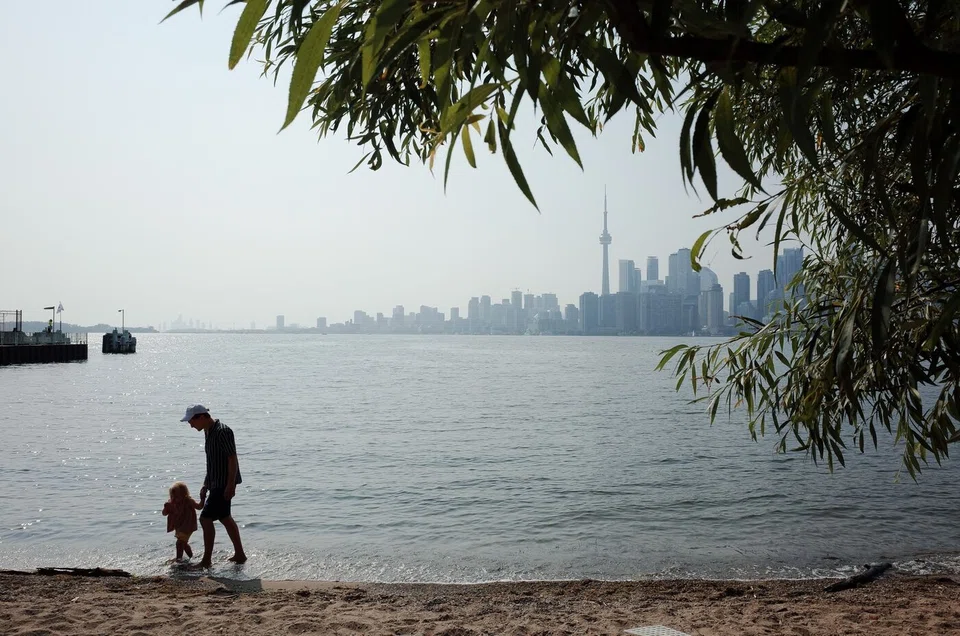
THE affordably priced homes have long been considered real estate treasure hidden in plain sight. If you were lucky enough to be selected by lottery, you could buy one at a below-market price.
Houses at the picturesque Toronto Islands community have been in high demand for three decades, offering a rare combination of amenities: A quick 10-minute ferry ride to downtown, an idyllic setting on protected public land with a view of the Toronto skyline, and housing prices kept low by a special trust.
But now, as many long-time residents get older, they are discovering a catch: They can’t afford to sell their home and move into a more senior-friendly neighbourhood in a scorching Toronto housing market.
The conundrum highlights the challenges of alternative homeownership models that control prices, particularly as residents age or their needs change.
“Social housing is great when you live in it, but if you need to move, you face a type of lock-in,” said Mike Moffat, the founding director of the Place Centre at the Smart Property Institute and an assistant professor in business, economics and public policy at Western University’s Ivey Business School.
Toronto Islands, a set of 15 small car-free islands in Lake Ontario connected by walking paths and bridges, are a tourist attraction for most. But for a select few individuals, they offer a non-traditional housing proposition. Homebuyers who snag a spot on the waiting list are offered land leases that end in 2092, and a price stipulated by a formula, in exchange for one of the 262 homes that dot the two inhabited islands. Residents are surrounded by verdant parkland, beaches and water sports, with beavers and cormorants for neighbours.
The development is protected by a trust, which manages the land and the five public buildings on the two islands, while the surrounding park is managed by the city. A core principle of the governing trust is that the sale of Islands homes does not result in windfall profits for the owners. “On the islands, the home is first a place to live in, and then an investment, whereas in Toronto it’s the other way around,” said Daniel Hall, an architect who’s a homeowner.
The Toronto Islands Residential Community Trust declined to respond to questions.
The development follows the model of a community land trust, a type of social housing originating in the US that’s intended to keep homes affordable in perpetuity. As housing affordability continues to worsen across Canada, public investments in social housing are seen as a key solution. Since the Islands trust was formalised in 1993, similar land trusts have formed elsewhere in Toronto.

Moffatt, who researches housing affordability, says Canada desperately needs to scale up well-located social housing. But a model like the Islands’ doesn’t account well for changed life circumstances, he adds. “Owners will get older. Someone may be trying to get out of a difficult relationship. But you just can’t afford to move.”
It’s a problem bedevilling many members of the Islands community, comprising retired lawyers, firemen, artists and professors. “I can never leave,” said Tony Farebrother, a former worker at a social justice credit union who’s lived on the Islands for about three decades. “If my home goes for C$400,000 (S$404,860), I can maybe buy a parking garage in downtown Toronto,” said the 72-year-old who heads the Islands’ residents’ committee.
“If islanders had bought similarly valued homes in Toronto in the mid 1990s, they’d be millionaires now,” said Moffat. “I’m sure that’s a source of regret for some.”
Landing a home on the Islands involves luck and infinite patience. The next opportunity is the biennial lottery coming up in October 2024. If a prospective buyer is selected, their name is tacked on to the bottom of a wait list with previous “winners,” but their turn to purchase a home will not come for decades. In the 2022 lottery, thousands vied for a handful of spots on that wait list. Yet many Torontians don’t know the opportunity exists: Publicity often comes by word-of-mouth from current residents.
“The Islands homes are the hidden gems of Toronto’s housing market,” said Tito Singh, a city realtor who considers the community a perfect foil for Toronto’s escalating home prices.
Only 70 homes have been resold since the trust was formalised by law in 1993. The home must be the purchaser’s primary dwelling, and can pass only to a spouse or children. If not, it must be sold. “Supply is extremely limited but once in, it’s a lifestyle straight out of a storybook,” Singh said.
To those getting older, it’s not quite that utopian. While the development does include some basic amenities like a fire station, a restaurant and even a theatre, fulfilling many daily needs does require leaving the Islands. There isn’t a convenience store for a quick milk run. No doctor or hospital is available if a resident takes ill. And if, after a hard day, someone felt like Chinese takeout or pizza, good luck; there are no food deliveries.
Getting an electrician or plumber is challenging, as is securing a personal support worker for the frail or homebound. Getting off the car-free islands is dictated by inflexible, once-hourly ferry schedules that end just after 11 pm. In the winter, the water freezes and throws the ferry service in disarray.
“If they have serious health issues, we can’t look after each other,” said resident Linda Rosenbaum, 75.
The first island dwellers date back to the 1800s, but the Islands came under Toronto’s jurisdiction in 1956. Hundreds of so-called squatter homes were demolished and a fierce legal battle ensued between the residents and the province of Ontario, which had begun demolishing homes and wanted to reclaim the land. An unusual truce was struck nearly three decades later, and was made official through legislation called the Toronto Islands Residential Community Stewardship Act, which allows the land leases and home sales solely through the trust at a price stipulated by a formula.
The sale price includes a fixed land lease cost, and the value of the home as determined by a third-party appraiser. Smaller homes have sold for as little as C$150,000 while a large modern dwelling this year had a price tag of around C$1 million. But prices have barely kept up with inflation, said Singh. Affordability, he said, has become the enemy of some Islanders.
Mary Partridge and her late husband bought an Islands home in the 1993 lottery for C$90,000. Just a few years before, the couple had sold their home in the upscale Riverdale neighborhood in Toronto for C$280,000. “Why did we sell our house?” is the question that haunts her, said Partridge, who estimated that it would now be valued at upwards of C$1.4 million.
“Many people can’t move. They can’t afford to,” said Partridge, 70, a former IT services professional. “If someone is lucky enough to have family who’ll take them, or have money, or is willing to move to less expensive neighbourhoods in the far reaches of Ontario, then they go.”
India-born Nupur Gogia, 56, sells under her own wine label Kush, which means happiness in Hindi. Her partner Sean Tamblyn grew up on the island and was among early buyers of a home they have since rebuilt. Social media exposure has brought hordes of tourists – and noise and garbage – but watching the pristine moonrise from her bathtub or skirting toads while running in the morning makes it worthwhile, she said. In her two-plus decades, Gogia has seen the community around her change.
She was the only person of colour on the Islands for years, she says, but now there are a couple more. Word-of-mouth publicity and inheritance rules that favour passing the homes down to family may make it harder to diversify.
“We are the oldest community of this kind in North America,” she said. “We may also be the ‘whitest’ community in North America.”
Over the years, the Toronto Islands community has evolved into a Norc, a naturally occurring retirement community, said Hall, the architect who has designed or renovated nearly two dozen homes on the islands, including his own. “Do people feel trapped? Some say they do,” said Hall. He put his name on the wait list in 1993 and was able to buy a 100-year-old home on Algonquin Island, the larger of the two inhabited islands, which he completely remodeled. Nearing 60, Hall said he and his wife want to stay.
Meanwhile, evidence that the community is ageing is showing up everywhere – more electric wheelchairs in use, ramps being added to homes, and some residents adding a room or two to house personal support workers.
The average number of homes sold every year has inched up to five from two. Murmurs are now bubbling up among a section of residents about the rigid nature of the home sale rules. Conflict is not a new thing in the community. Inheritance rules were the subject of pitched verbal battles when a 90-year-old resident legally adopted a 58-year-old and residents found he had inherited the island home. A court finally settled the matter in favour of the duo. More recently, when the café on Ward’s Island applied for a liquor licence, the community was divided.
Owners are now split over rules dictating home sales, though many vehemently oppose any changes, saying they don’t want the islands to become a billionaires’ playground like Martha’s Vineyard or Nantucket. “The Islands may not be racially diverse but they’re economically diverse because home prices are within reach of a lot of people,” said Susan Roy, a Toronto school teacher who moved in the 1980s with her husband.
Roy teamed up with her friend Linda Rosenbaum to offer Toronto Islands walking tours. The duo said they wanted to put to rest some of the rumours about the Islands as a haven for substance abusers and hippies, or that Islanders don’t pay taxes. She has no plans of moving, she said. “I’ve told my three children to fight it out on my front lawn for the house when I die.” BLOOMBERG
Decoding Asia newsletter: your guide to navigating Asia in a new global order. Sign up here to get Decoding Asia newsletter. Delivered to your inbox. Free.
Share with us your feedback on BT's products and services