Timing a 'make or break' factor for property deals
Study shows properties in prime locations not immune to capital losses due to unfavourable entry or exit timings, says research firm

Singapore
"LOCATION, location, location" may be the well-known refrain when it comes to property investment, but good timing can be just as important.
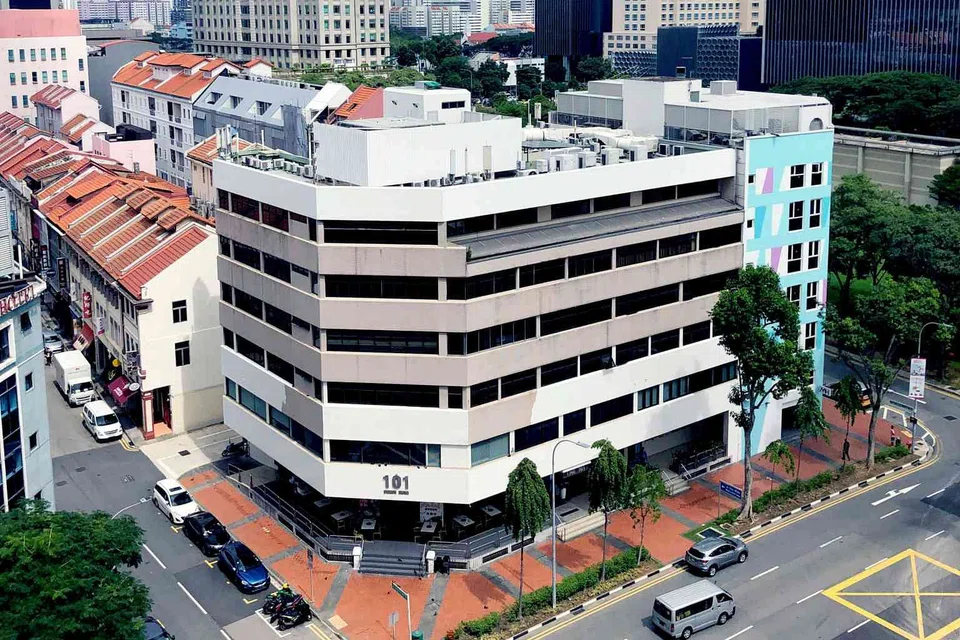
This was shown in the latest data from Edmund Tie Research, which showed that a seller who scooped up a unit at The 101 on Beach Road after the Asian Financial Crisis found that the move paid off.
The transacted price when the property was sold last month was roughly four times the original investment as the property changed hands for S$1.65 million (S$1,597 psf).
Edmund Tie Research studied caveats for non-landed private homes with a prior purchase history that were transacted in the month of December. These were then ranked as the top five profit- and loss-making deals, both by percentage and by quantum.
The seller - who had listed a HDB address at the time of the purchase in April 1999 - bought the 1,033 square foot (sq ft) unit on the sixth floor of the 999-year leasehold development for S$416,000 (S$403 psf); this translates to a profit of about S$1.23 million or nearly 300 per cent. Based on the holding period of nearly 22 years, this works out to an annualised profit of 6.6 per cent.
Completed in 1986, the property is near Bugis MRT station and malls such as Bugis Junction.
However, another seller found their timing was not as fortuitous, racking up the highest loss-making transaction by percentage last month for a freehold apartment at Reignwood Hamilton Scotts in District 9. The unit was purchased in June 2013 just before the introduction of the total debt servicing ration (TDSR), which put the brakes on the property market as it was gaining momentum.
The 2,756 sq ft unit on the 24th floor was bought for S$13.78 million (S$5,000 psf) and sold after seven-and-a-half years for some S$7.19 million (S$2,608 psf) - a loss of nearly 48 per cent or an annualised loss of 8.3 per cent. Situated along Scotts Road, Reignwood Hamilton Scotts was completed in 2012 and is within walking distance from Newton MRT station and not far from Singapore's iconic shopping belt, Orchard Road.
Incidentally, the unit transacted was both the biggest loss-making transaction by percentage and by quantum in December, given the sizeable S$6.6 million loss sustained.
The other leading loss-making transactions by quantum in December ranged from about S$877,000 to S$1.42 million, making them comparatively smaller.
To Edmund Tie & Company's senior director of research and consulting, Lam Chern Woon, the transactions in December indicate that - contrary to the popular maxim - there is more at play sometimes than simply location. "The loss-making transactions in December were concentrated in the Core Central Region," said Mr Lam.
"This suggests that the adage 'location, location, location' may not always hold true, as even prime properties are not immune from capital losses due to unfavourable entry or exit timings."
"A rising tide lifts all boats, and catching the property cycle is arguably more important than fretting over the 'right' location for property investments."
Meanwhile, the sale of a 2,874 sq ft apartment at the freehold Four Seasons Park in District 10 earned top billing as the biggest profit-maker by quantum in December as the seller walked away with a handsome profit nearly equal to the original purchase price. Four Seasons Park, which is situated on Cuscaden Walk, was completed in 1994.
The seller acquired the unit on the 27th floor in October 2004 for nearly S$4.14 million (S$1,440 psf) and sold it for S$8 million (S$2,784 psf), or a profit of S$3.86 million. The annualised profit was 4.2 per cent, given the holding period of over 16 years.
In fact, the data showed that the top five transactions by quantum last month were held for a period of 15 years or more, and four of the five homes were freehold in tenure. "All the properties were purchased during a favourable stage of the property cycle, during 2004/5 or in 1999," Mr Lam pointed out.
Separately, Mr Lam also looked at the share of loss-making transactions for both landed and non-landed properties for the whole of 2020. In December, the overall proportion of loss-making transactions fell to 15 per cent from 17.1 per cent in November.
Zooming in on the non-landed segment, the proportion of loss-making deals also retreated to 16.1 per cent in December from 18.4 per cent in November.
For the full year, the overall share of loss-making transactions worked out to 16.8 per cent, up from 14.3 per cent in 2019.
Meanwhile, for the non-landed segment alone, the proportion jumped to 17.8 per cent in 2020 from 14.6 per cent in 2019, suggesting "a higher level of Covid-induced distress in this segment", said Mr Lam.
Nonetheless, he added that the level of distress could improve marginally in the coming months, on the back of the improving outlook for property as well as a pick-up of resale volumes and pricing.