

The trends dominating the luxury real estate market in 2026
Millennials and Gen Xers are driving the shift
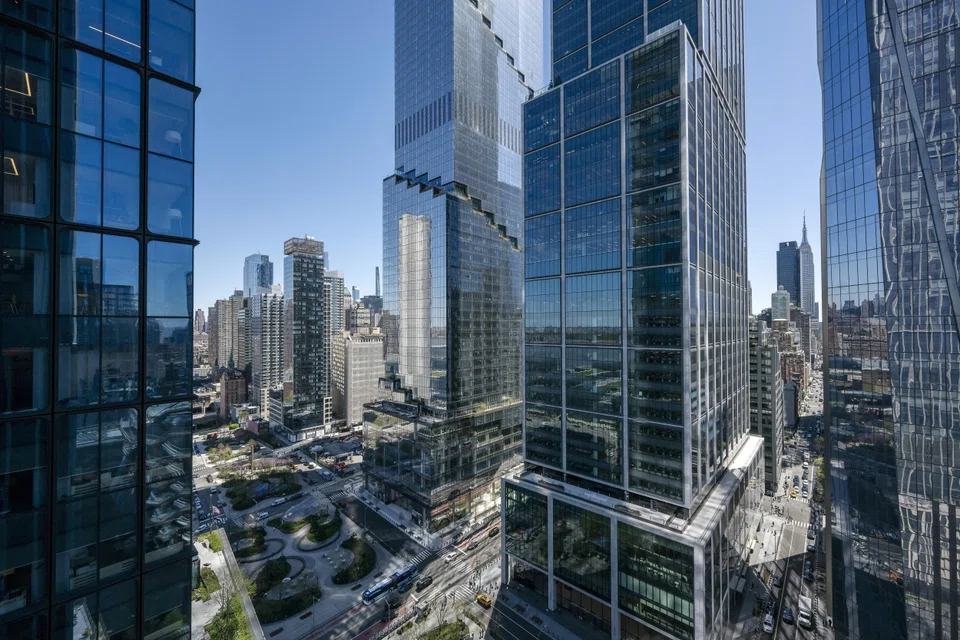
[NEW YORK] The rich are increasingly looking for properties that can accommodate extended families, according to the 2026 Luxury Outlook report by Sotheby’s International Realty.
Millennials and Gen Xers are driving the shift as they search for homes that work for both young children and ageing parents.
Bradley Nelson, the company’s chief marketing officer, spearheaded the report. He says nearly one in five purchases in the US is made by buyers who plan to live with relatives beyond their immediate family, including grandparents who might help foot the bill.
Nelson says wealthy buyers are prioritising features like guesthouses and fully detached apartments in their searches. In cities like New York and Miami, there’s demand for adjoining apartments that can be combined to create multigenerational spaces. But the trend goes beyond renovations, Nelson says, and is increasingly shaping what architects and developers are creating in new properties.
This includes an increase in multiple primary bedroom suites. Beyond private bathrooms, these primary bedrooms are also increasingly designed with small sitting rooms or office areas for privacy away from the rest of the family.
“These little details create a sense of equals across multiple generations that have chosen to purchase a property together,” Nelson said.
Not all of this is driven by baby boomer largesse. John Young, a global real estate adviser with California-based Golden Gate Sotheby’s International Realty, says in the report that he’s seen this multigenerational living trend among clients in Palo Alto and Silicon Valley.
“They perhaps have small children, and they’re in a position to give a better life to their parents, who got them where they are,” he wrote.
Multigenerational living takes on different forms. For some families, it is the full-time sharing of communal space to help with child care or elder care. For others, it involves sharing a vacation home for a few weeks each year – a ski lodge in Aspen, Colorado, or a beach house in the Hamptons of New York’s Long Island where the family gathers during summer.
Nelson says this shift is taking place as the wealthy own more high-end properties in different parts of the world. In 2025 only 51 per cent of homebuyers in the luxury market bought a home as their primary residence, according to the report. “Properties are less about singular decisions and more about the overall portfolio,” he said.
Here are three other trends highlighted by the Sotheby’s International Realty 2026 Luxury Outlook:
Privacy is paramount
According to the report, the top concerns for wealthy homebuyers are privacy and security – even as crime has declined in many markets. In the US, home burglaries have fallen 68 per cent over the past three decades, according to FBI data. Still, global spending on smart-home security is projected to reach US$39 billion by 2029, according to a July 2025 report by market research firm Statista.
Nick Damianos, global real estate adviser with Bahamas Sotheby’s International Realty, says in the report that privacy concerns can complicate even seemingly ideal properties, such as private island retreats.
“Celebrities often feel safe on islands, because they are some of the only places in the world where they can be sure they’re not going to be bothered by anyone,” Damianos wrote. “But an island can be more difficult to secure than a house in a gated community.”
New York is still New York
“There is long-term confidence in the city of New York,” Nelson said, adding that the sales velocity he saw in 2025 has been quite robust, despite any noise about an exodus of wealthy residents following the election of democratic socialist mayor Zohran Mamdani. (Luxury apartment sales actually climbed after his election win.)
Nelson cites stricter return-to-office policies at major employers, along with what he describes as “seismic investment” in commercial real estate, such as JPMorgan Chase’s US$4 billion new office.
High-end deals are also getting done. Nelson points to a West Village penthouse that sold for US$87.5 million – expected to close around 2027 after construction finishes – as evidence of renewed confidence in the city. The sale is expected to set a record for Lower Manhattan.
“I’m a big believer to never bet against New York,” he added.
A two-tier housing market
The report suggests that agents selling homes priced at US$10 million and above are the most optimistic, with the very top end outperforming the broader housing sector. The middle of the market looks murkier. This comes as the chief executive officer of listings platform Zillow is expecting a slow year for US housing.
Wealthy buyers are less exposed to macroeconomic factors, said Mark Zandi, chief economist at Moody’s Analytics, who’s quoted in the Sotheby’s report. “At the lower end of the luxury market spectrum, homebuyers are a little more sensitive to their overall net worth and the stock market,” according to Zandi.
Still, the fundamental financials of the luxury consumer remain strong, Nelson said: “One of the references we cite is an earnings call from Delta Airlines. They were talking about how they’re reprogramming the planes to have more premium inventory.”
It’s similar to how the front of the planes are filling up faster than economy seats – luxury real estate is also in more demand, he says. BLOOMBERG
Decoding Asia newsletter: your guide to navigating Asia in a new global order. Sign up here to get Decoding Asia newsletter. Delivered to your inbox. Free.
Share with us your feedback on BT's products and services
TRENDING NOW

Government to bring forward raising of retirement age, give employers more financial support to create flexi-load jobs

If Europe goes to war, the fallout will be felt in East Asia
Former minister Maliki Osman, Revolut chairman join Asia Gulf Holdings advisory board

Small nuclear reactors could boost the Asean Power Grid: GE Vernova executive

