

Two Park Nova units sold in January at near-record prices, one penthouse at S$6,593 psf
The two freehold units are being bought by a foreigner and a permanent resident, URA’s Realis database indicates

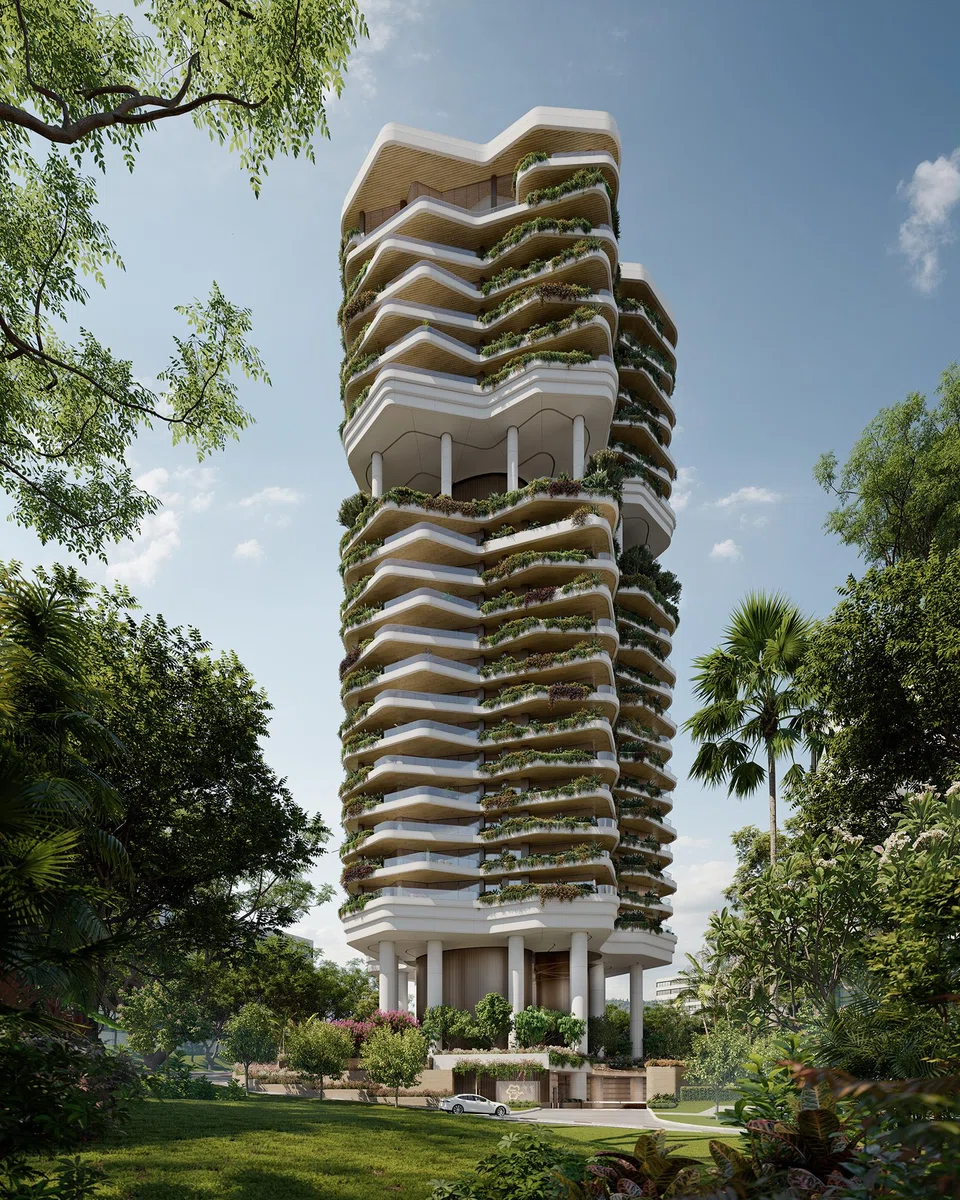
TWO recent transactions at Hong Kong developer Shun Tak’s Park Nova project in Singapore have surfaced at near-record-high levels, caveats data showed. One unit sold at S$6,593 per square foot (psf), the second-highest psf price ever recorded in the market.
The two Park Nova sales, both done in January 2025, stood out amid the slump that has permeated the prime residential market since sharp hikes in stamp duty in April 2023 kept wealthy foreign investors at bay.
The data from the Urban Redevelopment Authority’s (URA) Realis database indicates that the two freehold units were bought by a foreigner and a permanent resident (PR). Both deals were new sale transactions – that is, sold by the developer.
One 20th-floor penthouse unit transacted on Jan 21 at S$6,593 psf, or S$38.9 million, for the 5,899-square-foot (sq ft) apartment. The other unit, a 2,906 sq ft apartment on the 19th floor, was sold for S$5,708 psf on Jan 17 at S$16.6 million.
The recent Park Nova sales were also done at markedly higher levels than the rest of the luxury condominium’s sales. Located along Tomlinson Road, the 54-unit freehold condo recorded a median price of S$4,979 psf when it first launched in May 2021.
Prior to the transaction this month, the highest transaction price on a psf basis was S$5,784 psf for a 4,499 sq ft unit at S$26 million in May 2021.
Caveats data showed that the median price of units in the Orchard planning area, where Park Nova is located, was S$2,906 psf in the past six months.
PRs buying their first residential property in Singapore pay 5 per cent Additional Buyer’s Stamp Duty (ABSD) on their purchase. A second property purchase is subject to 30 per cent ABSD, while 35 per cent ABSD is levied on the third and subsequent property purchases.
In comparison, non-PR foreigners face 60 per cent ABSD on any residential property purchase, a rate that was doubled from 30 per cent previously.
The highest psf price mark was chalked up by the sale of a unit at The Marq on Paterson Hill in November 2011. The 20th-floor unit, 3,089 sq ft in size, was sold for S$20.5 million, or S$6,650 psf.
Only seven private residential sales have breached the S$6,000 psf ceiling, according to the URA’s Realis database, which dates back to 1995.
Singapore’s luxury home market has been subdued since the government doubled ABSD rates for foreigners in 2023. Demand from foreigners – who typically account for a larger proportion of prime residential sales – evaporated as a result, and has yet to fully recover.
According to a Knight Frank market report, there were just 80 prime non-landed home transactions totalling S$573.7 million in the second half of 2024, down 27.1 per cent from S$787.4 million recorded in the previous half-year. Prices averaged at S$2,237 psf.
For the whole of 2024, there were 184 of such home sales amounting to S$1.4 billion, a 22.1 per cent drop from 2023’s S$1.7 billion. This was the lowest number of prime non-landed transactions since Knight Frank’s tracking of such properties began in 2009. In Knight Frank’s analysis, prime non-landed homes refer to those with a floor area of at least 2,500 sq ft in Districts 1, 2, 4, 9, 10 and 11.
Savills Singapore executive director of research and consultancy Alan Cheong reckons the sale of the two Park Nova units is not necessarily an indicator of the return of foreign wealth.
“One swallow does not a summer make,” said Cheong. The ABSD rate of 60 per cent for foreign buyers remains “excessive” and will continue to deter most of them from entering the market, he said.
Even if ABSD rates were lowered to 30 per cent, it may not move the needle much, but it will “send a message that the government is listening” while giving both developers and buyers hope, Cheong added.
In its report issued Jan 8, Knight Frank expects the prime non-landed market to remain soft in 2025, with prices falling by 1 per cent or inching up 2 per cent, unless the “more prohibitive measures are eased”.
“Foreign professionals and expatriates who have turned to the leasing market, due to the prohibitive ABSD, are unlikely to return to the buying market any time soon, especially with rents no longer rising and in some instances easing,” it added.
Demand for prime non-landed homes is therefore more likely to stem from local homebuyers scouting for an ideal home or an investment property, said Knight Frank.
TRENDING NOW

Singapore updates renewable energy certificate standard to tackle greenwashing; unveils new solar efforts

Director of PR firm sacked for secretly recording internal meeting loses wrongful dismissal claim

Indonesia says gas export cuts to Singapore remain within contract terms

Time for MAS, SGX to scrutinise issue managers

