UAE developers rush to reassure investors wary of Iran war risk
Their moves reflect a rapid shift in sentiment; brokers say many buyers are adopting a wait-and-see approach
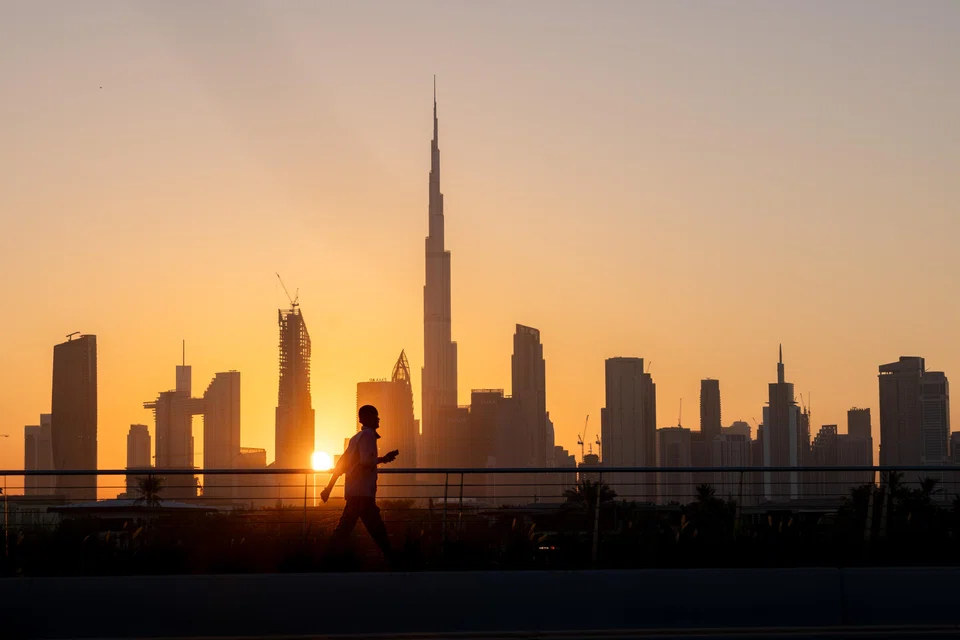
[DUBAI] A number of developers in the United Arab Emirates (UAE) have held calls with investors to allay concerns over a potential liquidity crunch, a stark reversal of fortunes as the Iran war approaches the one-month mark.
Several developers, including Binghatti Holding and Omniyat Holdings, spoke with investors this week as their bonds slipped into distressed territory following the conflict.
This was according to sources familiar with the matter, who asked not to be identified discussing confidential information.
Other developers including Sobha Realty and Arada Developments have held similar calls since the war began, sources said. Debt issued by all four companies is rated below investment grade by major ratings firms, according to data compiled by Bloomberg.
Earlier this month, Emaar Properties – the developer of the Burj Khalifa, the world’s tallest tower – also reached out to investors, some of the sources said. The firm’s shares are down about 28 per cent since the conflict began, underperforming Dubai’s benchmark, which has fallen around 17 per cent.
The moves reflect a rapid shift in sentiment. Dubai’s real estate market is coming off a record rally driven by ultra-wealthy buyers who snapped up luxury villas and penthouses, pushing the emirate ahead of New York and Hong Kong in sales of homes priced above US$10 million.
But the UAE has borne the brunt of retaliation from Teheran since the US-Israeli war on Iran began on Feb 28, with energy infrastructure, airports and residential and commercial buildings hit by projectiles and debris. Even so, much of the country remains operational: businesses are open, many offices have shifted to remote work, and investors continue to pursue global deals.
Still, brokers have told Bloomberg News that many buyers are adopting a wait-and-see approach. Early signs suggest some are halting plans to purchase properties ahead of construction, or “off plan”.
During the recent calls, several developers presented stress-test scenarios aimed at demonstrating liquidity resilience.




Binghatti, whose call drew more than 300 investors, outlined a worst-case scenario involving a 20 per cent decline in collections and a 30 per cent drop in average selling prices of unsold inventory.
Even under those assumptions, the company projected cash of more than five billion dirhams (S$1.7 billion) by year-end and close to 14 billion dirhams by the end of 2027, the sources said. The firm added it has seen no delays in customer payments or defaults.
Representatives for Binghatti, which focuses on mid-market housing but has also pushed into luxury projects, including plans for a Mercedes-branded tower and one of the world’s tallest residential buildings, declined to comment.
Omniyat also presented downside scenarios, modelling declines of more than 20 per cent in property prices alongside higher default rates, while maintaining that its liquidity position would remain intact, according to sources familiar with the matter. The firm declined to comment.
The ultra-luxury developer said in a separate statement on Thursday that it has a “strong liquidity position” of more than US$1.4 billion in cash and equivalents, including US$726 million of unrestricted corporate liquidity not subject to escrow or regulatory ring-fencing.
The company said that this would fully cover its US$500 million sukuk maturing in 2028 without relying on property sales, buyer collections, refinancing or additional capital markets activity.
Some of Binghatti’s and Omniyat’s sukuk have slipped back below the distressed threshold, trading with a yield spread of over 1,000 basis points above the risk-free rate, after rebounding on Wednesday (Mar 25).
Ratings agencies have flagged geopolitical risks to demand and the potential for higher construction costs, with Fitch Ratings placing Binghatti, Omniyat and, more recently, Arada on watch for possible downgrades.
Representatives for the Arada, co-owned by the son of Saudi Arabian Prince Alwaleed bin Talal and a member of Sharjah’s royal family, declined to comment on the call. The firm previously told Bloomberg News it had taken proactive steps to reinforce liquidity.
A spokesperson for Sobha Realty confirmed the firm has held multiple investor calls, where it assured investors it has “a strong liquidity position” and that liquidity preservation remains its top priority. The developer, owned by an Indian tycoon, has also been looking to expand into the US in recent months.
Before the war, property companies had been on a borrowing spree as they raced to secure sites for residential projects in Dubai and Abu Dhabi.
Real estate bond issuance in the UAE reached nearly US$7 billion in 2025, more than double the 2024 total, which was itself a record. That has created a growing wall of maturities, with about US$8 billion due by 2030. BLOOMBERG
Decoding Asia newsletter: your guide to navigating Asia in a new global order. Sign up here to get Decoding Asia newsletter. Delivered to your inbox. Free.
Share with us your feedback on BT's products and services