UK house prices rise in April despite Iran war headwinds: Nationwide
They go up 0.4% after a 0.9% increase in March, in contrast to economists’ expectations in a poll for a 0.3% drop
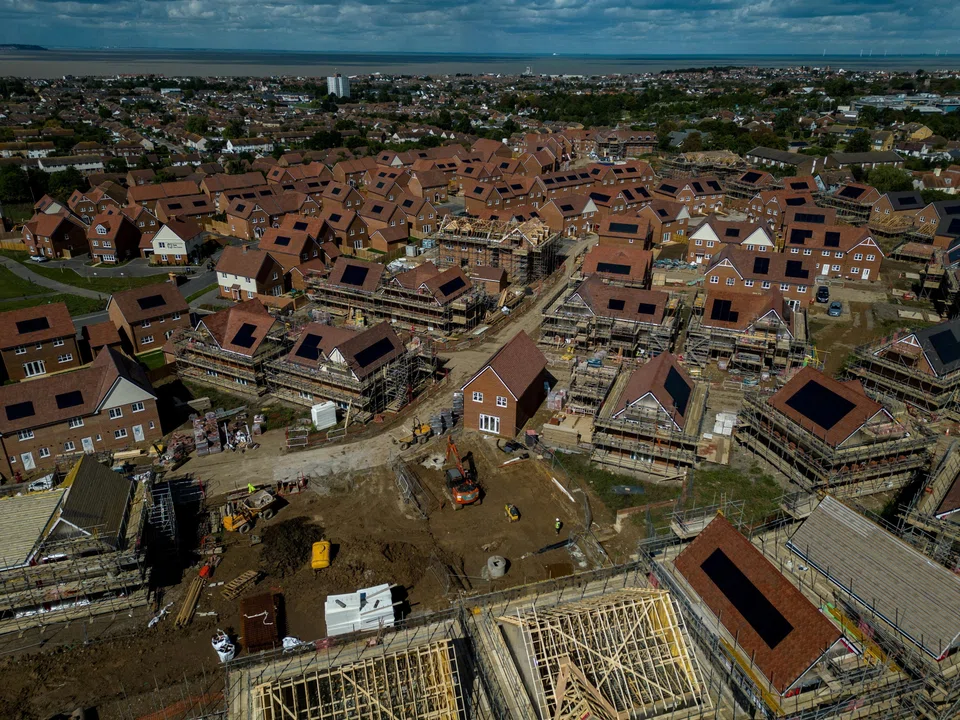
[LONDON] British house prices unexpectedly rose for a fourth month in a row in April, despite headwinds to consumer confidence from conflict in the Middle East, mortgage lender Nationwide Building Society said on Friday (May 1).
House prices rose 0.4 per cent in April after a 0.9 per cent increase in March, in contrast to economists’ expectations in a Reuters poll for a 0.3 per cent drop. Prices were 3 per cent higher than a year earlier, faster than the expected 2.2 per cent growth.
“Despite the uncertainty caused by developments in the Middle East and the subsequent rise in energy prices, the UK housing market has continued to regain momentum following the slowdown recorded around the turn of the year,” Nationwide chief economist Robert Gardner said. “This is somewhat surprising given that indicators of consumer confidence have weakened noticeably.”
Financing costs driving British mortgage rates have risen since the start of the Iran war to their highest since late 2024 and consumer sentiment has fallen to its lowest since 2023, according to GfK’s long-running survey.
Property surveyors reported weaker buyer demand in March and the broadest decline in house prices since January 2024.
Gardner noted that demand for now appeared to be supported by strong household finances – debt levels are the lowest relative to income in around 20 years – and by household income growth having outpaced house prices in recent years.

Rival mortgage lender Halifax had reported a 0.5 per cent fall in house prices in March. REUTERS
Decoding Asia newsletter: your guide to navigating Asia in a new global order. Sign up here to get Decoding Asia newsletter. Delivered to your inbox. Free.
Share with us your feedback on BT's products and services