

Unbound by the rules of business
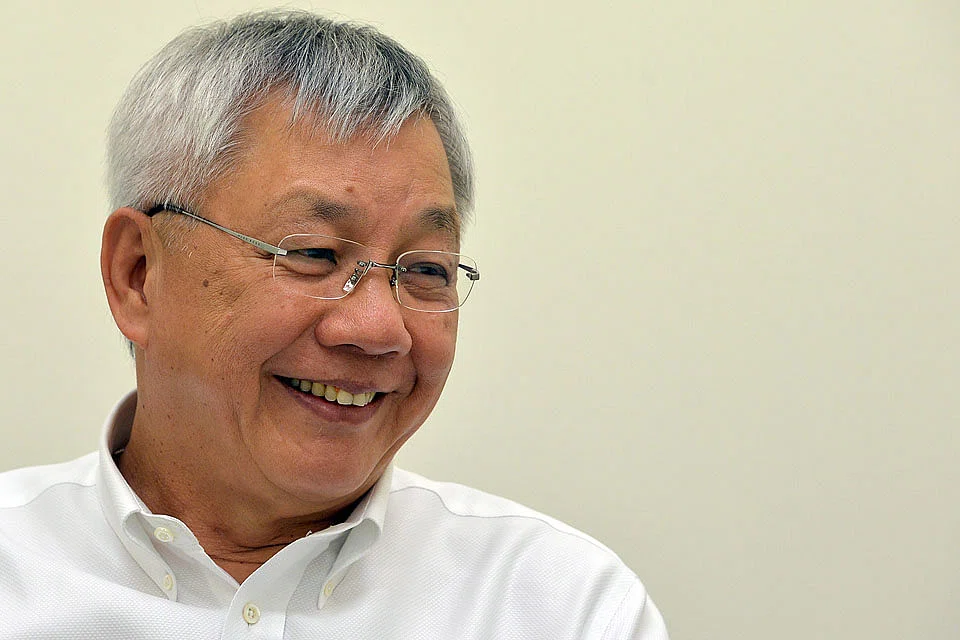
Edward Ong says his 20-year journey of struggles and soul-searching has moulded his character
Singapore
TO follow his calling in life, Singaporean businessman Edward Ong said he has made business decisions that are often unconventional and against the grain of logic. In 1994, he discontinued the construction business under his family-run OCK Group and ventured into hospitality, converting a swamp land in Malaysia's Sabah state into Sutera Harbour Resort. This ran counter to the macroeconomic conditions back then - Sabah's economy was growing at a much slower pace than Malaysia's more developed west coast.
Just as the project was about to be completed, the Asian financial crisis sent the ringgit on a dive, triggering hefty currency losses in one day as the resort's borrowings were in US dollars, and sending a potential investor scurrying away.
Mr Ong was left "carrying the baby" and running the resort for the next 15 years. The payoff came only last year when he finally sold control of the resort group to Singapore's business tycoon Sam Goi for RM700 million.
His next move was to build a similar resort in Timor-Leste in 2008, also with the hope of stimulating foreign investments in the country torn by decades of civil war and ethnic hatred. But after several starts and stops, six years passed without even a groundbreaking. Meanwhile, other potential investors in Timor-Leste have exited.
Asked why he is still hanging on there, the staunch Christian said: "God didn't ask me to move."
In a recent interview with The Business Times, Mr Ong described his past 20-year journey as one filled with struggles and soul-searching. But the journey moulded his character, turning him from someone who "used to be hot-tempered, self-centred and arrogant" to one who has "the peace of God".
Banks' support
"I've learnt that you can lose everything but you cannot lose your integrity," said Mr Ong, who initially lost his seed capital in the Sutera Harbour project.
When Sutera Harbour Resort went broke, the syndicated loan did not come with personal debentures or guarantees. Instead of walking away as advised by his peers, Mr Ong stayed on to make sure the resort was well-run so that it could fetch a good price from investors.
Fortunately, the banks remained supportive of Mr Ong to continue running the resort. During the tough period, Sutera Harbour Resort went on to win hospitality awards every year.
One of the two five-star hotels in the resort where Mr Goi stayed impressed him, according to Mr Ong, such that he closed the deal within just three months to acquire a 77.5 per cent stake in the resort group through his listed company GSH Corp and investment vehicle TYJ Group.
Mr Ong retained the balance stake and a board seat in the resort group. The syndicated loan, which ballooned from the original RM760 million to RM2.3 billion with compound interest, was finally settled with the banks taking a haircut.
Separately, Mr Ong owns the concession rights to run Sutera Sanctuary Lodges since 2003, which he said "is still making good profits". The tourist attraction comprises the Unesco World Heritage site Kinabalu Park, two resorts, a hot spring and nature reserve and a resthouse.
Mr Ong remains hopeful that his proposed Timor-Leste project will eventually take off, providing jobs to some 1,200 Timorese upon completion.
"If I complete the hotel by 2017, it will help the nation in many ways because it will be the only five-star hotel there. It will create a lot of attention for other investments to come in," Mr Ong said.
One major roadblock has been the lack of a master plan for the country to have roads, utilities and sewerage systems that meet required standards. It also took longer than expected to remove three sewerage ponds from the proposed resort site.
But in retrospect, the delay turned out to a blessing in disguise, Mr Ong said. Under a recent infrastructure plan by the government, a highway would cut into the site and it would have cost the country more money to circumvent the site.
In his business considerations, Mr Ong conceded that he chooses to turn away from mainstream financial assumptions lest he gets paralysed in decision-making. But he recognised that he could be so single-minded only by bringing in like-minded people and being the sole proprietor of his businesses.
"I told the Timor-Leste Prime Minister, His Excellency Gusmao, that if I want to make money, I will build a three-star hotel with US$10 million and within five years, I can earn back the money. But a three-star hotel does not bring in investors, entrepreneurs and CEOs," he said.
"Unless you are able to get entrepreneurs to come in and make the place to be one that is secure for investors to come in, you are not going to have a major change," he added. "For Sutera Harbour, we did just that. Investors think that if a person from Singapore can bring so much money in, it must be deemed safe."
In pioneering investments in new places, there is often not enough data to make projections. Mr Ong said that he would not have anticipated the growth in Sabah, which now has over 170 incoming international flights a week, up from only 20 flights in 1996.
Mr Ong was conferred Datukship in 2001. Last year, he became the first Asian to win the Entrepreneurial Leader of the Year Award sponsored by the Entrepreneurial Leaders Organization and the World Evangelical Alliance.
For Mr Ong, he felt his reward earlier. He recalled that some years back, an employee at Sutera Harbour Resort earning RM600 a month returned some RM49,000 of cash that he had found to a guest. "I think that is worth more than 2 million dollars I make in profits," he said. "So then, how do you measure your profits?"
TRENDING NOW

Two Singapore-listed palm oil firms named in Greenpeace report on Indonesian plantation fires

Singapore Airlines flight returns to San Francisco after ‘unruly’ passenger incident

Singapore looking into which companies responsible for haze-causing fires: PM Wong

Deluge IPO 3.86 times subscribed ahead of SGX debut

