

Uncertain times in Singapore’s property markets

SINCE the government announced its intention to pilot a new category of rental housing, two sites incorporating “long-stay” serviced apartments have been put up for sale. Developers have been, shall we say, less than enthusiastic.
The first tender, for a piece of land in a prime residential enclave close to Orchard Road, drew one bid. The second tender, for a site in a suburban-ish location, saw no interest at all.
The serviced apartment component, designed to address a perceived need for “interim” rental housing, offers an element of recurring income for developers. But in this economy, with new home sales slowing to a crawl, financing costs still high, and fresh supply of state land sites yet to be released in coming months, it’s not hard to see why developers chose to stay away.
Leslie Yee makes a case for rolling back the serviced apartment programme, or tweaking terms and conditions such that developers can be motivated to take on such projects. Perhaps the Additional Buyer’s Stamp Duty or ABSD rules on developers selling their housing inventory can be relaxed to facilitate developers holding some stock in newly completed developments for lease. Serviced apartments could also be decoupled from pure housing projects so that lines can be more clearly drawn.
A third long-stay serviced apartment site is up for tender in September. To be offered in the one-north area where many expatriate professionals work, the project is distinct from the earlier two sites. It is meant solely for serviced apartments (with a small commercial element) with no housing mixed in. The site is also being sold with a 60-year lease, versus the 99-year lease put on other government land sale sites. The market will be watching to see if developers have an appetite for such projects.
The numbers are in, and point to private home prices rising 1.1 per cent in Q2, slowing from their 1.4 per cent increase in Q1 and 2.8 per cent spurt in Q4 of 2023. With new home sales dwindling in recent quarters, the price index was skewed towards transactions in the secondary market which dominated overall sales in the quarter. Buyers are clearly resisting higher new launch prices, especially with mortgage rates still where they are.
It’s also possible that some demand is decanting into the public housing market. Households priced out of the private property market who don’t qualify for new Build-To-Order flats could be looking in the HDB resale market. Indeed, HDB resale prices rose in Q2 at the fastest quarterly pace since the end of 2022. The spike in both prices and volume was driven by strong demand coupled with tightness in market supply, HDB said. Analysts also pointed to flat buyers flocking to the resale market, ahead of a coming reclassification of BTO flats that put new curbs on the resale of the best-located new flats.
The business of business parks
The outlook for Singapore’s older business parks, which opened in the ’80s and ’90s, appears grim. Vacancies have been rising, and some asset owners have sold properties, are exploring divestments, or are having to spend on renewing ageing buildings. One immediate concern is whether new space in the pipeline can be absorbed, given a coming spike in supply and a widening lag in take-up.
Another question arising is whether better uses can be found for half-empty buildings if industries that had previously supported occupancy are not growing. Samuel Oh takes a closer look at the business park sector.
Some of the available space at Changi Business Park will be taken up by Singapore Airlines, which plans to house some of its functions at the Changi estate. The move is part of a multi-year plan by SIA to relocate its corporate headquarters from Airline House to a new corporate hub in Upper Changi.
Unlocking value
Like many Singapore Reits and listed property groups, Far East Hospitality Trust has been trading well below its net asset value. But one of its properties, sitting on a sleepy stretch of the Orchard Road belt, could well catalyse the counter’s price. Far East’s Orchard Rendezvous Hotel may be ripe for redevelopment.
Kalpana Rashiwala explores some ideas arising from the market chatter that the Ng family behind FEHT is exploring the possibility of teaming up with the family of tycoon Sukanto Tanoto, which bought the Tanglin Shopping Centre site next door, for a joint redevelopment of the two sites.
Meanwhile, High Street Centre has received an offer of under S$700 million, more than 6 per cent below its reserve price of S$748 million, Ry-Anne Lim reports. Owners are in the process of getting the 80 per cent mandate required to cut the reserve price.
In other markets
At the top of the UK market - the luxury segment in London - developers are offering UHNW buyers the VVIP treatment to draw money back into a market where sales have dropped. This involves the dishing out of upper crust amenities such as access to new private members’ clubs, Botox bookings (and delivery of weight-loss drugs) via an app, as well as town car driver services to ferry trust-fund kids to private schools. May sales of properties exceeding £5 million (S$8.6 million) were down by more than 20 per cent on an annual basis, in the slowest May since 2017, excluding the pandemic period. London mansions are being discounted by as much as 30 per cent.
In the broader market, UK home prices rose for a second month in June, in signs the market is stabilising after last year’s dip. Prices are now 1.5 per cent higher than a year ago, and interest rates at a 16-year high are eroding affordability.
Does it feel like everyone is travelling to Japan right now? Investors have been piling in too. With both tourism and investment flows fuelled by yen bargains, Japan’s land prices are rising at the fastest pace since 2010. Average land prices climbed 2.3 per cent last year, rising for the third straight year after a 1.5 per cent increase in 2022 and a 0.5 per cent rise in 2021.
Down Under, Australian home prices rose in June for a seventeenth straight month as tight supply outweighed interest rate pressures. Nationwide, home prices climbed 0.7 per cent in June from May, when it gained 0.8 per cent. Prices are up 8 per cent on a year earlier. Prices rose the most in Perth (by 2 per cent), while in the bellwether market Sydney, home values touched a new record. The median house price in Sydney is now A$1.2 million (S$1.08 million), up 0.5 per cent from May.
Are things looking up for China’s housing market, which appears to be slowly emerging from its slump following government rescue efforts? The value of new home sales from the 100 biggest real estate companies is down 17 per cent in June from a year earlier, compared with a 34 per cent decline in May.
TRENDING NOW

AEM tumbles 11% along with Singapore and regional chip peers following Alphabet’s record plunge

If Europe goes to war, the fallout will be felt in East Asia
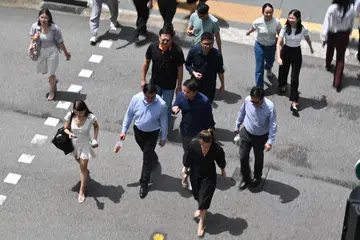
Singapore Q3 retrenchments rise to 4,800; resident unemployment edges up to 3%: flash data
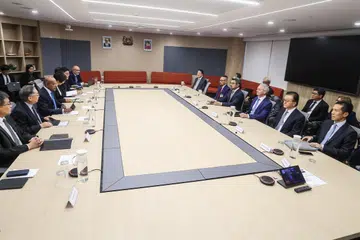
FTI Consulting, WongPartnership among seven members on specialist panel for haze probes

