

An unlikely winner in the office real estate slump? A dance troupe.
Dancers need to work in person, a fact that made the Paul Taylor Dance Company attractive to potential landlords
 Add BT as a preferred source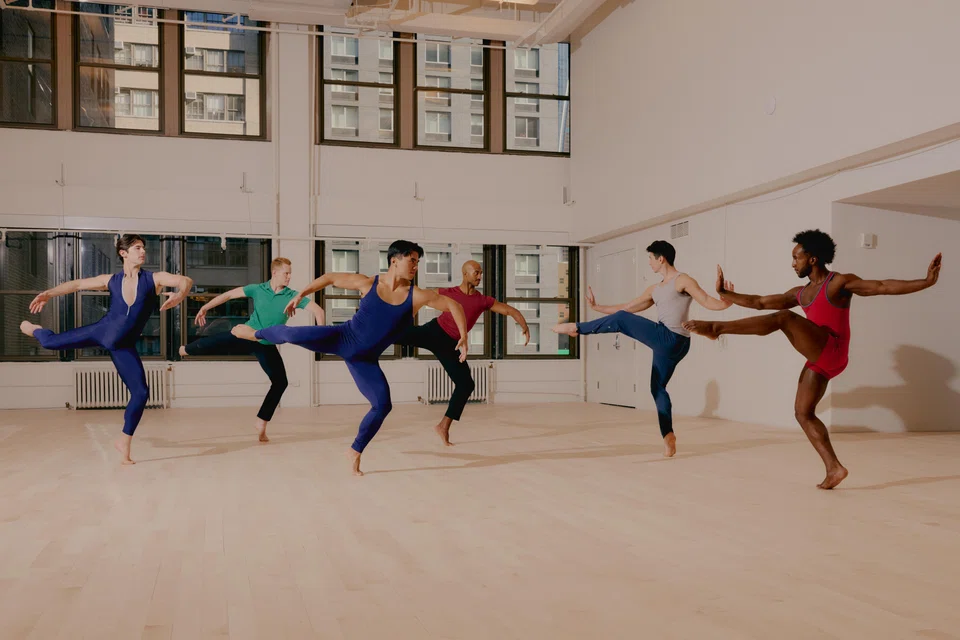
LIKELY you’ve heard about the proliferation of empty urban office space since the pandemic and the rise in remote and hybrid work. But if you’ve given any thought to who might fill some of that space, you’ve probably overlooked a promising group: dancers.
Dancers need to work in person, a fact that made the Paul Taylor Dance Company attractive to potential landlords. At a time when funding for dance has been shrinking, the company has recently expanded into new headquarters in midtown Manhattan – just in time for final rehearsals before its annual season at Lincoln Center (Nov 5-24).
“They said they needed tenants who would show up to work,” John Tomlinson, executive director of the Paul Taylor Dance Foundation, said of George Comfort & Sons, the real estate management and investment firm that owns the building.
The space, two floors of an office building on West 38th Street, close to the Theater District, has been renovated to include two large double-height studios, along with classrooms, changing rooms and offices. It is nearly three times the size of the headquarters on Grand Street that the company has leased on the Lower East Side since 2011, a site it will retain.
A move this big might seem surprising in the current funding climate. But for this company, long one of the city’s most prominent dance institutions, expansion was, in a sense, a necessity. Making it happen required some good fortune, including the discovery of a quirk in real estate law.
With the expansion, the Taylor organisation joins the very short list of dance companies with substantial real estate in one of the world’s most expensive markets: Alvin Ailey American Dance Theatre, Mark Morris Dance Group, Dance Theatre of Harlem.
It’s “an upgrade, a jolt, an adrenaline shot to the system,” said Michael Novak, the company’s artistic director. Emerging from the pandemic – a crisis that came on the heels of the death of the company’s founder, Paul Taylor, in 2018 – the company, he said, asked itself a question: “Do we maintain our status quo or do we double down on growth and the future?
“We’re doubling down.”
Tomlinson said that “even before Paul died, we had been talking about how the school needed to be bigger because it’s the only growth path.”

Foundations, Tomlinson said, have been shifting their money to social justice causes, at the same time that government grants and corporate sponsorship have decreased. Every expense involved in touring has gone up, and theatres, also struggling, don’t have more money to spend. “The gap between what they pay and what we are spending has gotten tighter and tighter,” Tomlinson said. “Now we pay to tour.”
The Taylor company’s annual home season at Lincoln Center is also a money loser, Tomlinson said, especially since the troupe is committed to using live music, by the Orchestra of St Luke’s. Individual donors, including board members, are still a reliable source of funding, and Tomlinson stressed his gratitude for them and the foundations that have stuck by the company. But the only income stream with real potential to increase, and offset the losses, he said, is from the Taylor School.
The company considered several options. Why not build more studios for classes at the Grand Street location? Zoning laws and neighbour tenants got in the way. What about buying a building? Too expensive.
But when the pandemic hit and Tomlinson heard about companies shedding office space, he wondered whether conditions might have become more favourable. Through a chance connection, he found a new broker, Jeffrey Rosenblatt of Lincoln Property, and started a search.
“We were looking all over the place,” Tomlinson said, “and I was making offers and they were not even being looked at, because they were too low.”
Then they discovered 307 W 38th St, and an owner interested in making a deal.
In an email, Peter Duncan, George Comfort’s president and CEO, wrote that the firm felt that “a tenant of this quality” would create “a wonderful new use for the building.”
George Comfort agreed to invest millions in the conversion, which involved tearing out some of the floors to create the double-height spaces and installing fancy fold-down doors that can divide those studios into soundproof sections. (In his new office, Tomlinson keeps a chunk of one of the removed steel girders on his desk as a souvenir.) Novak was all for it, so Tomlinson, armed with spreadsheets, made a case to the Taylor board.
“They saw this was an opportunity for us,” Tomlinson said, noting that the board raised US$5 million in seven months. Now having moved in, the company hopes to raise an additional few million to help cover operating expenses while the school grows.
One reason the deal is advantageous for both parties is a commercial real estate structure called leasehold condominiums. Rather than leasing the two floors, the Taylor company has purchased them as condominiums – but with the payment spread across 30 years, after which ownership will revert to George Comfort. Because the Taylor company, a non-profit organisation, is the nominal owner, it doesn’t pay property taxes. Neither does George Comfort, which means it can lower what it charges.
“Everybody wins,” Tomlinson said. NYTIMES
Decoding Asia newsletter: your guide to navigating Asia in a new global order. Sign up here to get Decoding Asia newsletter. Delivered to your inbox. Free.
Share with us your feedback on BT's products and services
TRENDING NOW

Nvidia will soon face a chip limit, warns Huawei’s top scientist

Cold Storage moves into convenience retail with On The Go, to replace FairPrice at 58 Esso stations

Yeoh Pei Xien: YTL’s third-gen scion with a pastor’s heart

Three Arrows going after founder Zhu Su’s wife for US$40 million from Dubai property sale

