Upgrading lessons from Woh Hup
Singapore
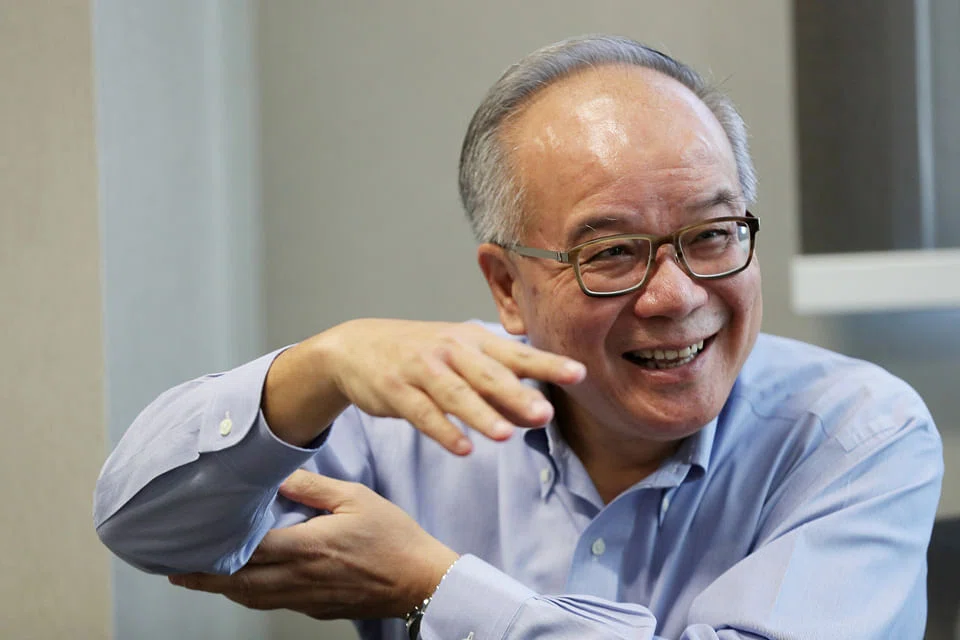
LEARNING takes time, whether it is for a company to internationalise or to adopt productive technologies. For this reason, construction companies need to make provisions for mistakes and a couple of loss-making years, says Eugene Yong, executive director of homegrown building and civil engineering firm Woh Hup.
Amid the government's drive to encourage local construction firms to expand overseas and reduce manpower by building off-site and using planning technologies such as Building Information Modeling (BIM), some builders here have complained that it is hard enough to survive in the challenging climate, much less to deploy more capital for these initiatives.
Mr Yong agrees that indeed, like any other business, construction firms "need to have a certain amount of fat" to go overseas.
In a rare interview for the privately-held firm, he told The Business Times: "The government has been asking us since (year) 2000 to internationalise, but you have to realise when you go to a new market, it is unlikely you will be profitable in your first project. You have to learn from it. You pay to learn."
Woh Hup has done industrial and hospitality projects in India, Sri Lanka and Myanmar. In India, it has a joint venture with homegrown developer and construction firm Lee Kim Tah, which has been its partner for the past decade. A tenth of its yearly turnover of about S$900 million comes from overseas.
One lesson the company has learnt is how important it is to find trustworthy overseas clients who pay on time.
"We have been through a couple of these. We don't want to be debt collectors; we don't want to finish a job and chase after people year after year for the last bit of money," he said.
So when the company first started, it decided to stick with reliable Singapore juggernauts such as Ascendas and Mapletree. The trust goes both ways, he says. The developers also need to trust their contractors to deliver the project, even if the project may not be commercially profitable for the latter.
"You will lose money in some projects; you have to accept some of this as your own mistake. I pay for my mistakes, I learn from my mistakes, but I keep the trust of the owner because he works with me for the two to three years, and he knows that I am doing my best to achieve what he wants and what is good for the project."
It is not a matter of profiting at each other's expense but rather, ensuring that the project succeeds so that everyone benefits. Trust is built and trustworthiness proven over time, he says.
The same goes for adoption of technology. Mr Yong says that investments in new equipment and new training take time to recoup.
It also takes at least one project cycle to test a particular technology on an actual project and decide if it works and can be applied to future projects.
Only after being assured of the technology's usefulness can a construction firm take the plunge to cut its workforce that would be made redundant by the technology.
Even then, it takes time to invest in new hardware and software and to train up all its staff, consultants and subcontractors to pick up the new technology.
For Woh Hup, it needed to adopt BIM to build Reflections at Keppel Bay because of the project's complicated curved architecture. BIM involves using a digital model that draws on a range of data before, during and after construction. Using BIM enabled Woh Hup to measure the building's specific dimensions and fabricate modules from there. Woh Hup found that the technology helped to reduce the number of workers, mistakes made, and rework required, and decided to roll it out to other projects as well.
But this was enforced gradually. "(In today's environment), everything has to be done now, has to be effective now. But sometimes maybe it takes one or two years to do something, so you have to make provisions for it," Mr Yong said.
Perhaps the companies' disapproval of any hasty jumping onto the wagon stems from a composure that comes with age. The 90-year-old company was founded by Yong Yit Lin who started the family business by building garden fences for the British colonial masters.
The younger Mr Yong belongs to the third generation. A registered architect, he said he accepted quite early on that he was not a very good designer, and was better at management, coordination, and anticipating problems.
Woh Hup is behind landmarks such as the Gardens by the Bay conservatory complex, and in joint venture with Obayashi Singapore, it is also the main contractor for the Jewel Changi complex, a S$1.6 billion contract which will connect terminals one, two and three of Changi Airport and the Changi MRT Station.
Its former subsidiary called Singapura Developments also developed the likes of Golden Mile Complex, Katong Shopping Centre, Queensway Shopping Centre, The Arcade, and Balmoral Point, before it was sold to the Kwek family's City Developments, owing to family disagreements.