URA lifts ban on new hotels, hostels and serviced apartments in Boat Quay, Beach Road areas
The government will also pilot schemes in some precincts to test how space can be used to make the city centre more vibrant

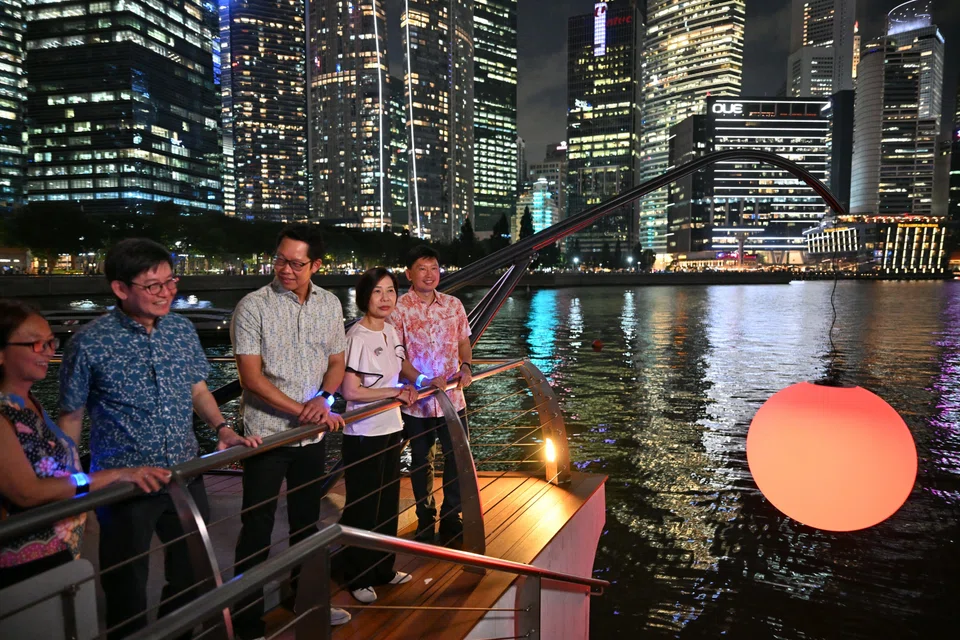
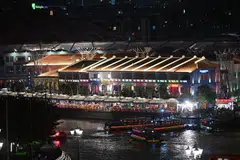
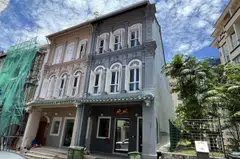
[SINGAPORE] The government is lifting restrictions on new hotels, hostels and serviced apartments in the Upper Circular Road and Beach Road areas, giving property owners and developers greater flexibility to pursue short-term accommodation projects in the two heritage precincts.
Regulatory sandboxes are also in the works, where selected rules on the use of space in certain precincts will be temporarily relaxed to allow new ideas to be tested and refined before being considered for wider implementation.
Speaking at the opening of the annual light festival i Light Singapore on Friday (Jun 5) evening, Minister for National Development Chee Hong Tat noted that the moves were made in response to industry feedback and would allow developers and business owners to provide more diverse offerings to visitors.
The lifting of restrictions in Upper Circular Road in the Boat Quay area and Beach Road would also provide visitors with more accommodation options in the two heritage precincts, with the Singapore River “right at their doorstep”, added the minister.
Under current guidelines, new short-term accommodation uses are generally not permitted in the two areas to avoid an “over-proliferation of such uses”.
The Urban Redevelopment Authority (URA) said that the restrictions help to preserve the two districts’ character as mixed-use neighbourhoods with historic shophouses that are home to restaurants, shops, boutique offices and other lifestyle facilities.
Chee added: “In the same spirit, we are open to making the necessary changes to our rules and processes, to help businesses and partners in other precincts meet evolving needs and enhance the vibrancy and attractiveness of their precincts.”
A pilot scheme of regulatory sandboxes will give businesses and community partners greater flexibility to organise events or activities tailored to the character and needs of their precincts, he noted. “This flexibility will create new opportunities for businesses to innovate and attract more customers, while offering visitors more vibrant and distinctive experiences.”
He cited examples in Australia, where local councils can decide on trading hours and disamenity-management measures in designated precincts to support live entertainment venues and outdoor performances.
He also pointed to London with its “night-time enterprise zones” to facilitate longer business hours and more family-friendly nightlife.
“We will do likewise for certain precincts in Singapore,” said Chee, who visited Sydney and Melbourne in May on a work trip with a delegation from the Ministry of National Development, URA, and the Real Estate Developers’ Association of Singapore.
In a Facebook post wrapping up his trip, the minister shared that the trip was organised “to understand first hand and draw learning points from Australia’s experience in urban planning and rejuvenation”.
The topics explored on the trip included the design of public spaces with a focus on connectivity and accessibility, adaptive reuse of heritage buildings, efforts to rejuvenate nightlife activity, as well as ways to increase residential development in the city centre.
Supporting businesses, enhancing an area’s attractiveness
The government’s latest moves follow last year’s relaxation of nightlife and liquor-trading restrictions in Boat Quay, and come amid a broader push to support businesses and increase vibrancy in the city centre.
Chee noted that the decision to ease nightlife and liquor-trading restrictions was possible because Singapore River One had committed to stepping up private security deployments in the area.
This gave the authorities “confidence to support a livelier, safer night-time environment for all”, he added.
Singapore River One is a private sector-led partnership of property owners and business operators that oversees place management of the Singapore River.
It is the first pilot Business Improvement District (BID) formed in 2017 to help revitalise the area.
Other areas that have piloted the BID programme include Marina Bay, Raffles Place and Tanjong Pagar.
Under the programme, the government provides matching grants to encourage business and property owners to pool resources for stakeholder-led place management efforts aimed at enhancing an area’s vibrancy and attractiveness.
In an interview with the media last August, Chee said that the authorities will be introducing legislation to formalise the BID model and expand to more precincts across Singapore.
URA noted that a more formalised placemaking framework would enable collective ground-up action to plan, fund and implement a shared business plan tailored to the needs of businesses, communities and visitors in an area.
It would also support more sustainable placemaking efforts, “addressing the limitations of the current voluntary model where non-participating members get to ‘free-ride’ on the benefits generated by the efforts and resources invested by participating members”.
Chee added on Friday that, to better shape the BID legislation, the government will launch a public consultation through dialogue sessions and public platforms later this year.
Singapore River One and Raffles Place Alliance – place manager of the Raffles Place area – have also extended their four-year BID term for a second time.
Decoding Asia newsletter: your guide to navigating Asia in a new global order. Sign up here to get Decoding Asia newsletter. Delivered to your inbox. Free.
Copyright SPH Media. All rights reserved.