

US existing home sales unexpectedly increase as mortgage rates decline
Housing inventory increases 4.9% to 1.29 million units from year ago
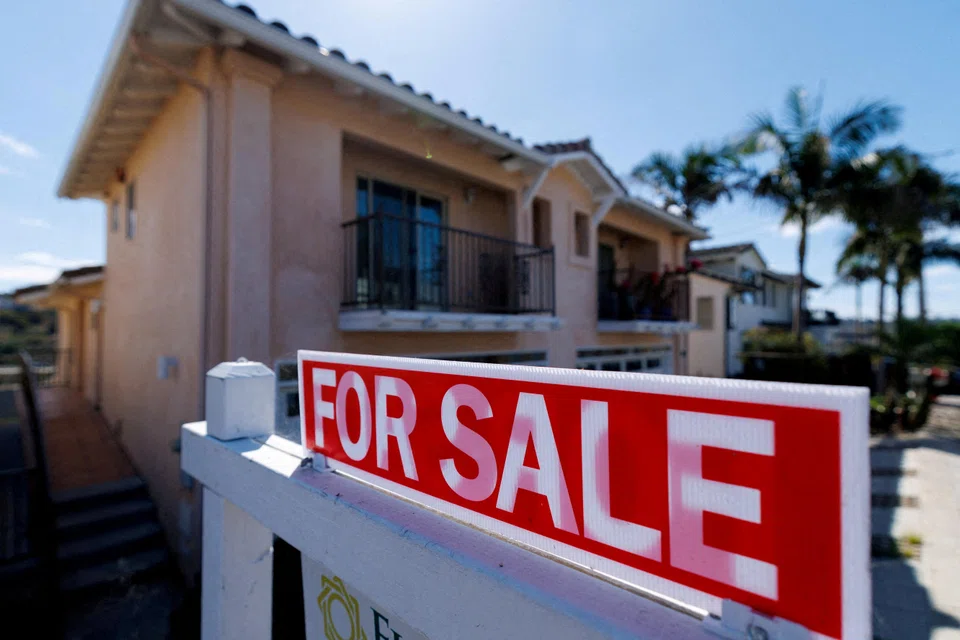
[WASHINGTON] US existing home sales unexpectedly increased in February as lower mortgage rates and a moderation in house-price growth pulled buyers back into the market, but still-tight supply could constrain activity during the spring selling season.
The report from the National Association of Realtors (NAR) on Tuesday (Mar 10) offered some glimmers of hope for the housing market recovery, with affordability steadily improving. The share of first-time home buyers was the highest in five years. Housing affordability has become a political talking point ahead of the November midterm elections.
Despite last month’s rise in sales, the housing market is far from turning the corner, with the Middle East conflict risking higher inflation, which would raise mortgage rates. The US-Israeli war against Iran also poses downside risks to the labour market and economy through reduced demand from inflation and erosion of household wealth due to stock market volatility.
“Affordability, though improved around the edges, remains a significant limitation,” said Charlie Dougherty, a senior economist at Wells Fargo. “Homebuying is likely to slowly improve over the course of the year, but should continue to run at a sluggish rate on account of adverse affordability conditions.”
Home sales rose 1.7 per cent last month to a seasonally adjusted annual rate of 4.09 million units. Data for the prior month was revised up to show sales falling to a rate of 4.02 million units rather than the previously reported 3.91 million-unit pace.
Economists polled by Reuters had forecast home resales decreasing to a rate of 3.89 million units last month. Last month’s sales likely reflected contracts that were signed in December and January, when mortgage rates began a sustained decline.
Heavy snow and frigid temperatures that slammed large parts of the country in January disrupted activity in the Northeast region, with sales there dropping 6 per cent. Sales jumped 8.2 per cent in the West and increased 1.6 per cent in the densely populated South. They rose 1.1 per cent in the Midwest.
Overall existing home sales, however, fell 1.4 per cent on a year-over-year basis. The median existing home price last month increased 0.3 per cent from a year ago to US$398,000.
The NAR said its Housing Affordability Index edged up to 117.6 in February from 117.1 in January. It was up from 103.1 a year ago. Affordability improved across all regions versus last year, with big gains in the West and South regions, it said.
SEE ALSO





Mortgage rates have declined
The improvement mostly reflected mortgage rates, which have decreased considerably this year, in part after President Donald Trump ordered the Federal Housing Finance Agency (FHFA) to buy bonds issued by mortgage finance giants Freddie Mac and Fannie Mae. The FHFA oversees these two companies.
Scope for further declines is, however, likely limited because of the Middle East war, which is driving up US Treasury yields. Mortgage rates track the benchmark 10-year Treasury yield. The popular 30-year fixed-mortgage rate averaged 6 per cent last week, data from Freddie Mac showed.
It had dropped to an average of 5.98 per cent in the prior week, before the Middle East conflict flared up. The inventory of existing homes increased 2.4 per cent to 1.29 million units, still remaining well below pre-pandemic levels of between 1.5 million and 1.6 million units.
Supply was up 4.9 per cent from a year ago. At February’s sales pace, it would take 3.8 months to exhaust the current inventory of existing homes, up from 3.6 months a year ago.
Should supply not increase during the busy spring selling season, that would push up house prices. Most of the housing shortage is for starter homes. About 45.5 per cent of homes sold last month were in the US$250,000-to-US$500,000 price bracket. Sales of houses priced at US$250,000 and under declined year on year.
“Homes are still pricey, and many Americans are struggling with an affordability crunch,” said Heather Long, chief economist at Navy Federal Credit Union. “The US needs to build more starter homes.”
The median days on the market for listed properties increased to 47 from 42 a year ago.
First-time buyers accounted for 34 per cent of sales, up from 31 per cent a year ago. Economists and realtors say a 40 per cent share in this category is needed for a robust housing market.
All-cash sales constituted 31 per cent of transactions, down from 32 per cent a year ago. Distressed sales, including foreclosures, made up 3 per cent of transactions. While that was unchanged from a year ago, the share of distressed sales has mostly been around 2 per cent.
“It is a little on the higher end. People who have sizable housing wealth don’t have an incentive to default on their mortgages, or if they cannot make mortgage payments, they can do a normal sale,” said Lawrence Yun, NAR chief economist. “This level may be reflecting the fact that home prices have not risen all that much in the past two years.” REUTERS
Decoding Asia newsletter: your guide to navigating Asia in a new global order. Sign up here to get Decoding Asia newsletter. Delivered to your inbox. Free.
Share with us your feedback on BT's products and services






