

US House passes historic housing affordability Bill, sending it to Trump
The legislation would streamline rules around factory-built housing, encourage localities to remove barriers
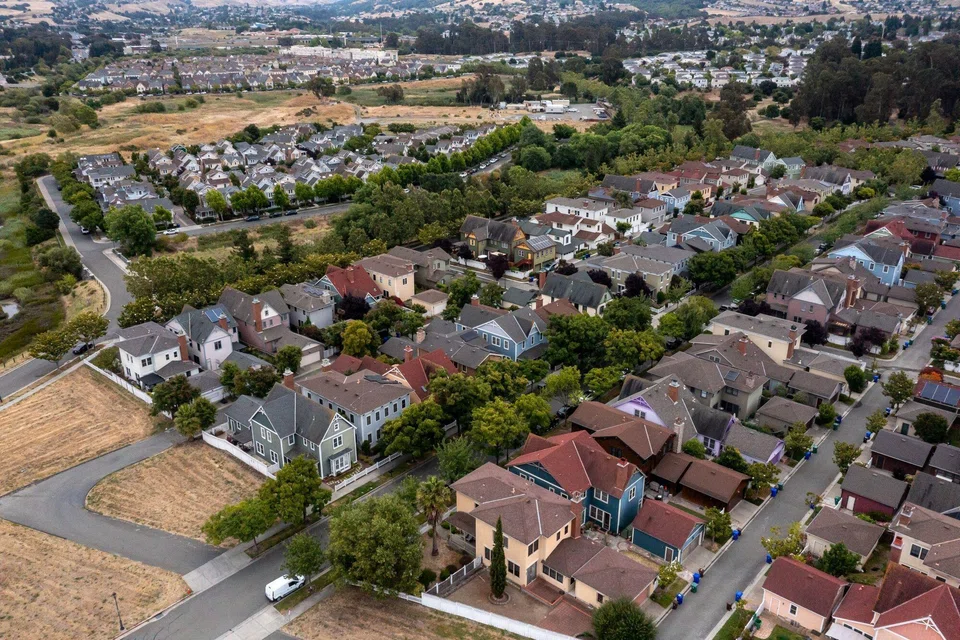
[WASHINGTON] The US House of Representatives on Tuesday (Jun 23) passed the most significant housing legislation in decades on a 358-32 vote, sending to President Donald Trump’s desk a Bill with rare bipartisan backing that is aimed at showing action on voters’ affordability concerns.
The Bill would streamline rules around factory-built housing, encourage localities to remove barriers to construction and curb large institutional investors’ ownership of single-family homes in a bid to bring more supply to the stagnant housing market.
Trump is expected to sign the legislation on Wednesday, according to two officials who asked not to be identified.
The legislation’s passage gives lawmakers of both parties a win to tout on the campaign trail as they work to persuade voters that they’re focused on the pocketbook issues expected to be central in the midterm elections this November.
The House and Senate had been trading competing versions of the bill for months before congressional leadership announced a deal on a compromise Bill last week.
The Senate passed the package of nearly 60 individual provisions on an 85-5 vote on Monday.
Industry experts expect the immediate impact of the 21st Century ROAD to Housing Act to be muted, because expanding supply takes time. Even its backers say there is more to be done: Senator Elizabeth Warren, a Democrat of Massachusetts, said last week that she’s ready to start work on “ROAD 2.0.”
Still, the Bill marks a “paradigm shift in federal housing policy” by focusing on supply as the ultimate driver of high costs, according to Dennis Shea, executive vice-president of the Terwilliger Center for Housing Policy at the Bipartisan Policy Center.
“No single law fills a multimillion-unit deficit overnight, and most of the provisions in this bill won’t immediately affect housing costs for families,” he said. But “some will lower costs and expand access in the near term”, he added, pointing to a rule change that could save buyers up to US$10,000 on a manufactured home.
SEE ALSO






“The supply-side reforms will have a longer-term impact by making it easier to build,” Shea said. “That’s how you close a structural shortage: by steadily widening the pipeline of new homes until supply catches up with demand.”
The high cost of housing can be traced to a supply shortage nearly 20 years in the making, as construction rates cratered in the wake of the 2008 global financial crisis. Years of underbuilding have led to a deficit of some 10 million homes, the White House said earlier this year. Costs skyrocketed in the wake of the Covid pandemic and remained high as mortgage rates more than doubled in recent years.
One of the most consequential, and contentious, measures of the Bill would bar institutional investors with more than 350 homes from purchasing additional single-family properties – a provision the White House largely negotiated with Warren. The inclusion of that measure was critical to securing the White House’s support, Senate Banking Committee chair Tim Scott told reporters.
But House lawmakers successfully stripped a controversial provision requiring large investors to dispose of homes built as rentals within seven years, following an outcry from housing experts and advocates who said such a requirement would limit one of the few vectors of new supply and could block construction of up to 100,000 new homes per year.
House Financial Services Committee chair French Hill, Republican of Arkansas, also secured the inclusion of nine community banking Bills in the final product. And House Republicans pushed for the reauthorisation of a disaster recovery programme to sunset after three years instead of seven, a key compromise that led to Hill signing off on the bill. “Housing affordability starts with supply, and this Bill makes meaningful progress towards building more homes and lowering costs for American families,” he said on Monday.
Democrats, meanwhile, secured wage rules for labourers on projects that fall under the Community Development Block Grant programme, requiring construction workers to be paid no less than the rates for similar work in the local area.
“Housing is the gateway to opportunity, stability, and economic prosperity,” said California Representative Maxine Waters, the top Democrat on the committee. “If we want to build a stronger nation where working families can succeed, it starts with taking our housing crisis head on by expanding affordability, increasing access, boosting supply, and creating pathways to homeownership.”
The Bill would incentivise state and local governments to overhaul restrictive zoning policies while establishing pre-approved home designs and streamlining environmental reviews in an effort to hack away at the regulatory barriers to new construction. It would also create a pilot programme to give competitive federal grants to localities that convert underused commercial buildings into affordable housing.
The final package also includes a ban on the Federal Reserve creating a central digital bank currency through 2030. Conservatives have been pushing for a permanent ban, arguing it is necessary for financial privacy. Democrats have been widely critical of a permanent ban, arguing that Congress should not shut down the exploration of a CBDC and its possible benefits. BLOOMBERG
Decoding Asia newsletter: your guide to navigating Asia in a new global order. Sign up here to get Decoding Asia newsletter. Delivered to your inbox. Free.
Share with us your feedback on BT's products and services
TRENDING NOW

Britain’s mansion tax shows the difficulty of targeting wealth

Once staunchly pro-China, Malaysian Chinese businesses are now distancing themselves from Beijing

The only common thing in S-E Asia is that we all eat rice: Cisco’s Asean president

Singapore data centre operator DayOne opts for US IPO at likely US$20 billion valuation

