

As US office space shrinks, so does workers' privacy
With rents surging as the office market rebounds, many companies are looking to cut costs.
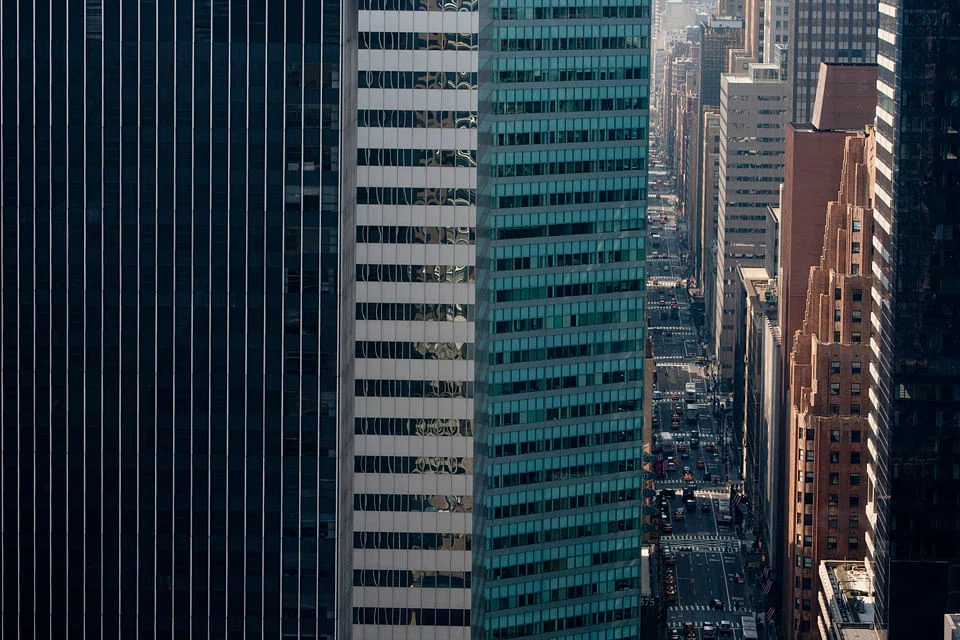
New York
DAFNA Sarnoff worked her way up to vice-president at American Express and what she remembers as "a desirable office". Later she was hired by a financial services company - bigger salary, bigger office. Then, in 2012, she was recruited by Yodle, a smaller, newer company that sells online marketing tools for small businesses.
"I had heard about these tech startups that had these open office environments," Ms Sarnoff said. "I wondered if I was going to get an office."
She did not, and on her first day on the job, she all but panicked. "I remember being led to my new desk and thinking, 'Oh my God, this is going to take some getting used to.'"
Soon, she will have even less space. Yodle is scheduled to move in the next few weeks and is cutting the amount of space allotted to each employee to 122 square feet or 11 square metre, from 137 sq ft in its current quarters.
With rents surging as the Manhattan office market rebounds, many companies are looking to cut costs, and one way to do that is by trimming personal space. The shrinking is happening beyond New York. The average amount of space per office worker in North America dropped to 176 sq ft in 2012, from 225 sq ft in 2010, according to CoreNet Global, a commercial property association. Though more recent figures are not available, property specialists say there is no doubt that workers are being shoehorned into even less space.
This means that everyone will get to hear those loud calls about how long your mother-in-law will be staying or why the US$1,500 medical bill the collection agency insists you owe should really be covered by insurance.
Bryan Langlands knows all about this. He works for NBBJ, an architecture firm that designs open offices - and has one. Consider the conversation in which he told the assistant to a partner, who sits directly behind him, that he was postponing their later-in-the-week lunch. He explained why, too: He was having a colonoscopy. "About six people around me know - they heard," Mr Langlands, a principal at the firm, said.
Some property brokers make the pitch that companies can avoid a rent increase by moving to new quarters that are 20 or 25 per cent smaller than what they had, even if it means increasing workplace density and jamming people into less space.
"Every client we talk to, they're using less space per person," said Kenneth McCarthy, the chief economist for Cushman & Wakefield, a commercial property broker. He said that 50,000 more people work in "office-using industries" in New York now than before the recession. But with the vacancy rate at 9.5 per cent in Manhattan at the end of 2014, he said, "more people are taking up less space".
Bosses - and the designers and architects they hire - are betting that most employees will not notice the difference. "The balance between individual spaces and community spaces has changed drastically," said David Bright, a senior vice-president of Knoll, the office furnishing manufacturer, "with shared and community spaces taking up a greater proportion of space than they once did."
The result, nationally as well as in Manhattan, is offices with less space for desks and more square footage for conference rooms or other activity space areas, as some designers call them. Also popular with architects and designers are "refuge rooms" to which employees can retreat when the buzz around them proves distracting - the open-office equivalent of the low-decibel "quiet car" on many trains.
The argument for more communal space is that open offices foster communication and accidental creativity - that serendipity is a plus, if serendipity is defined as bumping into co-workers and chatting about projects they may not necessarily be assigned to.
The comic strip Dilbert, which has long lampooned office culture, anticipated the personal space squeeze in 2013. The character identified as the Boss was trying to justify declines in productivity to the chief executive. He explained that the engineers had first moved from private offices to cubicles. Then they had been assigned to an open-plan area. The chief executive asked: "Have we tried putting all of them in one clown car?" The Boss replied: "No, but I don't see why that wouldn't work."
Scott Adams, the cartoonist who created Dilbert, said that it was no surprise that individual breathing room in the workplace was being reduced. "But computers have gotten smaller and the need for storage of paper has disappeared," Mr Adams said. "If you've got a place to hang a coat and a place to sit with a laptop, you've got everything you need."
While space is getting tight in many places, there is every indication that offices are even tighter in the New York area. Justin Mardex, a member of CoreNet's New York City chapter, surveyed 10 recent projects and found that the average came to 120 sq ft per employee. The most generous amount set aside was 178 sq ft per person. The smallest was 93 sq ft per worker.
It is not just underlings who are losing the office space race. "There's a unilateral flattening," said Tom Krizmanic, a principal of Studios, an architecture and design firm. "Even the CEO, the CFO used to have more."
But Louis D'Avanzo, the chairman of CoreNet's New York City chapter and a vice-chairman of Cushman & Wakefield, cautioned that if individual space dwindled to less than 100 sq ft per person, "it can be a very dense environment". And, some cubicle dwellers add, too noisy for sustained concentration. Suzanne Carlson, a partner at Mr Langlands' firm, recalled a recent conversation in which she found herself saying that the private office needed to make a comeback, but with one important qualification. "It does not need to be owned," she said - meaning that no one person's name is on the door. "This is about the existence of a private space you can go to for refuge," she said.
Yodle's move to West 34th Street near Ninth Avenue is being overseen by Arnold Madisson, who was deputy executive director of facilities, construction management and operations for the last two years of Michael Bloomberg's time as mayor. "The idea was to go around to the last of the offices and tear them down," Mr Madisson said. "One million square feet. I believe in openness."
Yodle's chief executive, Court Cunningham, so values being close to other employees that he does not want a private office. He even dictated that the desks in Yodle's new quarters be relatively small: no more than 1.5 metre wide and 0.7 metre deep.
"We believe a lot of individuals don't need their own space," Mr Madisson said, adding: "We talked about what if we eliminated desks."
Long tables would have given each person even less space, he said - about 0.6 metre wide by 0.4 metre deep.
Ms Sarnoff, Yodle's head of consumer marketing, spent that first night agonising. "I remember telling my husband about it," she recalled. "He said, 'Would you not take the job if you didn't have an office?' He actually said that to me, and I said, 'Would that be a bad reason not to take this job?'" She became a convert. "It's fun," she said. "That's the reason I wouldn't want an office. It's fun - if you like the people you work with." NYT
TRENDING NOW

One-third of Singapore-listed firms at risk in severe AI downturn: MAS

‘Not done’: Keppel CEO Loh Chin Hua transformed the group, but says there’s ‘still a lot to do’

He built the Vingroup empire. Now South-east Asia’s richest man is handing some key roles to his sons

‘We don’t want to stay as we are’: CEO Patrick Ng builds a more resilient Huationg

