
Want to flee the city for suburbia? Think again
 Add BT as a preferred source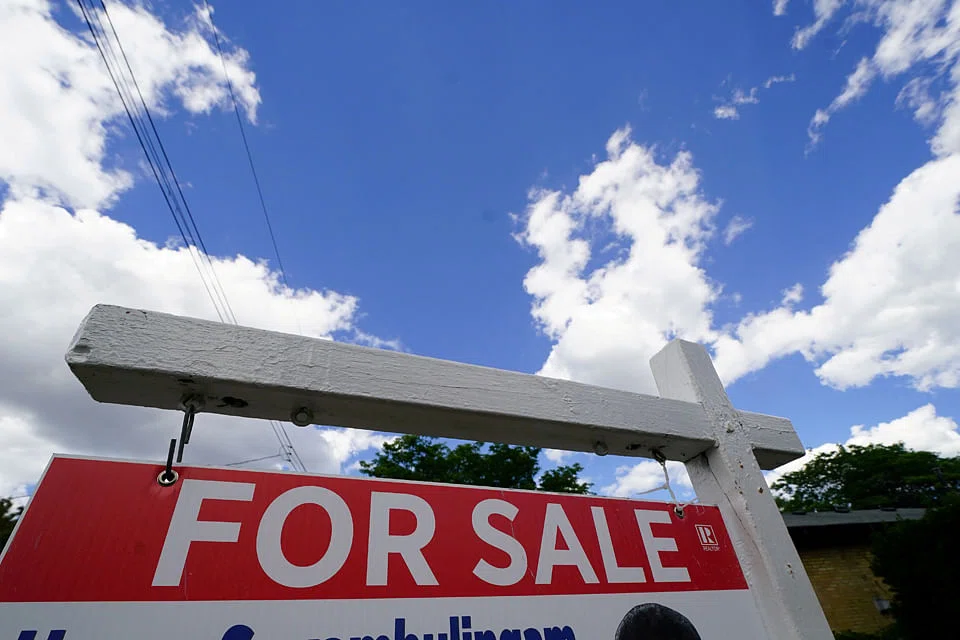
WALKING the streets of San Francisco during these coronavirus days, you will see more "for sale" and "for rent" signs.
Six months ago, I would have texted pictures of them immediately to friends who were hoping to move. You had to act fast if you wanted a good slot on the list of dozens of potential buyers.
Now, some of those friends are posting on Instagram about their freshly built suburban homes, surrounded by trees, wild animals and lots of space. Living in San Francisco used to be an impossible dream; today, the dream is to escape it.
For the first time since the tech crash of 2000, housing vacancies in San Francisco are skyrocketing, and rents on one-bedroom apartments are down by 11 per cent.
Still, this is not like previous economic busts. For the most part, the people leaving have not lost their jobs, and they are not being priced out of rapidly gentrifying neighborhoods.
Instead, they are the ones who are rich enough to work remotely from a bucolic palace with high-speed internet and a two-car garage.
Navigate Asia in
a new global order
Get the insights delivered to your inbox.
It's not just in San Francisco. Real estate services in Florida and Arizona are reporting similar patterns.
Expensive cities are losing their lustre, while smaller cities and towns feel like the wave of the future. It seems a harmless enough trend. After all, what could be bad about getting more fresh air and space to take walks?
A lot, it turns out. The 20th century offers object lessons in why fleeing cities for suburban and exurban settings can backfire - even if it seems like a good idea at first.
In the early 1900s, many large cities were suffering from the side-effects of rapid industrialisation: they were polluted, full of high-density housing with bad sanitation.
Crime flourished under corrupt policing systems. There were disease outbreaks, too; in San Francisco, bubonic plague killed more than 100 people at the turn of the last century.
In response, a new wave of utopian thinkers proposed moving to what Ebenezer Howard, a British urban planner, called "the garden city" in his 1902 manifesto "Garden Cities of Tomorrow".
His garden cities would be planned communities of limited size, built with ample park space and free housing for people in need. Everyone could eat locally, from sprawling farms that ringed the city. Mr Howard's ideas were so compelling that he was able to work with planners to build two English towns to his specifications - Letchworth and Welwyn, both of which still stand today a few dozen miles outside London.
Although both towns are pretty, they fell short of Mr Howard's vision, which was to provide shelter for the needy as well as prosperous country folk.
During the Great Depression, US planners funded by the Works Progress Administration tried their hand at creating some garden cities.
They founded a community that offered extensive social support services to its residents at first - though today it has become a hotbed of private development.
As the craze for these British-style garden cities grew in the States, Frank Lloyd Wright wrote about building a uniquely American version. He called it Usonian - the "Us" in the name stood for United States, to distinguish it from the Central and South American cities he did not like.
Mr Wright argued that the Usonian city would not be a flight from modernity.
Instead, he would liberate ordinary people from high-density industrial "tumour" metropolises through technology. Brand-new inventions like telephones, radio and automobiles meant everyone's work could be done remotely.
Some of Mr Wright's followers eventually built a garden city called Usonia in Westchester County, New York.
Its hundred-some-odd homes are still occupied, each at the end of a winding driveway, surrounded by flower beds and groves. It was supposed to be an idyllic rural community, progressive and affordable, welcoming people of all backgrounds.
Although Usonia's homes were inexpensive in theory, the reality was that they were quite expensive to build and maintain.
To this day, everyone who lives there is dependent on cars. Those gardens that give the town its special character are at odds with a world of carbon-belching transportation machines.
Utopian communities like Usonia are still relatively rare, but Mr Wright's urban plan became a template for thousands of mid-century American suburbs, with their low-slung, ranch style homes and endless lawns.
These suburbs, like their more idealistic ancestors, were a mess of contradictions. Supposedly democratic, they were ground zero for redlining policies.
Plus, their commuter populations often depended on nearby light industries that flatlined in the 1990s. Eventually, wealthy young people fled these suburbs as urban cores bloomed in the early 2000s.
Now the cycle has come around again, as the middle class flees cities in pandemic panic, seeking unpolluted - yet car-dependent - places.
But we need to pay attention to the tragic fate of the garden cities that Mr Howard and Mr Wright dreamed of nearly a century ago. Ultimately, the garden city future is a false Utopia.
The answer to our current problems isn't to run away from the metropolis. Instead, we need to build better social support systems for people in cities so that urban life becomes healthier, safer and more sustainable. NYTIMES
Decoding Asia newsletter: your guide to navigating Asia in a new global order. Sign up here to get Decoding Asia newsletter. Delivered to your inbox. Free.
Share with us your feedback on BT's products and services

