

They rushed to buy in pandemic; Here's what they regret
Hard lessons from shopping in a frenzied sellers' market, where pickings are slim and prices astronomical
 Add BT as a preferred source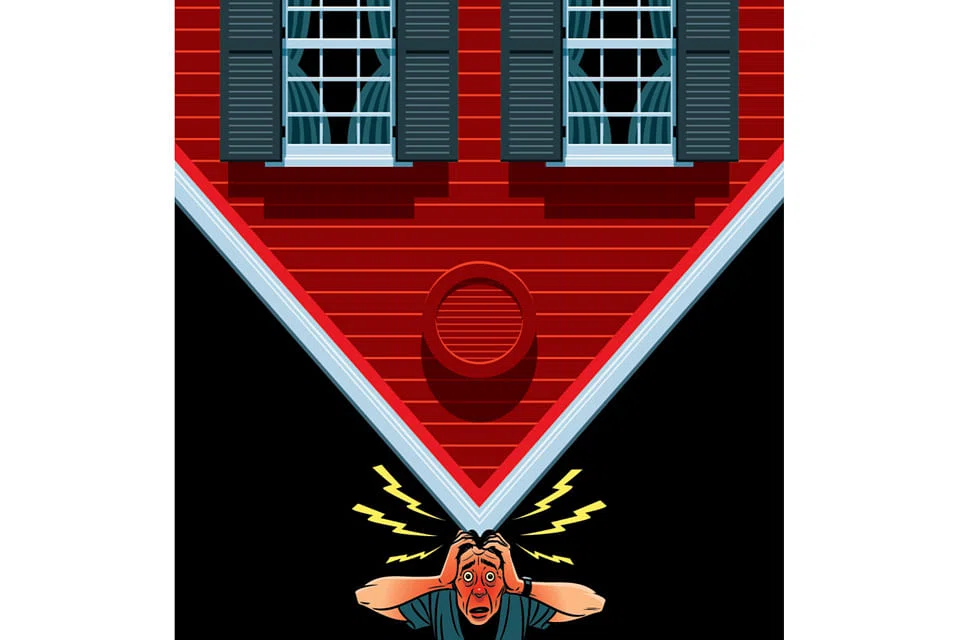
New York
FOR nearly 2 years, homebuyers have been shopping in conditions ripe for regret. Prices have soared, inventory has plunged and competition has been brutal in markets across the country. With fixer-uppers fetching multiple offers, buyers must make snap decisions about what is often the biggest financial investment of their lives.
Invariably, someone makes a choice they wish they hadn't.
"There are all kinds of craziness happening," said Marilyn Wilson, a founding partner of the WAV Group, a consumer research company, who described open houses so crowded they felt like nightclubs, with buyers getting 15 minutes to tour a home. "Sometimes people don't remember, did it have three bedrooms or four? You might get the house, but it might not be the house you want because you're just in this desperate state."
The pandemic has turned out to be a historically miserable time to buy a home. Many buyers entered the market looking for a home to solve some of the problems the pandemic created. They wanted more space for Zoom rooms and home gyms. They wanted bigger and better backyards to entertain outdoors.
These expectations ran headlong into the reality of shopping in a frenzied sellers' market where the pickings were slim and the prices astronomical. Surveys by the WAV Group and Zillow found about three-quarters of recent buyers expressed some regret.
In the Zillow survey, released Friday (Feb 4), the findings paint a picture of homeowners second-guessing the choices they made and wishing they'd had more time, more patience or considered living somewhere else. About a third of respondents regret buying a house that needed more work than they anticipated, 31 per cent wish the home they bought was bigger and 21 per cent thought they overpaid.
"Pandemic-era buyers faced unprecedented conditions. They had far fewer homes to choose from; they had far more competition for the homes that were for sale," said Amanda Pendleton, Zillow's home trends expert. "A lot of buyers ended up in this home that was maybe not what they expected."
Buyers stepping into the 2022 market have much to learn from those who shopped before them. Market forecasts predict that conditions won't change significantly this spring. If anything, they might get tougher.
At the end of December, inventory fell to a record low, according to the National Association of Realtors. Zillow projects that home prices will rise another 16 per cent in 2022, on top of the 20 per cent rise in 2021. Rising interest rates will likely push some buyers out of the market, but they could be replaced with others looking to escape rising rents or shoppers who sat on the sidelines last year, waiting for some stability.
Many successful buyers ended up with homes that they liked and are happy to own a place. For some of them, that meant making an offer that managed to stand out in a bidding war. For others, it meant recalibrating their expectations during their search to avoid disappointment.
Recent buyers - those who are remorseful and others who are content with their homes - have some sage advice about how they would do it differently if they had to do it all over again.
Celeste Mohan and Zach Flynn did not set out to buy a farmhouse with a barn and two cows. But after they lost a bidding war for a rundown house in Boca Raton, Florida, the couple jumped on the 2,660-square-foot house in Lake Wales, a town of 16,000 about an hour from Orlando. They bought it in July for US$349,000.
Mohan, 25, and Flynn, 29, a teacher, felt pressured to buy because the rent on their 1-bedroom in Boca Raton was about to jump 22 per cent, to US$1,900 a month. With their US$400,000 budget, their options were restricted to fixer-uppers, with fierce competition. After their bidding war defeat, the couple headed for the country. The farmhouse, set on 5 acres (about 2 hectares) on a lake, seemed like an ideal alternative: quiet, pastoral, and charming.
"There really wasn't much hesitation at that point. We're defeated, we're exhausted, we're anxious," said Mohan, a curriculum developer for an educational company. "We really just wanted to own a house."
Almost immediately, the couple regretted their decision. The property felt eerily quiet and isolated, and maintaining 5 acres and two cows was more work than they anticipated.
"You see these people on Instagram with their farm life," Mohan said. "Nobody tells you what actual hard work that is and how time consuming it is." Before the summer ended, the couple had given the cows to the neighbour, had moved back to Boca Raton and rented a new apartment. Rather than try to sell the farmhouse, they hope to turn it into an Airbnb.
"Right now we're paying rent and a mortgage, which is really uncomfortable," Mohan said.
They married in December and are expecting a baby in March, adding to their financial stress.
- What they wanted: A 3-bedroom house in Boca Raton for under US$400,000
- What they bought: A 3-bedroom farmhouse in Lake Wales for US$349,000
- What they learnt: In hindsight, Mohan wishes that she and Flynn had spent more time evaluating their goals before giving up on Boca Raton. If they had been more clear on what they wanted, they would have known that their wish list included staying in a younger, livelier community.
"I also would've told myself and Zach to honestly try harder for a house in Boca and to not get so worried about the competition," she said.
Three months into the pandemic, Stephanie DiSantis felt claustrophobic working from home in her 800-square-foot town house in the Queen Anne neighborhood of Seattle.
So, like millions of other Americans, she started looking for a bigger space. She set her maximum budget at US$900,000 but soon realised that if she wanted to stay in the central neighborhood, she would have to pay more. She pushed her budget up to US$1.3 million, reassessing her priorities.
"I decided, I've done a lot of traveling, I've had a lot of fun. I've done the thing where I'm like, 'I'm hungry for pasta, I'm going to go to Rome for three days,'" said DiSantis, 47, who works for Amazon. "I can stop doing that. I can afford to be a little house poor."
In October 2020, while she was in Massachusetts visiting family for a month, a 2,570-square-foot house dropped the list price to US$1.45 million, over her maximum budget but within reach. After her friends, her broker and an inspector vetted it in her absence, her offer at full asking price was accepted.
She returned to Seattle in November, seeing the house she'd only seen on video in person for the first time.
"When I first saw it, I cried," she said of the house with views of the Puget Sound. "I fell in love." The house gave her more space, but at a significant financial cost. In 2021, her priorities shifted, and she suddenly felt the burden of a huge mortgage.
"I got super burned-out at work," she said. "I remember thinking, 'Man, if I was still in that town house, I could just quit my job for a year and be fine.' The mortgage was so low, I could take a year off, I could relax, I could refuel and now I really can't. "
- What she wanted: A 3-bedroom house in Seattle for US$900,000.
- What she bought: A 3-bedroom house in Seattle for US$1.45 million.
- What she learnt: When DiSantis calculated her budget, she did not anticipate how a large mortgage would limit her future options.
"I wish that I would have been able to foresee a couple of years down the road and waited it out," she said. "I could have taken a big break or been that person who's like, 'OK, I'll move to Montana and get a house that is everything I want for half the price.'" NYTIMES
Decoding Asia newsletter: your guide to navigating Asia in a new global order. Sign up here to get Decoding Asia newsletter. Delivered to your inbox. Free.
Share with us your feedback on BT's products and services
TRENDING NOW

‘I felt like dying’: Thai Singha beer scion speaks up after disclosure of alleged sexual abuse

In a world of long-drawn crises, ‘wait and see’ may be a decreasingly tenable stance
SpaceX’s US$1.75 trillion IPO: How retail investors, including those in Singapore, can buy shares

The returnees: Inside China’s AI talent reversal

