Wealthy Middle East residents are house-hunting in Europe to escape war
Investors who might have ploughed money into the most popular Gulf property markets are also examining alternatives
[LONDON/DUBAI] Wealthy Middle East residents are stepping up house-hunting in high-end European property hotspots as concerns about the war drive an uptick in demand for temporary rentals and longer-term accomodation.
Realtors from London, Monaco, Switzerland and Spain’s upmarket resort of Marbella are reporting increased interest ranging from multi-millionaire traders to influencers and families looking to relocate until the Middle East conflict is over or move overseas permanently.
Investors who might have ploughed money into the most popular Gulf property markets are also examining alternatives with the war now well into its second month, they said.
The hostilities are forcing a rethink for some wealthy individuals, families and investors who’d been increasingly drawn to cities such as Dubai and Abu Dhabi due to a combination of tax-free pay, year-round sunshine and the promise of a luxurious lifestyle.
While those cities have recently made reforms designed to encourage residents to stay longer, the war has shaken their carefully-maintained images as oases of calm in a volatile region.
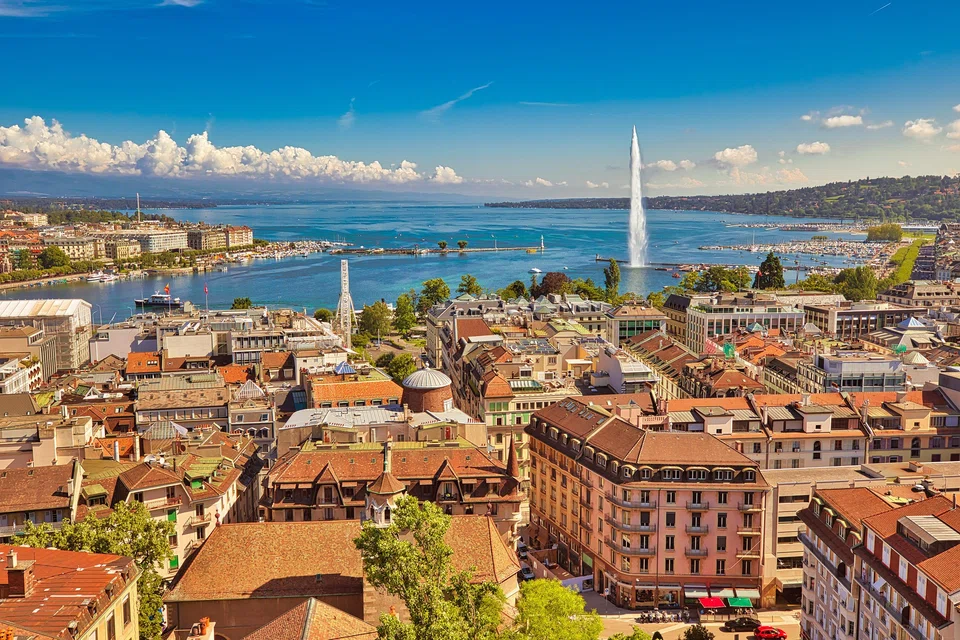
One Geneva realtor, Jan Florian with Rockwell Properties, is looking for a 20 million franc (S$32.6 million) house for a trader who wants to relocate to Switzerland from the Middle East.
And, he said, a luxury watch seller with clients from the region had invited him to an event they are hosting this week because many are also interested in Swiss homes.
Costa del Sol
On Spain’s Costa del Sol, synonymous with both luxury resorts and package holidays, high-end realtor Engel & Volkers is receiving four to five daily enquiries for both purchases and rentals and has made several deals in Marbella since the war started, managing director Smadar Kahana said.
It has a long connection with the Middle East dating back to the 1970s, when then-Saudi Crown Prince Fahd made it a summer base and built the Mar-Mar Palace.
SEE ALSO



“We have quite a large community of Middle Easterners and Saudis that have come here every summer for decades,” said Oscar Lindahl, a partner at upmarket realtor MPDunne.
Buyers of new build properties were after “resort-style” real estate that emulates the lifestyle in Middle Eastern capitals, with properties that include a concierge, gym and restaurants, he said.
London prime rents
In London meanwhile, prime rents are rising as supply tightens and Middle East uncertainty persists, according to realtor Knight Frank’s latest data.
It shows that in March, for properties valued at more than £1,000 (S$1,722) per week, there was a 16.9 per cent increase in new prospective tenants compared with a year earlier, a boost for relatively high-end listings.
“We have seen an influx of enquiries from the Middle East for people looking at short-term rentals of six months or less,” said David Mumby, the firm’s head of prime central London lettings. “They tend to be British, European or North American nationals with families who have moved to the Middle East recently, but who already have a network in London.”
While the very wealthy often have several global homes at their disposal for turbulent times such as these, the current uncertainty and breakdown of ceasefire talks risks forcing a reckoning for the professional and expat classes considering options after putting down roots in the Middle East.
Some overseas buyers invested in property markets such as Dubai which have seen huge price appreciation in recent years.
And while local analysts and investors have touted continued demand even amid the hostilities, the pricing trajectory in less well-established markets and neighbourhoods – at least in the near term – is likely to be uncertain as investors assess their exposure.
Still, business hubs such as Dubai have rebounded well from previous periods of difficulty, such as the financial crisis, and Wall Street firms have rushed to publicly back the region, even as personal security concerns have forced some to allow employees to temporarily work from other locations.
“Sentiment is changing very quickly so they are generally looking at renting,” as a first step, said Edward de Mallet Morgan, head of the private office for Douglas Elliman France and Douglas Elliman Monaco and a specialist in residential properties for ultra high net worth clients.
He has some 10 clients from the UAE and Lebanon considering at least temporary moves to Europe.
“People are making short-term decisions while waiting for the situation to stabilise,” he said.
The main reason people are not yet looking to make permanent moves even as the hostilities continue is that changing tax residency takes time and organisation including finding schools for children and conforming to national requirements such as opening local bank accounts is often complicated and time-consuming.
But the hostilities also present a dilemma for individuals who moved to the region, as well as financial services firms and other companies that expanded there, drawn by huge capital reserves and buoyant economies.
The risk is that a sustained conflict will force some now overseas into uncomfortable decisions on whether to make the move permanent, especially with the end of the school year in sight.
Roberta Genini, a real estate and relocation broker near Geneva, said she currently has five clients who were based in the Middle East looking for temporary and furnished accommodation in the city. Their children are enrolled in local Swiss international schools until the summer and they will then reassess the situation, she said.
Geneva and Zurich have long been a magnet for Middle Eastern wealth and investors from the region had close to US$580 billion stored in Switzerland at the end of 2024, according to the local bankers association, about a fifth of the total and second only to Western Europe.
Weeks of peace
One employee at a US private equity firm in Dubai, who asked not to be identified citing the sensitivity of the matter, said they initially thought hostilities would be over quickly and visited family and friends in Europe, only to temporarily move to Portugal once it became clear that the war would continue longer. They said it would take several weeks of peace and no further attacks on the UAE for them to return.
Nuno Durao, head of real estate firm Fine untry in Portugal, said interest from Middle Eastern buyers surged after the outbreak of war, even if transactions are taking longer to materialise.
“The number of leads from Middle Eastern clients doubled from one day to the next when the war broke out,” said Durao, whose firm sells homes with an average price of about 2 million euros (US$2.4 million).
At some banks and financial services firms in the Middle East, one recruiter said, there’s been relocations back to Europe among those not tied to regional roles.
Many firms were vocal in boosting their presence and investment in the region and are conscious of not giving the impression that they are downgrading it, the person said, asking not to be identified discussing client information.
One wealth management executive at a major US bank, also asking not to be named citing confidential client matters, said he’s having many conversations with Western expats seeking to understand the pros and cons of a move to Switzerland.
Other European countries, from Italy to Spain, offer advantageous tax regimes and sunny lifestyles that may represent a prospect for those seeking at least a temporary exit from the Middle East.
UK Chancellor Rachel Reeves plans to tout Britain’s advantages, including its stability, as it attempts to attract wealthy expats back from countries such as the UAE, the Financial Times reported on Tuesday, without saying where it got the information.
Reeves will use a visit to Washington this week to try and repair the UK’s relationship with internationally mobile professionals, the newspaper said. The UK Treasury did not immediately respond to requests for comment.
Some wealthy Asian investors are reconsidering their exposure to Dubai and moving money back to Hong Kong and Singapore, while others are eyeing other countries for greater diversification, people with knowledge of the matter have said.
Even as expats and Gulf locals eye bolt-holes in Europe for the short, medium or long-term, there’s unlikely to be a major outflow of capital from the Gulf to, in particular, Switzerland.
With a few exceptions, most Swiss banks don’t book clients in the region, even if they have offices there, so their money is already safely booked back in Switzerland. Emiratis and other Gulf-state citizens also face severe political pressure to not pull their money out.
Compared with just a few months ago, it’s an abrupt reversal for many cities in the Middle East, which had been a prime beneficiary of changes to the UK’s non-dom regime and those seeking to escape rising taxes and safety issues back home.
Hedge funds and other financial service firms had also increasingly set up shop or expanded in the region.
For now, the signs are that a return to normality may take some time. Several European airlines, for example, have pushed back the resumption of flights to the region and sketched out the potential for reduced services when they do.
“Everyone will look at Spain, Italy, Portugal and France,” said Mary Dunne, founder of realtor MPDunne. “The classic destinations that lost out to Dubai in recent years will now benefit.” BLOOMBERG
Decoding Asia newsletter: your guide to navigating Asia in a new global order. Sign up here to get Decoding Asia newsletter. Delivered to your inbox. Free.
Share with us your feedback on BT's products and services