

A wealthy Sydney suburb braces for a fight over 10,000 new homes
The growing dissent in this village-like suburb is more than a local planning dispute
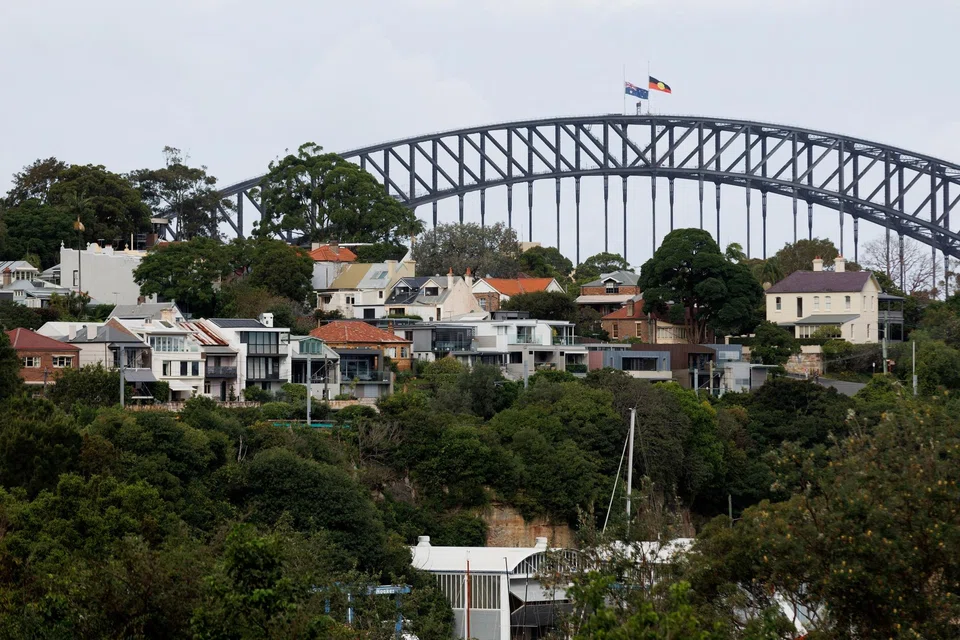
[SYDNEY] In the leafy streets of Woollahra, an affluent Sydney enclave home to some of Australia’s priciest real estate, locals have not been this riled since 1976.
Half a century after residents helped kill off a train station they feared would shatter the suburb’s calm, workers returned to the abandoned site last month to resurrect the plan. This time, it’s linked to the construction of 10,000 new homes in and around Woollahra as the state government scrambles to boost supply in one of the world’s least-dense and most expensive housing markets.
The growing dissent in this village-like suburb is more than a local planning dispute. As rents spiral and more Australians abandon dreams of homeownership, policymakers are confronting a hard truth: the country’s most protected neighbourhoods must change if cities are to stay livable.
“I think it should remain an old area,” said Pamela Cass, 88, a former model who bought her 19th-century terrace house – in the area near Woollahra now marked for rezoning – some 45 years ago. “There’s something very cosy about this. When I came here, it was a village. We used to have street parties here and everybody knew everybody.”
Though just minutes from the central business district, Woollahra has absorbed virtually none of Sydney’s growth. For decades, restrictive zoning and fierce local resistance have kept the city’s elite suburbs effectively frozen in time – a patchwork of sandstone terraces, boutique shops and art galleries that’s increasingly locked younger Australians out. Even as Greater Sydney’s population surged more than 70 per cent over the past half-century, the council area that includes Woollahra and neighbouring harbour-side suburbs shrank by about 10 per cent.
For state and federal governments, that era is ending. Their argument: Sydney’s outer fringe has shouldered the bulk of new development for too long, and wealthier inner suburbs – already well-served by existing infrastructure – must now take their share.
“Within five kilometres of the CBD today, about half of residential land is still zoned for low density,” Federal Housing Minister Clare O’Neil said at a Sydney conference this month. “Too many councils in well-located, affluent parts of the city are blocking sensible increases in density.”
While 10,000 new homes in Sydney’s moneyed eastern suburbs sounds big, it barely moves the needle. New South Wales state in 2024 pledged to add 377,000 desperately-needed dwellings over five years, more than 6,000 each month. Approvals are currently running at just over 4,000.
Woollahra’s streets are rarely trodden by first-time home buyers. Here, where jacarandas and bougainvillaea spill over the walls of mansions with tennis courts and pools, the median house price has jumped 20 per cent in the past year to roughly A$5 million (S$3.5 million). The latest census shows the suburb teeming with professionals in law, finance, investment and tech, with more than half of adults holding a bachelor’s degree or higher – twice the state average.
The suburb’s cachet was underscored in 2020 when Atlassian billionaire Mike Cannon-Brookes, one of Australia’s richest people, was reported as paying around A$18 million for the former residence of Germany’s consul-general, the kind of move that draws comparisons to the wealthy enclaves of central London.
“If you go to Chelsea, if you go to Kensington, there are no towers. London has protected its beautiful heritage areas,” said Charlene Batson, 42, a chief operating officer for a finance firm who lives next door to Cass. “Yet in Sydney, we have been prepared to throw it all out the window.”
Batson notes that Woollahra is not all mansions. Many residents, herself and Cass among them, live in terrace houses with modest gardens, and feel privileged to be part of what she calls “a beautiful part of the world”. It’s a character, she argues, that anyone can appreciate and would want preserved as the city’s older charms fade.
Sydney’s eastern suburbs are not the only affluent areas pushing back.
In Mosman, on Sydney’s north shore, residents are up in arms. Judith Pearson, a private citizen, has launched a landmark legal challenge against the state government over its plans to rezone the elite waterside neighbourhood for higher-density development near its centre. The suburb is one of more than 100 across New South Wales earmarked for upzoning.
In the southern state of Victoria, similar tensions are flaring, with residents in Melbourne’s affluent Brighton suburb last year taking to the streets to protest proposed high-rises. Lawmakers in these districts must juggle support for measures to ease a spiralling housing crisis with the concerns of long-time residents wary of change.
Allegra Spender, the independent federal member of parliament who represents Woollahra, knows she has to strike a delicate balance.
“I would say I’m cautiously supportive of this, but I think that there’s a lot of work to be done,” said Spender, whose Wentworth electorate spans some of Sydney’s most prized eastern suburbs, including Bondi Beach. “I have spoken to lots of people in the community who go ‘we need more housing’, but they are a little bit cynical about how this is being done,” she said, adding that there had not been sufficient analysis before the state government’s announcement.
One of the clearest signs of demand for housing in prime locations is what buyers are willing to pay. In Sydney, new apartments within five kilometres of the CBD command more than double the price, about A$21,000 per square metre, of those 25 kilometres out.
Woollahra Mayor Sarah Dixson, whose municipality also includes nearby prestige waterfront areas such as Double Bay, Point Piper and Vaucluse, argues the state government’s plan does not add up, particularly its claim that it will improve affordability.
“The winner here is the developer,” Dixson said in an interview at her harbour-view office. “I want to make sure that whatever is delivered is workable for the community, and actually improves the community.”
Sydney is already Australia’s most expensive housing market, with a median price approaching A$1.3 million, according to Cotality. More than 70 per cent of homes sit at A$1 million or more – far higher than Brisbane’s 57 per cent or Melbourne’s 33 per cent – cementing the city’s grip as Australia’s biggest wealth generator.
One reason prices keep marching higher: entrenched NIMBYism. Residents and local councillors routinely fight state efforts to boost density, arguing the changes would spark social problems, damage the environment and erode the city’s heritage.
If recent history is any guide, Woollahra won’t back down quietly. When the local council last year sought to install dozens of bus shelters with digital advertising screens, the backlash – ultimately unsuccessful – was so fierce it made national headlines, with one resident chaining herself to her fence in protest.
Not all residents are opposed to the rezoning – especially as more Sydneysiders confront the reality that their children and grandchildren may be priced out of the city altogether.
“I’m basically resigned to my children probably living with us their entire lives if they want to stay in this area,” said Skye Davidson-Wallace, a 44-year-old project manager who lives near Edgecliff Station, one of the areas targeted for new housing. “I honestly don’t see how they can afford to buy a home or an apartment around here.”
A showdown is looming – and a likely prolonged one. The New South Wales government plans to release a detailed master plan of the Woollahra rezoning in the coming months, triggering a formal consultation period that is expected to unleash a wave of objections, legal challenges and lobbying from resident groups.
Even if the changes proceed, the timeline for construction is long. Developers still need approvals, financing and community sign-off on individual projects, meaning the bulk of new housing wouldn’t appear for years. What’s less certain is whether Sydney’s most coveted suburbs can stay suspended in time – or whether a city straining under its housing crisis will finally push them to evolve.
For Davidson-Wallace, change is overdue. The shopping mall near her home has barely improved in decades, she says, while most restaurants still close by 9 pm.
“I’d love to see more vibrancy,” she said. “It is so quiet and boring.” BLOOMBERG
Decoding Asia newsletter: your guide to navigating Asia in a new global order. Sign up here to get Decoding Asia newsletter. Delivered to your inbox. Free.
Share with us your feedback on BT's products and services
TRENDING NOW

DBS, OCBC, UOB rout lops billions off STI as inflation, rate concerns spook investors

Grab CEO’s wife Chloe Tong on life with Anthony Tan and finding her purpose

OCBC sheds S$8 billion in value as shares close nearly 6% down; analysts cautious on banks
Deal between tycoon friends sparks scrutiny of Philippine power sector

