Who are buying HDB shophouses and why?
Despite these properties being considered commercial assets, foreigners make up just a small proportion of buyers

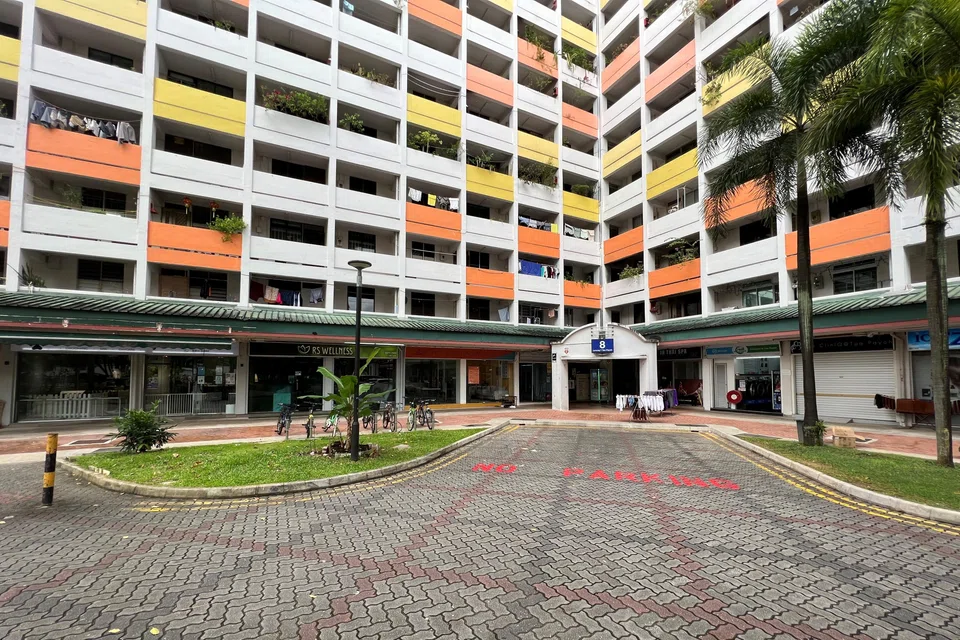
THE growing interest in HDB shophouse assets comes mostly from local individuals or companies, with foreigners accounting for a very nominal proportion, said Knight Frank capital markets executive director Mary Sai.
This is despite the Housing and Development Board properties being considered commercial assets, so foreigners face no restrictions in purchasing them, said Clemence Lee, CBRE capital markets executive director for Singapore.
Sai attributes this to the Additional Buyer’s Stamp Duty payable for the residential component of the property – the HDB shophouse’s living quarters on the second floor.
Lee noted that most buyers of coffee shops situated in HDB shophouses are local coffee shop operators, such as Broadway, Kimly and Chang Cheng Group, who buy and manage the assets themselves.
Several HDB coffee shops have changed hands at eye-watering prices. Most recently in June, The Edge reported that coffee shop chain operator Kimly bought a 358-square-metre unit in Serangoon Central for S$13.2 million, or S$3,412 per square foot.
Steven Tan, managing director of capital markets and investment sales at ERA Realty, observed that what used to be largely owned by locals has now attracted “larger, more sophisticated investors” such as private equity funds.
For instance, property group JBE reportedly bought one of the three bundles of commercial properties in HDB estates that NTUC Enterprise unit Mercatus put on the market last year. The deal was said to be in the low-S$80 million range.
Another notable transaction was DBS’ sale of 19 HDB shophouses and shop units in May this year. These units were part of the 46 shophouse and retail units, formerly occupied by the bank’s full-service branches, that were put up for sale in April at a total guide price of about S$210 million. DBS said the offers it accepted for the 19 units came in above guide prices.
“From the market, we understand that most of the buyers are local,” said Lee of CBRE.
Scarcity adds to the appeal, he noted. There are around 8,500 privately held HDB shops, including shophouses, out of about 15,500 in total.
These shops were sold by HDB in the 1980s and 1990s to promote entrepreneurship and ownership of commercial properties. The sale of HDB shops was discontinued in 1998, and the agency now rents out shops directly to businesses. This is for “better curation and to ensure affordability of essential goods and services for residents”, said HDB.
HDB shophouses are typically found in mature housing estates with a large catchment of shoppers from nearby public and private homes and schools.
“Due to the changes in consumer demand, the retail performance in HDB shophouses in the heartlands has been resilient through the pandemic,” Lee said. “(Therefore), investors like HDB shophouses as they offer defensive income and are less cyclical compared to investing in other asset classes such as retail, offices and industrial.”
Still, Evan Chung, head of Knight Frank’s property network, noted that there remains a “sizeable pool of investors” who prefer freehold conservation shophouses due to their limited supply and tenure, which may provide greater capital gains over time.
There are also risks involved in buying an HDB shophouse. For one, it may be difficult to get bank financing if the remaining lease is too short, said Sai.
Most HDB shophouses have a remaining lease tenure of 40 to 65 years, Lee noted, and investors also have to keep value depreciation in mind.
Regulations governing HDB shophouses are more restrictive than for private shophouses, too, said Tan of ERA. Not only is the tenure fixed at 99 years with little chance of topping it up to a fresh 99 years, the sale of HDB properties must also be approved by the authorities, he said.
He added that conservation shophouses in certain areas allow asset enhancements, such as the addition of an extension block at its rear, but HDB shophouses are not permitted any form of asset enhancements.
TRENDING NOW
He built the Vingroup empire. Now South-east Asia’s richest man is handing some key roles to his sons
Despite the de-dollarisation debate, demand for dollar liquidity in Asia is growing
Can a first-time homebuyer couple earning S$18,000 a month afford a new EC unit?
Asia needs new energy security architecture