Why the renovation of Federal Reserve headquarters costs US$2.5 billion
The most challenging parts of the renovation are underground
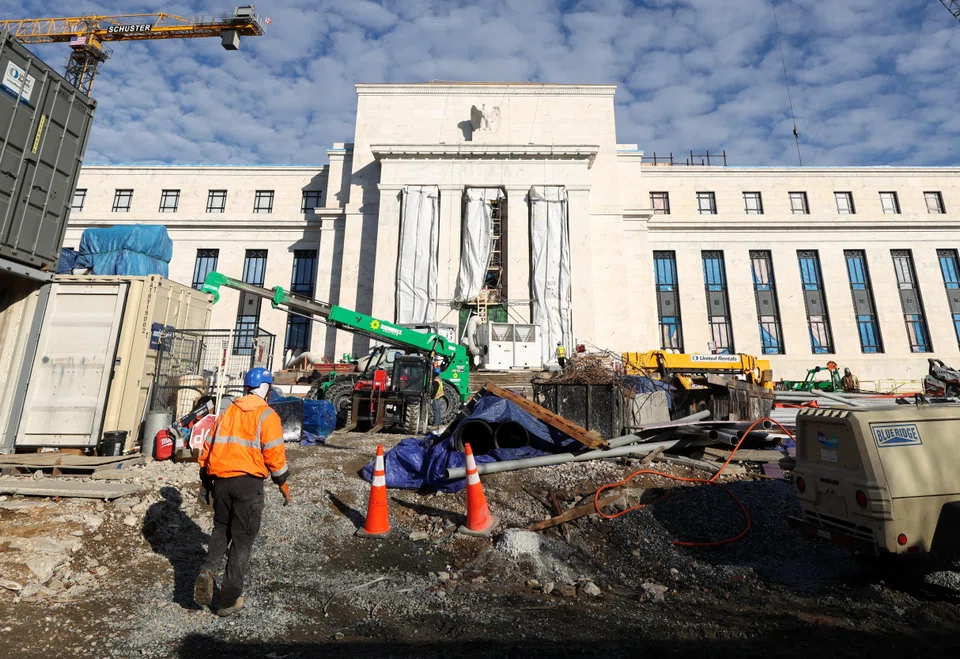
[WASHINGTON] For months, the renovation of the US Federal Reserve’s headquarters in Washington has been a subject of friction between the White House and the central bank. On Sunday (Jan 11), Fed chair Jerome Powell said the Department of Justice (DOJ) had issued subpoenas in advance of a possible criminal indictment related to the ongoing work.
The cost of the work has ballooned to US$2.5 billion, and allies of President Donald Trump have previously pressed for an investigation. Powell described the DOJ inquiry as a pressure campaign led by the White House.
Any evidence of mismanagement or fraud, as Trump administration officials have suggested, could prove a useful pretext for removing Powell, who the president has repeatedly lambasted for interest rates higher than he would like.
Powell’s critics have pointed to certain features of the building plans as ostentatious, including vegetated roofs and changes to the lift. The Fed has said the price tag for the renovation has more to do with the challenges of building – particularly underground – in what was once a swamp near the Tidal Basin along the Potomac River.
The ongoing renovation and expansion of the historic 1937 building that houses the Fed, plus an adjacent 1931 federal building, has faced setbacks, with costs for the long-overdue rehab climbing more than 30 per cent since 2023.
Foundation work for the Fed expansion was so difficult that contractors responsible for the job received a 2025 award for “excellence in the face of adversity” from the Washington Building Congress, a building trades association.
Officials from the Trump administration blame wasteful spending for the cost overruns. In a Jul 10 letter to Powell, Office of Management and Budget director Russell Vought described the project as an “ostentatious overhaul” featuring “rooftop terrace gardens”, “VIP dining rooms and elevators” and other luxury amenities. Federal Housing Finance Agency director Bill Pulte, a frequent Powell critic, was a key driver behind the DOJ probe.
The White House is currently engaged in a costly development project of its own, Trump’s 90,000-square-foot ballroom, although it is being funded with donor rather than taxpayer money.
Trump first teased the project in February as a US$100 million expansion, an estimate that has more than tripled since. Recent estimates of US$300 million suggest a total project cost of US$3,333 per square foot, far more than renovation costs for the Fed.
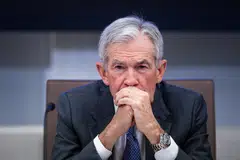
Powell has defended the renovation of the Fed headquarters as transparent. He responded to Vought’s claims in a letter on Jul 17, saying that the gardens are merely green roofs, for example, and the lift is being extended to accommodate disabled users.
And in a video and written statement on Sunday, Powell said that the DOJ’s move “should be seen in the broader context of the administration’s threats and ongoing pressure”.
The project was always going to be tricky, with initial cost estimates pinned at US$1.9 billion. Construction on the Marriner S Eccles Federal Reserve Board Building and the adjacent Federal Reserve East Building involves adding new office space, removing asbestos and lead, and replacing antiquated mechanical systems.
Neither the Eccles Building – an austere edifice designed by Paul Cret and dedicated by Franklin D Roosevelt – nor the East Building has been fully renovated since they were built almost a century ago.
In 2021, the Fed’s Office of Inspector General (OIG) issued a report outlining how the board could improve the way it plans and manages its renovation work. The report found that the board could do more to ensure that contractors submit required meeting minutes and progress reports on a timely basis. The OIG did not find evidence of fraud and waste, indicating that the board complied with industry and government standards.
Some of the bigger cost factors are largely invisible.
The price of structural steel exploded in 2021, just before construction began. Any building project in Washington’s so-called monumental core is covered by a bevy of design oversight boards that can – and did – slow down the work.
And the renovation of structures built during the New Deal has to account for federal security standards adopted after the Sep 11, 2001, terrorist attacks.
The most challenging parts of the renovation, however, are underground.
Parts of the job call for deep excavation. Expanding the Fed’s campus involves converting a parking garage underneath the Eccles Building into additional office space. A five-storey addition on the north side of the Fed’s East Building also boasts four extra floors below ground – a common trick in Washington, where heights are capped and historic vistas are protected.
Below the south lawn of the East Building, a 318-space parking garage is being added. According to the Fed, the water table was higher underground than builders had predicted.
Building a new basement below an existing structure is a huge undertaking. Berkel and Company Contractors, a specialty foundation contractor, had to physically lower the slab on which the building stands, supporting the structure while excavating the ground beneath it.
The company declined to comment, but a video posted on YouTube explains that Berkel built a bracing system above the slab in order to demolish it and lower the basement level more than 6 metres. The work required 1,000 micropiles, deep foundation steel elements used in ground conditions that do not allow for traditional piles.
Excavating underneath historic structures is expensive work. A proposal to shore up the Smithsonian Institution’s 19th-century Castle against seismic rumbling with an expansion below ground totalled US$2 billion before the plans were shelved. Building along the National Mall is tough as well. Much of the land did not exist a century ago.
As landscape architect Phia Sennett wrote on the website of the National Trust for Historic Preservation, the Tidal Basin and surrounding area were filled from sediment dredged from the Potomac River and built over a series of creeks.
To complete the Smithsonian’s National Museum of African American History and Culture – more than 60 per cent of which is below ground on the National Mall – architects had to design an enormous “bathtub” to keep the water table out.
Construction costs for that building, which opened in 2016, reached US$540 million, 50 per cent more than an initial estimate. The price tag for the National September 11 Memorial and Museum, another project with daunting underground requirements and multiple stakeholders, rose to US$1 billion before construction was halted in 2011. Its final costs were reported at US$700 million.
In testimony before Congress in June, Powell acknowledged the project was a daunting one.
“No one in office wants to do a major renovation of a historic building during their term in office,” he said. “We decided to take it on because, honestly, when I was the administrative governor, before I became chair, I came to understand how badly the Eccles Building really needed a serious renovation. It never had one. It was not really safe and it was not waterproof.”
Design plans for the Eccles Building have changed significantly since they were first introduced.
During the first Trump administration, architects, at the request of the Fed, proposed using more glass, but Trump appointees to the US Commission of Fine Arts asked for more white marble to align with a proposed mandate from the president requiring all new federal buildings to be classical in style.
The demand to use more marble was first reported by the Associated Press.
During a 2021 review by the National Capital Planning Commission, a General Services Administration (GSA) official said that the Fed had withstood a “tumultuous” oversight process.
“They’ve been really put through their paces,” Mina Wright, founding director of the GSA’s Office of Planning and Design Quality, said at the time. “They’ve had some hostile criticism at one point that was unjustified.” BLOOMBERG
Decoding Asia newsletter: your guide to navigating Asia in a new global order. Sign up here to get Decoding Asia newsletter. Delivered to your inbox. Free.
Share with us your feedback on BT's products and services