Wider design focus for Michael Graves
Now relying on a wheelchair to get around, the distinguished US architect creates buildings for survivors, reports BARBARA SADICK
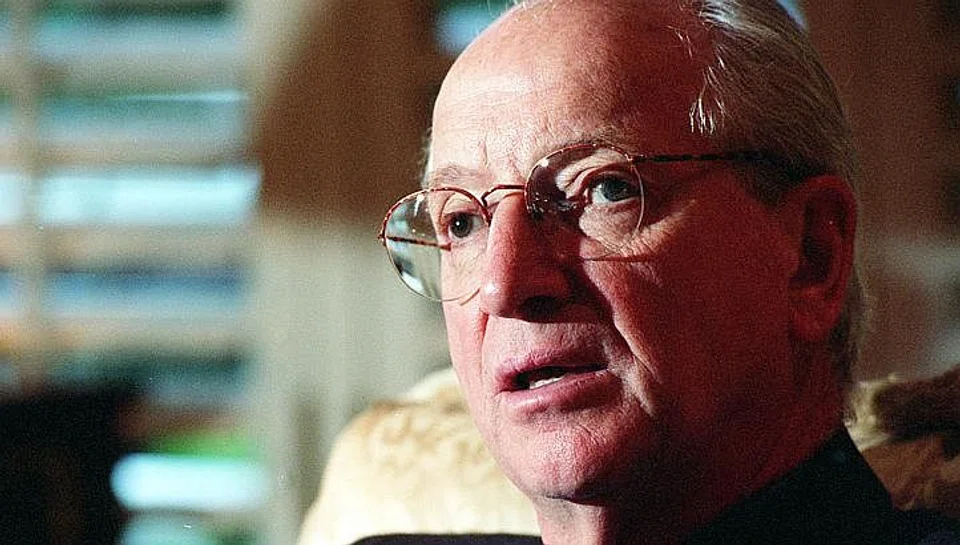
[NEW YORK]
IN 2003, Michael Graves had just returned home from a business trip to Germany and Switzerland. He wasn't feeling well and told colleagues at his architectural firm that he was leaving early to go home and rest.
By the next morning, Mr Graves - one of America's most prominent architects and designers - was fighting for his life against a mysterious virus. It was not until two years later, after treatment in eight hospitals and four rehab centres, that he finally got back to work - paralysed from the chest down and needing to use a wheelchair.
This story is not about the virus or his rehab, but about what Mr Graves has done with the rest of his life: design hospitals and rehab centres for people like himself, for wounded soldiers and for others facing huge physical challenges. Most of what exists now for such people, he says, is just too depressing to even die in.
"I believe well-designed places and objects can actually improve healing, while poor design can inhibit it," says Mr Graves, now 80 and still working full time. Designers, he says, must understand the physical implications of not being well: "This became very real to me after my illness. So since then I've asked my design team to spend a week in a wheelchair."
Until he got sick, Mr Graves was a "rock star", as one of his employees puts it, best known as the designer of such buildings as the municipal centre in Portland, Oregon - hailed as the first postmodern building in America - as well as some of the playful, entertaining Disney hotels and the Spanish Mission- inspired library in San Juan Capistrano, California.
When the Washington Monument needed a major renovation in 1998, the National Park Service hired him to design the scaffolding around it. Illuminated at night, the structure glowed, making it a dramatic part of the landscape, not a mere facade for a construction project.
He also brought his style to consumers. He created the iconic angular stainless steel Alessi teakettle, which has been Alessi's top-selling product every year since its debut in 1985, and for over a dozen years he designed a line of household products for Target (a role he now plays for JC Penney).
"We wanted to do something different," says Ron Johnson, who brought Mr Graves to Target when he was an executive at the retailer, "and Michael liked the idea of bringing original design to Middle America".
Mr Graves says he has always known that physical environment affects people, but his experiences after becoming ill bolstered that belief.
People need "buildings, rooms and objects that are easy to use and understand", he says. And "beauty can reduce stress and make us feel better".
He says good design also makes the work of caregivers, whether professionals or family members, easier. "All of these design questions," Mr Graves says, "if answered correctly, can lead to improved health and well-being."
Designers must understand the physical implications of not being well. It's often the little things, such as trying to pick up a piece of paper dropped from a wheelchair, that become important. And after his designers have spent time in a wheelchair, they get it.
Mr Graves was designing a new building for St Coletta of Greater Washington, a school for children and adults with cognitive and physical disabilities, when he contracted the virus that changed his life. For nearly three years, he vanished into the world of his own medical problems, and returned to the St. Coletta project only in 2006, for its opening.
"It was the first project opening that I attended in my wheelchair," Mr Graves says.
Before his illness, he says, he knew intuitively and from the staff at St Coletta what kind of design was needed to make life for handicapped individuals easier - but after his illness, it really hit home. Many students at the opening were also in wheelchairs, and one of them told the architect how grateful he was to have a school designed to work for him. "That," Mr Graves says, "reconfirmed my mission to improve health- care experiences with great design."
In 2010, he was asked by Clark Realty Capital, a construction and rental firm, to come up with a prototype for a single- family home that a wounded soldier could live in with his family while continuing on active duty at Fort Belvoir in Virginia. He had redesigned his own home in Princeton, New Jersey and knew what was required for one dealing with disabilities.
He knew, for example, that such a house had to be built with no stairs, that its hallways had to be wide enough to allow two wheelchairs to pass each other, and that rooms had to be large enough to accommodate both furniture and a wheelchair that could spin in a circle.
Wheelchairs had to be able to roll into bathrooms and showers. Doors had to slide, not open in or out. Push buttons had to open things. Windows had to be lower to allow good views from a wheelchair.
In addition, the house's features had to be easily adaptable for people with various kinds of injuries. The heating and cooling system, for example, needed to allow each room to accommodate the different requirements of burn victims, amputees and others. The counters needed to be adjustable to suit each resident. Baseboards had to be extra tall to protect the walls from wheelchair damage, and the flooring had to have visual contrast to assist people with damaged eyesight.
Two prototypes based on Mr Graves' design are now in use, with 19 more to join them eventually.
The project brought to Mr Graves' attention the number of wounded soldiers who choose to remain on active duty and attuned him to the broader needs of an ageing but still active generation of baby boomers.
"With the improvements in battlefield medicine, combined with an ageing US population that wants to 'age in place', a focus on accessibility and home healthcare is vital to our nation's future," he says.
Mr Graves is working on a host of other projects. He is designing a rehabilitation hospital in Lincoln, Nebraska for people with traumatic brain and spinal cord injury. He is drawing up the renovation of a unit at Yale-New Haven Hospital that offers acute care for the elderly. And for Mainstreet, an Indiana company that builds and owns nursing homes and other facilities, he is rethinking the model for senior living centres.
He is also working with a health technology firm to design hospital room products that will be not only easier for those with disabilities to use, making falls less likely, but also more attractive than what is found in many hospital and rehab rooms and much easier to clean.
"Who knew," Mr Graves asks, "that well-designed furniture and equipment could be part of the solution to reducing patient falls and the spread of infection?"
When he was ill, many of the rooms he occupied were poorly designed and full of products that made him feel worse. For instance, the height and angle of the bathroom mirrors made it hard for him to see his face. He wasn't able to reach the faucets, making it impossible to shave or brush his teeth.
Mr Graves doesn't design buildings and products only for those with physical handicaps now. But he says his paralysis changed his life overnight.
He lost the ability to do some of the things he loved, like play golf, but gained a new perspective that has been valuable - for him and, he believes, for people his new designs can help.
"Since my paralysis did not take away my ability to design and in fact has, if anything, made me a better designer, I remain whole," he says. "Now I wake up every day with a full appreciation for life, and with a passion to use my ordeal and newfound perspective to make a lasting contribution." - WP