
With sale to Blackstone, China's property power couple cements exit
Under Xi Jinping's leadership, public and official scrutiny on high-profile entrepreneurs has risen
 Add BT as a preferred source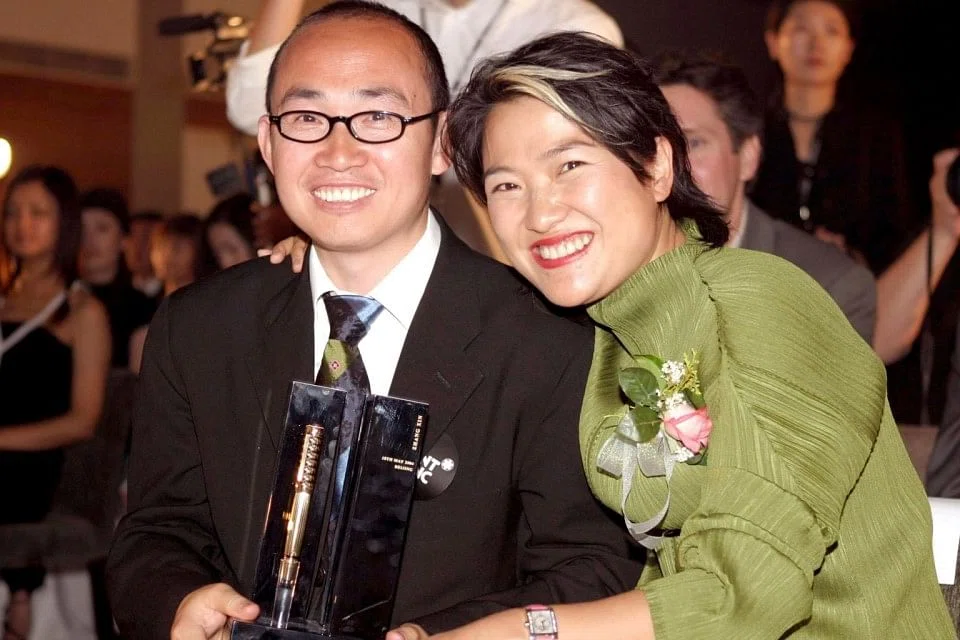
Taipei
CHINA'S economy is on a tear. Factories are humming and foreign investment is flowing in. Even so, the wealthy and powerful people atop some of the country's most prominent companies are heading for the exits.
The latest are Pan Shiyi and Zhang Xin, the husband-and-wife team that runs Soho China, a property developer known for its blobby, futuristic office buildings. In striking a deal this week to sell a controlling stake to investment giant Blackstone for as much as US$3 billion, Mr Pan and Ms Zhang are turning over the company as high-profile entrepreneurs come under public and official scrutiny in China like never before.
Soho China did not respond to a request for comment.
China's most famous tycoon, Alibaba co-founder Jack Ma, has kept an uncharacteristically low profile since late last year, when the government began a regulatory crackdown on his companies and the wider Internet industry. Colin Huang, founder of Alibaba rival Pinduoduo, resigned as chairman in March, less than a year after he stepped down as chief executive officer (CEO). In May, Zhang Yiming, founder of TikTok's parent company, ByteDance, said he would hand over the CEO post to focus on long-term strategy.
Under the Communist Party's top leader, Xi Jinping, nationalism has been resurgent in China, and the government has sought to exert more direct influence over the private sector. Even before this week's sale, Mr Pan and Ms Zhang had been avoiding the spotlight more than they did during an earlier, freer era of China's economic revival. "For big tycoons in China, nowadays they need to be careful in general," said Ling Chen, who studies state-business relations in China at the School of Advanced International Studies at Johns Hopkins University.
Navigate Asia in
a new global order
Get the insights delivered to your inbox.
Highly visible entrepreneurs, particularly those in risky sectors such as real estate and finance, know that regulators will scrutinise their businesses more closely someday, Ms Chen said. "They just don't know when that day is."
The rise of Mr Pan and Ms Zhang, as they have described it in media interviews and online, mirrored China's rise.
Mr Pan, 57, grew up poor in the remote north-western province of Gansu and briefly worked at a state-owned oil company after college. In the early 1990s, he started a real-estate company in the southern province of Hainan with a few friends and made his first bucket of gold.
Ms Zhang, 55, was born in Beijing and immigrated to Hong Kong at age 14. She worked in factories for years before going to Britain with the equivalent of a few thousand dollars in savings. After receiving a master's degree in economics at Cambridge, she worked at Goldman Sachs.
She was introduced to Mr Pan in 1994. He proposed four days later. In 1995, they founded the company that would later be renamed Soho China. As their towers began piercing the Beijing and Shanghai skylines, they became an "it" couple in business and society circles. Top entrepreneurs, government officials and intellectuals attended their parties.
Mr Pan was also one of the first Chinese business leaders to recognise the power of the Internet in marketing and public relations. He wrote a popular blog in the 2000s. Then, when the Twitter-like social media platform Weibo came along, he quickly became one of its most influential voices, amassing more than 20 million followers.
In his Weibo posts, he wrote about his childhood, China's real-estate policies and air pollution in Beijing. He was never too pointed in expressing his opinions. But he wanted China to learn from its mistakes, such as its cruel treatment of the moneyed and educated classes during the Cultural Revolution.
After Mr Xi took office as China's president in 2013, the authorities began going after businesspeople and intellectuals with big online followings. The police that year arrested Wang Gongquan, a friend of Mr Pan's and supporter of human rights causes, on charges of disrupting public order.
Mr Pan and Ms Zhang began selling off property holdings in China and spending more time in the US. The Zhang family and the Safra family of Brazil, long involved in international banking, teamed up to buy a 40 per cent stake in the General Motors building in the New York City borough of Manhattan. Chinese news outlets asked why Soho China was letting go of billions of dollars in assets in China. They noted that the couple donated generously to Harvard and Yale, but not to Chinese universities.
After media reports accused Soho China of "fleeing" Shanghai by selling projects there, Mr Pan wrote on Weibo: "Buying and selling is normal. Don't read too much into it." The company's last big public event was the opening of Leeza Soho, a spiralling skyscraper in Beijing, in late 2019.
On Wednesday night, minutes after Soho China announced the sale on its official Weibo account, Mr Pan reposted the announcement without comment, in what online commentators called a "silent farewell". NYTIMES
Decoding Asia newsletter: your guide to navigating Asia in a new global order. Sign up here to get Decoding Asia newsletter. Delivered to your inbox. Free.
Share with us your feedback on BT's products and services

