

'Women build the city' is Vienna's space for female architects
In Seestadt district, women are heavily involved in design of new buildings, take centrestage in naming new streets
 Add BT as a preferred source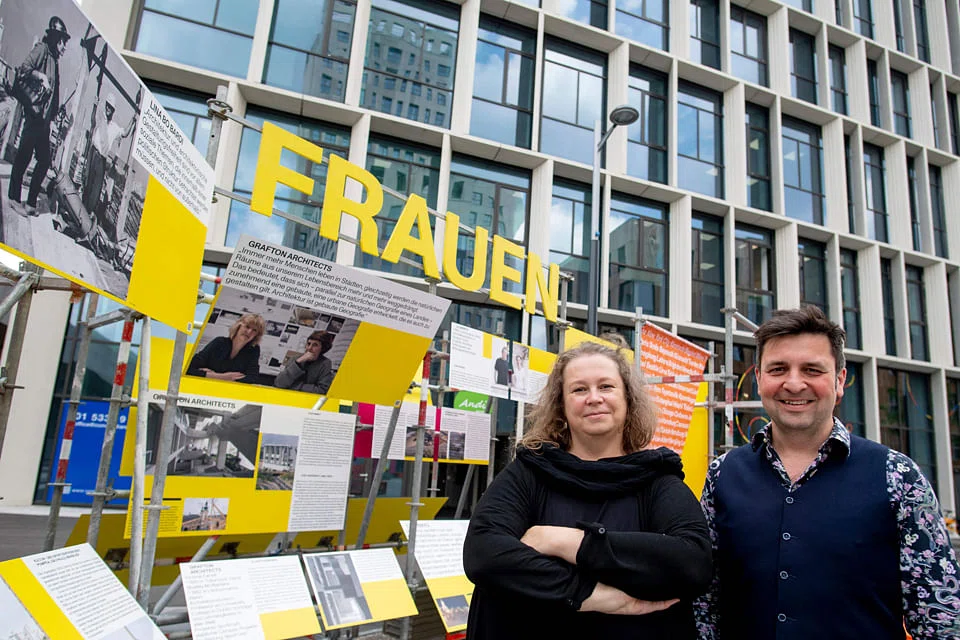
Vienna
WOMEN may hold up half the sky, but when it comes to designing the public spaces and buildings in which they live, their voices have too often been silenced. A visionary project in Vienna aims to turn that notion on its head, with a suburb in the Austrian capital designed by and for women.
It exemplifies how the city is trying to make urban space more inclusive, from brighter lights to broader pavements that make room for pushchairs, and how female architects and designers are driving the change.
The new Seestadt district has been in the throes of development since 2012, a sprawling building site on the city's eastern edge that is projected to expand from its 8,300 population now to 20,000 by 2030.
Giant letters on hoardings around some of the construction sites proclaim "Women build the city".
By turning the focus on the role of women in urban design, Vienna is helping to highlight the still dominant role men play in shaping the built environment.
The developers and bankers who often make the crucial decisions when it comes to urban development are still overwhelmingly male, says Sabina Riss, an architect and university researcher who studies the relationship between gender and urban planning. She estimates in most countries "the percentage of women in the decision-making process at between 5 and 10 per cent at most".
As well as being heavily involved in the design of the new buildings in Seestadt, women also take centrestage when it comes to naming the new streets.
The philosopher Hannah Arendt, singer Janis Joplin and children's book heroine Pippi Longstocking are just a few of the names to grace the new addresses.
The district is also hosting a new exhibition showcasing female architects that runs until Oct 15.
According to architect Carla Lo - who herself has contributed designs for one of Seestadt's interior courtyards - Vienna's planning policies have been refreshed since Kathrin Gaal in 2018 became the first woman to head the city's powerful housing department, overseeing an annual budget of more than a billion euros (S$1.6 billion).
"Since she has been there, suddenly the particular needs of single mothers are considered when tenders go out for projects," Ms Lo says.
Having given her input to the development of Seestadt, Ms Gaal says she wants the exhibition there to encourage other women "to make their visions reality".
The desire to cater to women's needs can be seen in many facets of Vienna's modern city planning, from the brighter street lights and more exits at sports venues to help women feel safer, to provision of better toilet facilities.
In residential design too, there are such innovations as common rooms shared between several flats to keep prices low and encourage families to collaborate for childcare.
At the exhibition, visitors can learn about the often overlooked achievements of 18 female architects, artists and urban planners from across the world.
For co-curator Wojciech Czaja, the show fits the ethos reflected in Seestadt's street names: "Ninety-two per cent of streets in Vienna are named after men. This doesn't reflect history or the present. That's why almost all locations here are named after women, from the worlds of art, politics, economy and architecture."
As in many other fields, women have long been active in shaping urban spaces but have rarely been accorded the credit or fame that male counterparts enjoy. In 1912, a project for a garden city won an international competition for the design of the new Australian capital Canberra.
While it was American architect Marion Mahony Griffin's renderings that impressed the jury, most of the credit went to her husband.
"Even today, women are written out of projects," Mr Czaja's co-curator Katja Schechter told AFP, citing a relatively recent case involving architecture's most prestigious prize.
"We have here an example of (Chinese architect) Lu Wenyu; her husband won the Pritzker Prize, even though they always built projects together - and that was in 2012."
The first woman to break the Pritzker's glass ceiling after 25 years of male prizewinners, was Anglo-Iraqi architect Zaha Hadid in 2004, for the Contemporary Arts Center in Cincinnati, Ohio.
Several others followed: Kazuyo Sejima in 2010, Carme Pigem in 2017, Yvonne Farrell and Shelley McNamara in 2020 and Anne Lacaton in 2021.
Some of the work highlighted in the exhibition is in the many countries where urban populations are continuing to swell as a result of migration from the countryside.
In Teheran, a 270-metre-long pedestrian walkway created by Leila Araghian was used by four million of the city's inhabitants the year after it opened in 2014 and has since won several prizes. AFP
Decoding Asia newsletter: your guide to navigating Asia in a new global order. Sign up here to get Decoding Asia newsletter. Delivered to your inbox. Free.
Share with us your feedback on BT's products and services
TRENDING NOW

Simba ordered to pay S$700,000 in damages to indoor skydiving operator Altitude Xperience for trespass

Malaysian tycoon Vincent Tan’s sell-downs point to pruning rather than an exit plan
What’s wrong with Orchard Road? Experts weigh in on the street’s cachet and its future
Scaling Berli Jucker’s retail empire – daughter of Thai beer billionaire seeks growth outside home country

