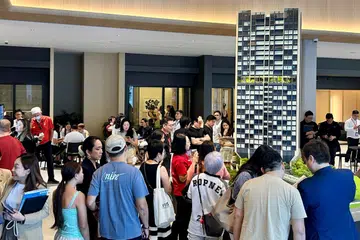
Young South Koreans dump homeowner dreams to pile into soaring stocks
Housing costs in the capital Seoul have outpaced even hot markets such as New York and Tokyo while affordability has tightened
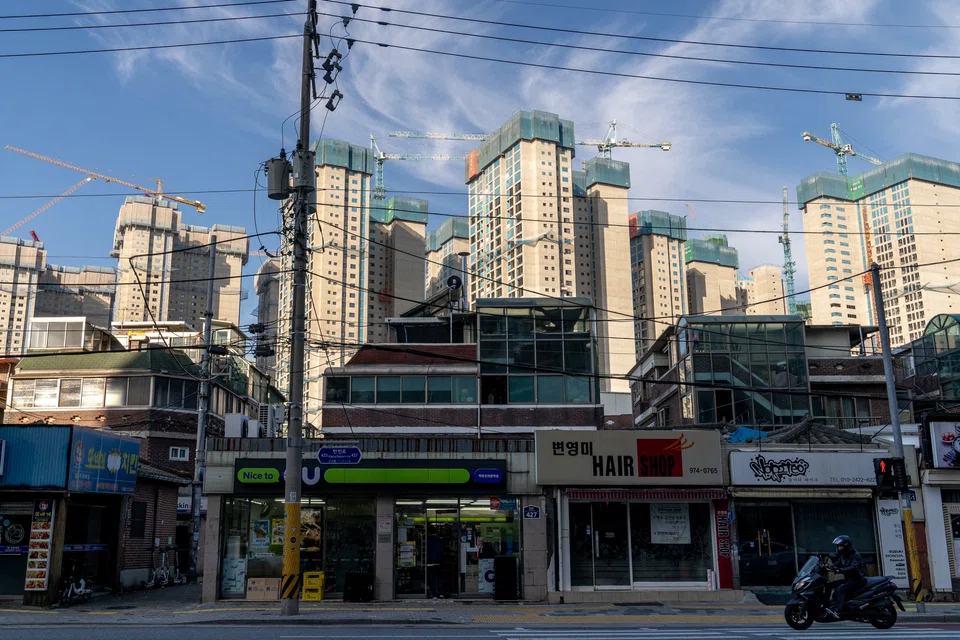
[SEOUL] South Koreans are piling into equities at a record pace as they retreat from an overheating housing market, a shift that’s underscoring policymakers’ struggle to cool housing prices and ease discontent over affordability.
South Koreans using borrowed money to bet on domestic stocks jumped to all-time high of 26.8 trillion won (S$23.6 billion) on Nov 20, according to the Korea Financial Investment Association. Meanwhile, South Koreans’ overseas securities holdings also climbed to a record US$1.2 trillion at the end of the third quarter, Bank of Korea (BOK) data show.
The government is attempting to change behaviour, especially among younger South Koreans, by encouraging them to buy equities and move away from the frothy property market. Housing costs in the capital Seoul have outpaced even hot markets such as New York and Tokyo while affordability has tightened. The ratio of Seoul home prices to worker income has nearly doubled over the past decade.
One element of the policy appears to be working: a wave of new retail investors has helped propel the main Kospi share index 68 per cent this year, the top performer among the world’s largest markets. Yet there is little sign the heat is coming out of home values in the capital, a dynamic that has turned the BOK wary of financial stability risks and kept monetary policy on hold, even as the export-driven economy faces headwinds from higher US tariffs.
“Prices have risen so fast that affordability is a challenge,” said Trinh Nguyen, an economist at Natixis in Hong Kong. This makes it harder for young people to buy homes and start families, she added.
“The Bank of Korea is now prioritising financial stability over pro-growth policy as imbalances grow,” adding that there is “discontent and uneasiness over this imbalance”.
South Koreans’ record rush into stocks marks a striking shift in the nation’s wealth dynamics – and a warning for policymakers. As the government struggles to rein in Seoul’s runaway housing market, younger South Koreans are giving up on homeownership and turning to equities instead. For generations, owning a house has been one of life’s main milestones in South Korea, as it is in much of the world.
Yet the pivot highlights deepening inequality: real estate remains out of reach, household risk-taking is surging, and frustration over affordability is reshaping financial behaviour.
The frenzy among retail investors for leveraged products has already prompted regulators to tighten rules on the purchase of high-risk products which kick in from Dec 15.
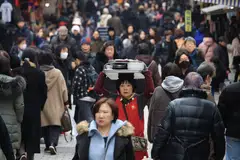
For many South Koreans, the trade-off is straightforward.
Take You Younghoon, a 43-year-old salesman at a guitar store in Seoul. He and his wife have been buying stocks whenever they have spare cash, since getting married earlier this year.
“Home prices are too high to even consider,” he said. “Saving up to buy a house here is impossible.”
While hot housing markets have frustrated would-be homeowners in many countries, Seoul stands out for its rapid and persistent price gains. Even using the most recent data available, the gap is stark: a household in Seoul needed to save its entire disposable income for about 13.9 years to afford a home in 2024, according to the Ministry of Land, Infrastructure and Transport.
By contrast, New York City households required around 9.7 years based on 2022 data from the Office of the Comptroller. Despite the two-year difference, the data shows Seoul’s housing remains dramatically less accessible than global peers, underscoring the severity of its affordability challenge.
Another fundamental shift is also undermining South Koreans’ ability to own property.
Demand for the decades-old jeonse system, in which tenants pay a large lump-sum deposit instead of monthly rent, has been fading. Once a stepping stone for aspiring homeowners, the model has fallen out of favour as a wave of fraud cases erodes trust between tenants and landlords.
Rising housing costs and the decline of the traditional system are pushing younger South Koreans to other investment areas.
For Bryan Do, giving up his jeonse has allowed him to invest more aggressively in the stock market.
“My wife understood the decision and supported me,” said the 35-year-old engineer who lives in Gyeonggi Province, which surrounds Seoul. “I couldn’t afford to buy real estate in core areas of Seoul such as Gangnam, so it made more sense to focus on investing in some of the world’s best companies,” Do added.
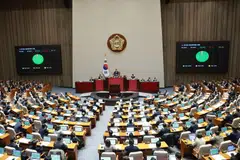
President Lee Jae Myung has promised to roll out investor-friendly policies since taking office in June, even pledging to push the benchmark index towards the 5,000 level, a rare political commitment to a market milestone. Buoyed by his reform agenda and an artificial-intelligence boom, the Kospi has become the world’s best-performing major index this year.
At the same time, his administration has announced a series of measures to curb speculative activity in Seoul’s housing market. Still, apartment prices in Seoul have risen for 44 consecutive weeks despite repeated government efforts to cool the market. The relentless surge has drawn the attention of the nation’s top policymakers, who have voiced growing concern.
“I used to live in a jeonse, but when I opened my cafe this year, I needed money, so I switched from jeonse to monthly rent,” said Kim Daewan, a 38-year-old small business owner in Seoul, who now pays 600,000 won in rent. Kim said he buys S&P 500 shares every month.
Recent gains in Seoul’s housing prices were “well above” expectations, the BOK governor Rhee Chang Yong told Bloomberg News, adding that authorities need to assess how the government’s measures play out as policy remains focused on financial stability. Rhee also said he was concerned about young South Koreans piling into overseas stocks.
President Lee also described the property market as “a bubble on the verge of bursting”. Since taking office in June after pledging to improve housing affordability, he has introduced several steps to curb speculation, though their impact has so far been limited.
Yet for some, the government’s property measures have “crushed young people’s dream”, Son Myeong-hoon, 27, a Seoul resident said.
“In trying to catch speculators, they have blocked young people’s housing choices,” Son added. BLOOMBERG
Decoding Asia newsletter: your guide to navigating Asia in a new global order. Sign up here to get Decoding Asia newsletter. Delivered to your inbox. Free.
Share with us your feedback on BT's products and services