

Zohran Mamdani’s tax threat risks worsening New York City housing crisis he’s trying to fix
Landlords are already facing rising insurance premiums, utilities and maintenance costs
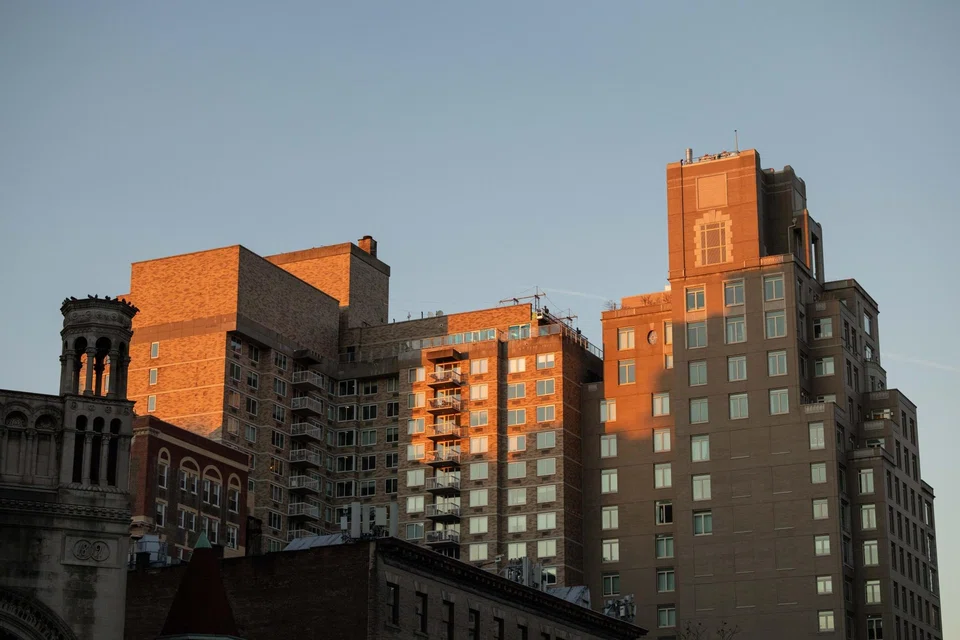
[NEW YORK] To help close New York City’s budget gap, Mayor Zohran Mamdani has floated the idea of a property tax increase. While that would hit all real estate owners, the people who could afford it least would end up bearing the brunt of the hike.
The property tax proposal is just one option – and Mamdani has called it a last resort that he’d fall back on if other ways of bringing in money do not come through. Under the plan, rates would climb about 10 per cent, with higher levies potentially affecting more than three million residential units.
Owners of the city’s most valuable condos and co-ops would be taxed advantageously, real estate experts said. On the other end of the spectrum, New Yorkers already stretching their budgets to buy their first home may find it harder to get approved for a purchase with the added tax burden.
Ironically, it’s renters, who fuelled Mamdani’s meteoric rise during his mayoral campaign, who’d be especially hard hit, according to Martha Stark, a policy director for the advocacy group Tax Equity Now New York. Even though renters do not directly pay property taxes, their landlords do, and they tend to roll any increase in their operating expenses into what they charge tenants.
“It really impacts renters and first-time homebuyers,” said Jessica Chestler, an agent at Douglas Elliman. “Ultra-high net worth individuals will always find a way to have property in New York. But it’s really going to have the biggest impact on the middle and lower class.”
As it exists, the city’s property tax system is notorious for being convoluted, and City Comptroller Mark Levine has called it “profoundly unfair and inconsistent”. Mamdani has called for the property tax system should be reformed, calling it “long-broken” during his inauguration speech.
Levies are assigned based on what you own, where you own it and how the city chooses to value it. The structure is regressive, essentially offering breaks to the wealthy while punishing lower-end property owners.
In absolute US dollar terms, wealthy homeowners pay more. But when looking at the effective tax rate, their bills are lighter relative to the property’s actual market value.
Whether you are a homeowner or a renter, the city has one of the most competitive and unaffordable housing markets in the country. Rent hikes for market-rate units have been almost unrelenting recently, especially in Manhattan, where apartment hunters have to gird for bidding wars. And with high rents commanding so much of New Yorkers’ paychecks, saving for a down payment to buy a home is an unscalable hurdle for many would-be buyers.


With that as the backdrop, it’s not hard to see how even high-earning New Yorkers helped power Mamdani, a democratic socialist who made affordability his campaign mantra, to the city’s highest office. It’s also why the property tax proposal comes as a surprise to many people who were drawn in by his promises to tackle the city’s housing crisis by building more apartments and freezing rents on certain units while advocating higher taxes for the rich.
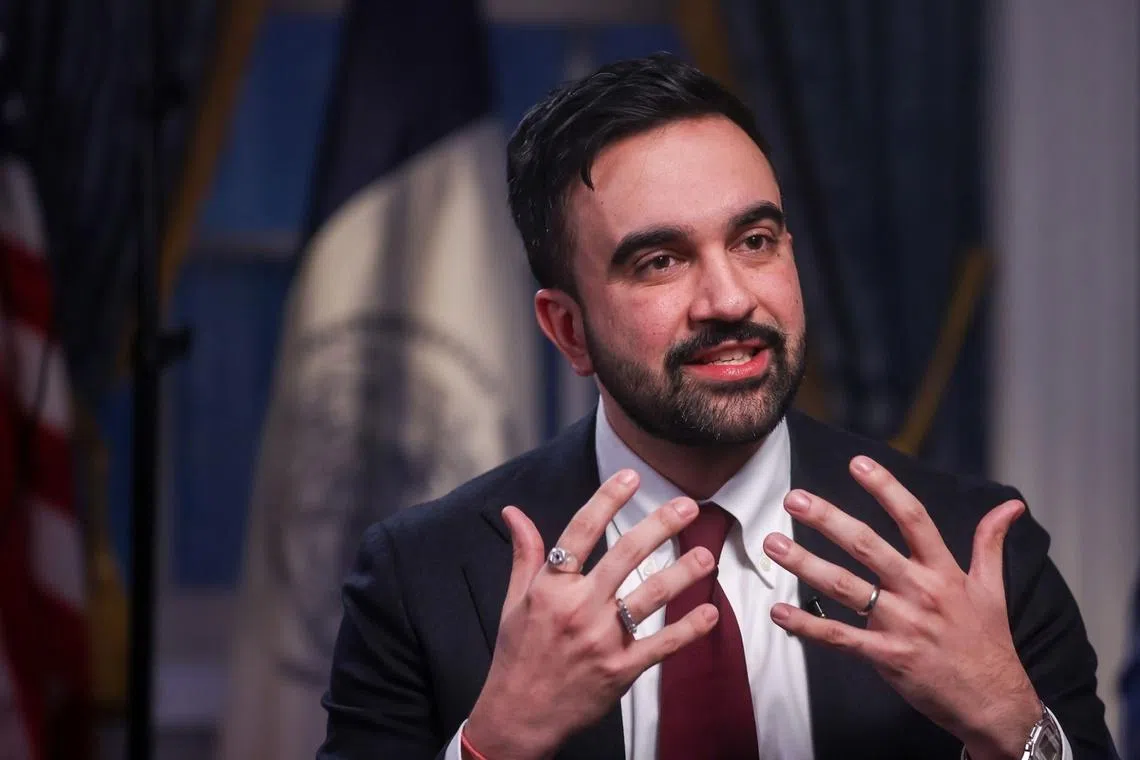
While the city’s US$5 billion budget gap may force his hand, Mamdani has said raising property taxes for everyone would not be his first choice. The proposal is largely a strategic move to lobby Governor Kathy Hochul and lawmakers in Albany for more funding, including potentially a bill to raise state income taxes on wealthy residents and corporations.
Mamdani’s office declined to comment. A representative for Hochul did not provide comment for this story but pointed to the governor’s January interview with NY1. In that, she said that she was “firm” on her position to not raise taxes on the wealthy but would want to “broaden the pool” by creating more jobs and having additional businesses open in New York.
“I want to make sure that people are still here and we don’t end up having those taxes pushed down to lower levels of income to make up for the loss,” Hochul said.
While Mandani has proposed for the tax hike to go into effect at the beginning of the new fiscal year on Jul 1, it would need approval from the city council, which would be an uphill battle. City Council Speaker Julie Menin and Council Member Linda Lee, the chair of the Committee on Finance, have expressed opposition.
No one knows exactly how much more anyone would pay under the proposal, partly because that would hinge on new property assessments due this summer.
An across-the-board increase in property taxes without reforming the system would only exacerbate its lopsidedness, according to Brad Greenburg, the deputy director of New York University’s Furman Center.
Owners of one-to-three-family homes, for example, benefit from strict limits on how quickly assessments can rise, and formulas that determine values for condos and co-ops often understate their true market worth, especially for the most expensive units. The result is that lower-end and rental properties frequently are charged a higher effective tax rate, a tilt that gives wealthier homeowners the advantage.
“The important thing to remember when dealing with a proposal to increase the property tax rate is that the underlying property tax system in New York City already has inequities baked into the process,” Greenburg said.
Here’s a deeper look at how a few types of residents might be affected by Mamdani’s proposal.
Renters
Renters do not directly pay property taxes, but they often absorb much of the cost. And multifamily landlords already face relatively high tax rates. Rental buildings pay a 4.3 per cent effective tax rate, compared with just 3 per cent for owners of co-ops, condos and one- to-three-family homes, according to a 2025 report by the non-profit Community Service Society.
The disparity in real US dollar terms can be dramatic. Take two properties next to each other in upper Manhattan’s Hamilton Heights, for example. One is an apartment building with 43 households, while the other is a single-family home. Both are valued at about US$4.2 million, city records show. But residents of the single-family home paid US$12,200 in property taxes last year, while the apartment building paid US$71,500, the non-profit said in its report.
The Citizens Budget Commission, a nonpartisan policy think tank, estimates taxes could rise by about US$559 per unit per year under Mamdani’s proposal. But the extent to which tenants would feel an increase depends on the type of apartment. For rent-stabilised units, annual rent hikes are capped by law. But market-rate tenants, particularly those renewing leases in high-demand neighbourhoods, are more exposed.
Landlords are already facing rising insurance premiums, utilities and maintenance costs. Ann Kochak, who owns two Upper West Side buildings with a mix of regulated and market-rate apartments, said the tax proposal would roughly translate into an additional US$1,600 a year for her market-rate units.
“Since the pandemic, there’s been a lot of fiscal strain and nowhere to turn to relief,” Kochak said. “It’s not just owners who could lose out – it’s the people living in the building.”
First-time homebuyers
A property tax hike not only makes it more expensive to own a home, it also makes it harder for new buyers to qualify for a mortgage, said Sean Campion, director of housing and economic development studies at the Citizens Budget Commission. That’s because lenders evaluate a borrower’s ability to repay by assessing their debt-to-income ratio, which takes property taxes into consideration.
Also, because taxes are generally rolled into mortgage payments, the prospect of higher monthly bills could “put a damper on demand, which will then flow into less development in the market that are in the price point that people can afford”, Campion said.
One- to three-family owners
The Citizens Budget Commission estimates a typical one- to three-family homeowner could see an increase of up to US$750 a year under the proposal, though the impact would vary widely by borough and the property’s assessed value.
In this category, assessed values are capped from rising more than 6 per cent annually and 20 per cent over five years. That shields owners from sudden spikes in tax bills by suppressing assessed values if home prices in their area balloon.
Long-time property owners, and those in pricey neighbourhoods where home values continue to grow, benefit the most because the caps in essence undervalue their homes, meaning they pay a lower effective tax rate. Meanwhile, newer homeowners and property owners in lower-income neighbourhoods where value growth is slower tend to pay higher tax rates because their assessed values are closer to the market reality.
Condo and co-op owners
Condos and co-ops are taxed differently – and often advantageously. Rather than using sales prices to compute assessed values, condos and co-ops are valued using rents in comparable buildings. Because there are fewer comparable high-end properties for the city’s ultra-luxury co-ops and condos, they tend to be undervalued and taxed at a lower effective tax rate.
Owners of Manhattan’s high-end condos and co-ops, which tend to be the most underassessed, are likely to feel the least pain from a tax hike, while cheaper units in outer-borough buildings, where assessed values are closer to market reality, generally face higher effective tax rates.
Rebecca Poole, director of membership and communication for the Council of New York Cooperatives & Condominiums, noted many of those residents, particularly in co-ops, are retirees on fixed incomes. Even moderate increases could strain their household budgets. BLOOMBERG
Decoding Asia newsletter: your guide to navigating Asia in a new global order. Sign up here to get Decoding Asia newsletter. Delivered to your inbox. Free.
Share with us your feedback on BT's products and services
TRENDING NOW
Singapore updates renewable energy certificate standard to tackle greenwashing; unveils new solar efforts
Director of PR firm sacked for secretly recording internal meeting loses wrongful dismissal claim
Indonesia says gas export cuts to Singapore remain within contract terms
Time for MAS, SGX to scrutinise issue managers

