Asean's '11th member' dips a toe in the bloc

Annabeth Leow
Singapore
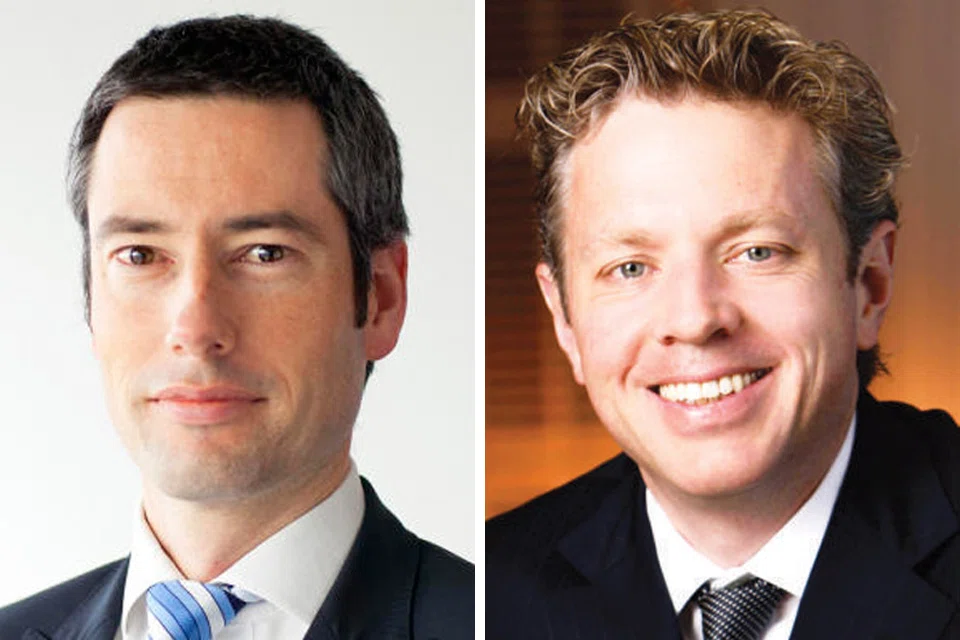
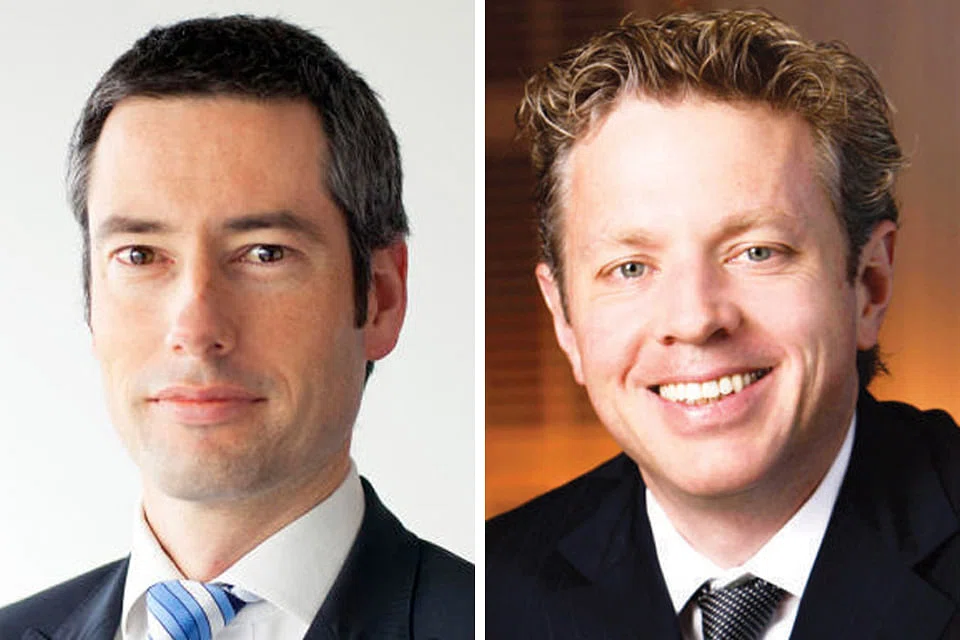
ASIA-PACIFIC law firm King & Wood Mallesons (KWM) has launched an international trade and investment practice with partners at its three-year-old office here on the back of an uptick of interest in South-east Asia.
Increasingly, that interest hails from Down Under, the partners added. Investors seem to be paying closer attention to Asean, even as Australia was recently floated as a possible 11th member of the regional bloc.
"For a long time, Australia looked past Asean and looked to China," Singapore-based partner Michael Lawson told The Business Times, noting that Chinese clients have been "more inclined" to invest in emerging markets, such as Laos and Cambodia than their counterparts. "But I think Australia is certainly waking up to, and has woken up to, Asean and the opportunities to trade with and invest in Asean."
Australia's investment in Asean was A$97.5 billion (S$99 billion) in 2016, while intra-Asean investment came in at US$24 billion that same year. But capital flows around the region may mask global sources of wealth, said John Sullivan, KWM's partner-in-charge here.
"We've raised quite a few Singapore funds, for example, and that will probably show up as an intra-Asean investment between a Singapore fund manager and the Philippines or Thailand or wherever - but they'll often be drawing money from around the region."
Both men emphasised the investment potential of energy and infrastructure projects, especially in emerging South-east Asian markets.
"One of the areas in which there's huge opportunity and advantage, relative to a lot of more developed nations, for the developing Asean jurisdictions, is to skip a generation in terms of the type of infrastructure that's employed," said Mr Lawson.
For example: "In energy, although there is still a fair bit of reliance on coal and fossil fuel systems, there is a real opportunity, in a lot of cases, to move straight to renewables."
Regional leaders announced an Asean-Australia Infrastructure Co-operation initiative in March. And, this April, a cross-border KWM team from Hong Kong and Singapore advised a Macquarie Group unit on the close of its second Asian infrastructure fund, with US$3.3 billion committed.
There is growing interest in regional private-public schemes too. "Whether that's in energy or roads or telecommunications - there's a host of different infrastructure, airports, you name it. That's a tried-and-tested model in Australia and other developed jurisdictions, and one which I think our clients are keen to participate in the region," said Mr Lawson.
But the region's diversity has challenged investors' appetites, with Mr Sullivan identifying a bias towards Singapore and mature, preferably investment-grade, markets - Malaysia, Thailand, Indonesia, the Philippines and to some extent, Vietnam.
"Unless someone's got a specific reason for going into one of those smaller countries. . . it's probably quite bespoke," he pointed out. "For a lot of listed companies, there's just much more risk for them going outside their home market. And invariably, immediately, no matter where they go, they're moving up the risk curve, and they're criticised if it doesn't perform well."
On whether investing regionally helps with hedging, Mr Sullivan said: "For the moment, it seems that people do have a bit of that view in infrastructure - that having a regional view allows you to sort of see a range of opportunities. In the real estate space though, people have gravitated more towards country-specific. . . In a fund-raising scenario, the view tends to wax and wane. At the moment, there seems to be a more pan-Asean, regional focus to fund-raising, but go back five years ago and people had flipped back the other way."
On investors' "strong note of caution", Mr Lawson added: "We've had some really interesting conversations. . . with the new Asian Infrastructure Investment Bank and other multilaterals about ways to close that gap. That's an ongoing effort. I think it does need multilaterals and governments to lead and to get in place settings that encourage investment by the private sector. There's no shortage of capital there, and no shortage of interest."
While currently based in Hong Kong with 27 offices worldwide, KWM traces its history to Stone James, which was set up in 1832 in Western Australia. The new trade and investment practice tackles areas such as cross-border mergers and acquisitions and intellectual property issues.