

Better prospects for warehouses this year

Singapore
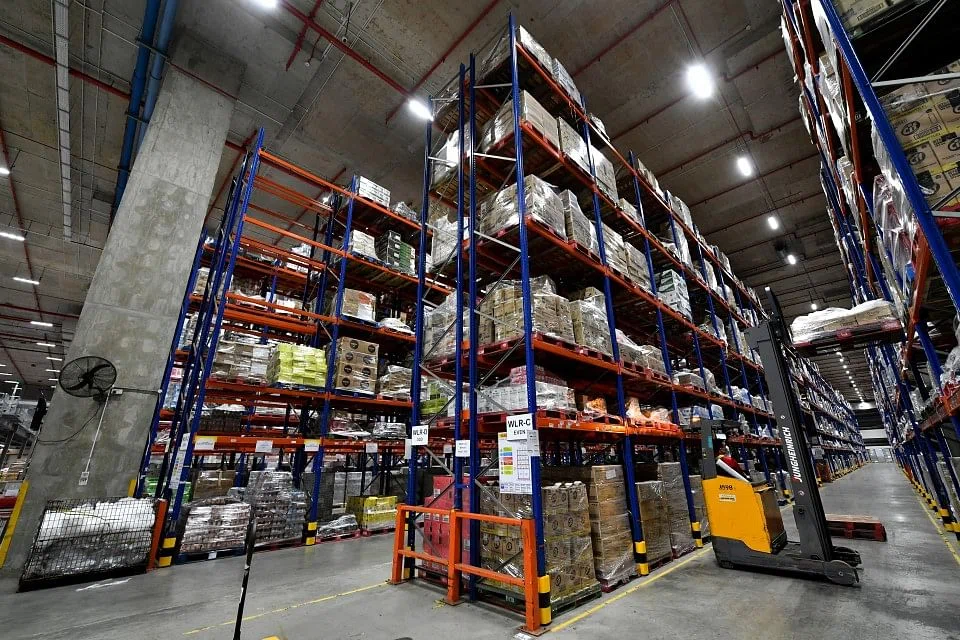
AFTER pulling off a reasonably resilient performance in 2020 amid a full-blown pandemic, warehouses could see rents pick up in 2021.
However, the performance across the industrial market may vary, with rents for certain segments, such as multiple-user factory space, possibly coming under pressure due to economic uncertainties, according to NUS' Institute of Real Estate and Urban Studies (IREUS).
Last year, the industrial sector weathered the storm better than other sectors such as retail and offices. Rents for warehouses and business parks eased slightly by 1.3 per cent and 1.1 per cent respectively in 2020, while rents for multiple-user factory space retreated by 1.8 per cent.
On the other hand, with safe-distancing measures in place, retail rents sank by a sharper 14.7 per cent in 2020, while office rents contracted by 8.5 per cent as many employees worked from home for the better part of the year.
While the "circuit breaker" put a dent in output in the second quarter of 2020, output picked up pace again as Singapore progressively emerged from the circuit breaker, with the manufacturing sector expanding 10.4 per cent year-on-year (y-o-y) in the fourth quarter of 2020.
In particular, certain clusters, such as the electronics, biomedical manufacturing and precision engineering clusters, saw output rise.
IREUS deputy director Lee Nai Jia said: "Moving forward, the rise in non-oil domestic exports, coupled with the recovery in the Chinese economy, is likely to help sustain industrial output. The electronics cluster is likely to do well, due to the increase in demand for semiconductor chips and other electronic goods."
At the same time, Dr Lee reckons that manufacturers may shelve expansion plans amid the uncertain outlook until demand proves sustainable. He expects rents for multiple-user factory space to remain depressed, while rents for warehouses are likely to improve - barring an increase in stock - on the back of the growth in e-commerce.
Specifically, warehouses which can cater to cold storage may see a surge in demand, stemming from the need to store vaccines and food supplies.
Meanwhile, Dr Lee reckons business parks may benefit should firms with offices in the CBD relocate, lured by the prospect of lower rents. Older business parks, however, which may not be be a good fit for such companies, may see downward pressure on their rents.
A recent report by CBRE Research highlighted that rents for factories and warehouses in the first quarter of 2021 were flat quarter-on-quarter (q-o-q) for both the ground floor and upper floors, while prime logistics rents ticked up 0.7 per cent q-o-q to S$1.39 psf/month.
According to CBRE, leasing for business parks was more muted in Q1 2021, with business park rents in the city fringe and the rest of the island retreating 0.9 per cent q-o-q to S$5.75 psf/month and 1.4 per cent q-o-q to S$3.65 psf/month respectively. Pandemic-linked construction delays have put the supply pipeline for this year at 1.4 million square feet, which may place some pressure on rents, CBRE added.
The loosening of office restrictions since April 5 could gradually put the business parks market on the road to recovery, although at the same time, some companies are transitioning towards a hybrid work model which incorporates flexible working.
"Quality will continue to be a priority for occupiers looking to relocate or expand," CBRE said.
TRENDING NOW

If Europe goes to war, the fallout will be felt in East Asia

China’s market is tougher than ever. Where can Singapore firms still find room to grow?

Vietnam’s race for growth tests pace of energy transition: experts

Indonesia stocks suffer worst plunge in nearly 30 years as MSCI proposes standalone status

