

Cold store warehouse rents to rise as Singapore aims to be hub for vaccines
Limited supply of such facilities should translate to higher capital gains for investors who enter the market early: Cushman & Wakefield

Singapore
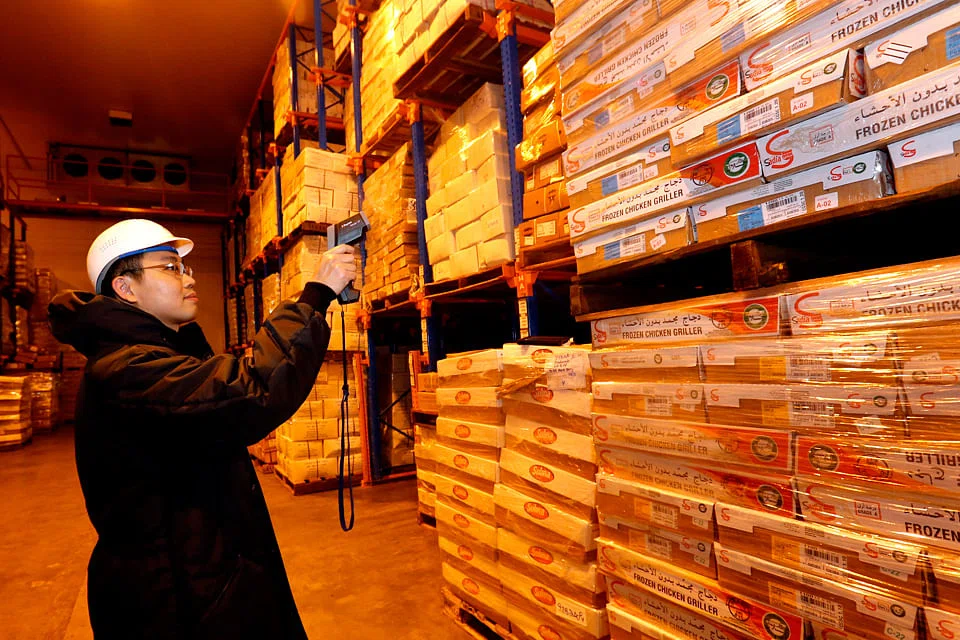
RENTS for cold store logistics warehouses here could pick up as Singapore positions itself as a centre for the storage and shipment of vaccines, according to Cushman & Wakefield, which says that limited supply of such facilities should translate to higher capital gains for investors who enter the market early.
This comes as the development of successful vaccines to fight the Covid-19 virus is expected to spur sustained demand for temperature-controlled logistics facilities.
Vaccines by pharmaceutical firm Pfizer and biotech company Moderna, for instance, need to be stored at temperatures of -70 degrees Celsius and -20 degrees Celsius respectively.
Cushman & Wakefield's head of research (Singapore & South-east Asia), Christine Li, said: "While the development of cold storage facilities is more expensive due to the installation of insulation and machinery, the rental premium poses a strong incentive for developers to construct cold storage projects instead of conventional warehouses, where feasible."
Rents for cold store logistics warehouses in Singapore currently stand at S$2.50-S$3.50 per square foot per month.
She said investors and developers can look at converting conventional warehouses to cold storage facilities - what is currently seen as a niche sector - to gain from the rental premium.
Cold storage warehouses command a rental premium of 50 to 100 per cent over conventional dry warehouses, depending on the type of cold storage facility and the country where it is located.
Ms Li also projects that the sector could evolve to become mainstream in time to come, and that investors who enter the market early could enjoy higher capital gains, owing to the scarcity of supply.
In an added benefit for investors, leases for cold storage facilities are typically triple-net leases, where the tenant handles the costs for property taxes, maintenance fees and building insurance.
Cushman & Wakefield suggests that conservative investors look to cold storage facilities that have locked in tenants with long leases; leases typically span 10 to 20 years for cold storage facilities due to limited supply and the need for retrofitting.
Leases also generally include rent increases periodically to account for inflation.
Investors looking for a higher rate of return can consider both greenfield and brownfield sites to capitalise on development profits, it said.
Data from Allied Market Research put the size of the Asia-Pacific cold chain logistics market at US$61.1 billion in 2018.
It is expected to swell to US$162.7 billion by 2026, which works out to a compound annual growth rate of 13.2 per cent.
Besides the pharmaceutical industry, other demand drivers singled out include the growing demand for perishable food as an emerging middle class prompts consumers to turn to fresh produce and organic food.
Cold storage capacity for countries in the Asia-Pacific currently lags behind the United States, and the region will need to expand the existing stock by 411 million cubic metres of new supply - or nearly double the existing stock - for cold storage capacity per urban capita to match that of the US.
READ MORE:
TRENDING NOW

If Europe goes to war, the fallout will be felt in East Asia
Shanmugam says firms linked to haze probe pledge cooperation; government to table changes to haze law

Indonesia stocks suffer worst plunge in nearly 30 years as MSCI proposes standalone status

Keppel seeks US$1 billion for Vietnam investments as it joins country’s international financial centre

