

Despite protests, politics and pandemic, Hong Kong is still in love with property
 Add BT as a preferred source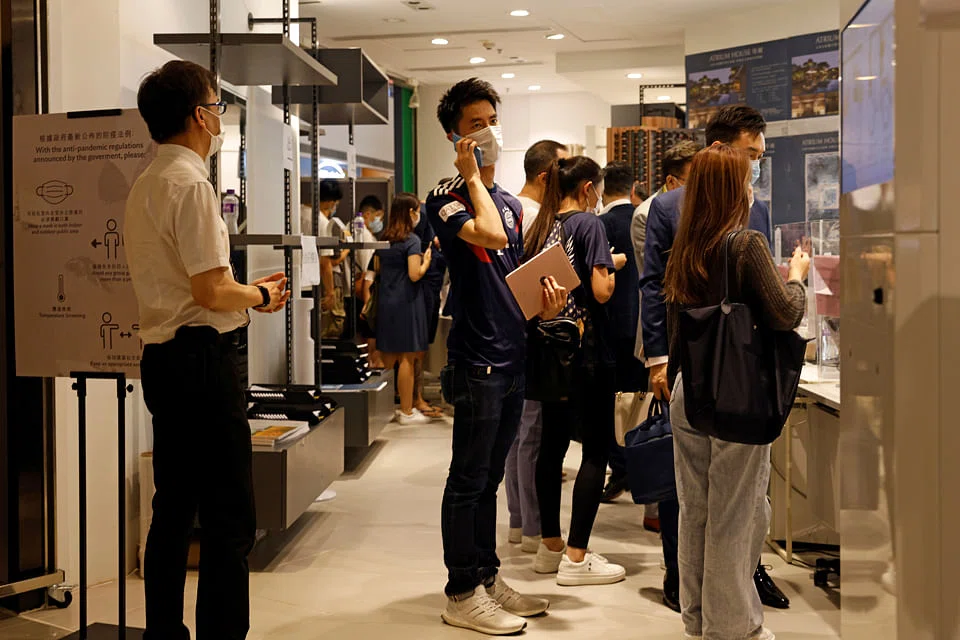
DeeperDive is a beta AI feature. Refer to full articles for the facts.
Hong Kong
HONG Kong is showing that its affinity for real estate has been unaffected by a year of anti-government protests and concerns over the coronavirus, with a large housing project launched this month registering the highest response in over two decades.
When the Pavilia Farm development in the New Territories district opened for subscription, eager buyers stocked up on food and water as they prepared for a long wait at the end of a snaking queue where signs read: "Expected waiting time: 8 hours."
The project, attractively priced and close to the busy Kowloon district, received close to 23,000 subscriptions for its first 391 units. When completed in late 2022 it will have 3,000 apartments.
All 391 units were sold, the developer said on Sunday night, adding more units would be launched soon.
Realtors said the take-up at Pavilia was the strongest in more than 20 years in one of the world's most expensive property markets and matched the frenzy seen at the time of the 1997 handover of the former British colony to China.
Navigate Asia in
a new global order
Get the insights delivered to your inbox.
But it comes after social upheaval in the past year over China's plans to introduce a national security law in Hong Kong, which has led many investors to question the future of the global financial hub.
However, Hong Kong's home prices dropped just 4 per cent since a peak in May last year before the outbreak of protests and the spread of the coronavirus, supported by strong demand, a severe land shortage and low interest rates. This followed a six-fold rise in the index of private home prices since 2003.
"The property market has accumulated over a year of demand since the social movement last June; the monthly transaction volume has been lower than usual," said Richard Lee, CEO of realtor Hong Kong Property Services. "People's confidence has come back after seeing (residential) prices have stayed resilient even during the Covid-19 outbreak."
Property consultancy Knight Frank's executive director Thomas Lam said, however, the real estate market will continue to be under pressure in an economy under recession and with high unemployment. He said he expected home prices will fall around 5 per cent this year before getting stable next year.
"Now the property market is very 'deformed'; home prices remain high but... commercial and shop rents and prices are falling non-stop," he said.
Pavilia Farm is being built by New World Development and MTR Corp above the Tai Wai railway station, on the train line into Kowloon and Hong Kong Island, and will have a large shopping mall in its lower floors.
On one of the early days of the launch, organisers stopped people queuing from 11.30 am local time as lines extended from a show flat to a footbridge outside despite social distancing concerns.
Buyers said they were unconcerned about the exodus of residents following the protests last year as well as the possibility of a crash in prices.
Grace Wong, a 40-year-old fitness trainer, said she wanted to buy a one-bedroom home for investment, although if prices dropped she said she would live in it herself.
She said she's staying in Hong Kong because she's single and doesn't have to worry about the future of any children. "(Otherwise) I'd choose to migrate elsewhere and not buy a property here," she said. "I'm not young any more; if I don't buy a property now it'll be more difficult to secure a mortgage in the future."
Property agents said Pavilia Farm's pricing was around 10 per cent lower than nearby developments, making it attractive to buyers who have been waiting for opportunities.
"The overwhelming response for this project demonstrates a rebound in the Hong Kong property sector and confidence from home buyers," Edward Lau, deputy chief financial officer of New World, told Reuters.
Candy Lau, 26, who works in the consumer industry, said she was also confident about Hong Kong's property market. She said she expects it to remain stable or rise slightly and had signed up to buy a one-bedroom apartment in Pavilia and rent it out.
"Property is still a better way of capital conservation. There's limited investment channels right now; equity is volatile," she said. REUTERS
Decoding Asia newsletter: your guide to navigating Asia in a new global order. Sign up here to get Decoding Asia newsletter. Delivered to your inbox. Free.
Share with us your feedback on BT's products and services
TRENDING NOW
‘Boring’ is the new black: The stars are aligning for a Singapore stock market revival
Near sell-out launches in March boost developer sales to 1,300 units after four slow months

China pips the US if Asean is forced to choose, but analysts warn against reading it like a sports result

Genting Singapore’s Lim Kok Thay receives S$7.5 million pay package for FY2025

