

Foreign banks lead retreat from Hong Kong's pricey office market
Their moves to give up space reflect wider trend among multinational firms struggling to curtail costs
 Add BT as a preferred source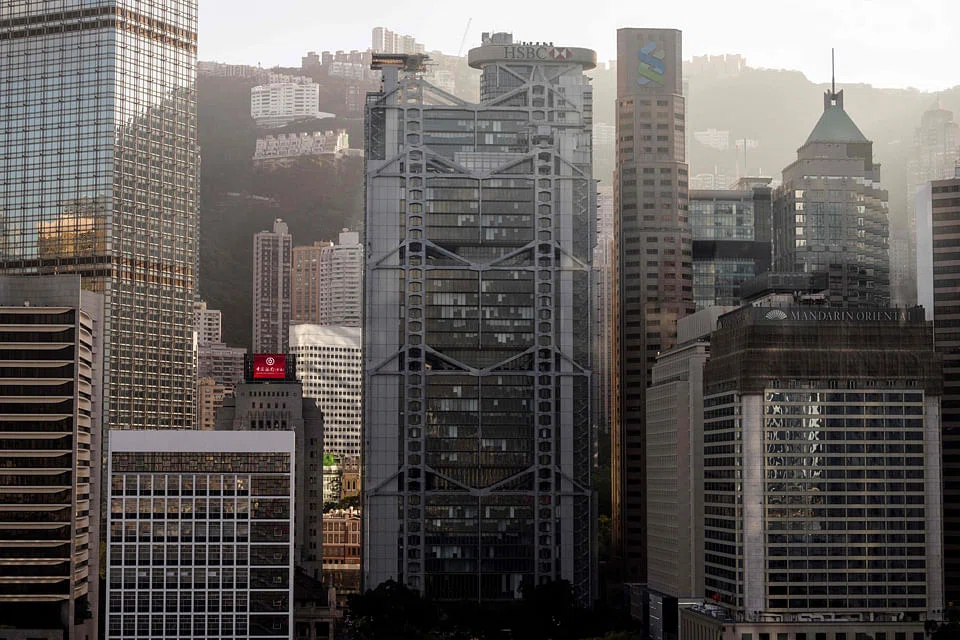
Hong Kong
INTERNATIONAL banks in Hong Kong are relinquishing space to bring down costs, threatening to suppress rents that are already dropping in the world's most expensive office market.
Lenders including BNP Paribas SA and Standard Chartered Plc recently decided to give up floors in their headquarters in the city.
UBS Group AG made a similar move late last year to let go of a floor in Sheung Wan's Li Po Chun Chambers, according to people familiar with the matter, who asked not to be identified discussing private information.
The banks' moves are examples of a wider trend among foreign firms in Hong Kong, as the coronavirus pandemic reshapes work styles. They are also a blow to the city at a time when China's crackdown risks diminishing its status as a global financial hub.
Multinational companies constituted 75 per cent of the total surrender of 628,000 square feet (58,343 square meters) of office stock in Hong Kong in 2020, according to Cushman & Wakefield.
That has pushed vacancies in the city's traditionally sought-after offices to the highest in years. The vacancy rate for the Central district's premium office buildings reached the highest since 2004 in December, Jones Lang LaSalle Inc said.
Foreign companies are likely to keep trimming space in 2021, according to Rosanna Tang at Colliers International.
"I will not be surprised to see this wave" continue, particularly among large multinationals with bulk-area leases that are struggling to curtail costs, said Ms Tang, who is head of research for Hong Kong and the Greater Bay Area.
She predicts office rents will fall by 7 per cent in 2021 while cost optimisation will remain the main concern for tenants. Rental value in the city plunged 17 per cent last year, the most since 2009, after the double whammy of anti-government protests and the pandemic, data from Savills shows.
UBS' move was first reported by Sing Tao Daily. A spokesperson for the Swiss bank declined to comment.
With global firms in retreat, counterparts from mainland China are expected to take up their space. Chinese companies have steadily increased their presence in the past few years to occupy 22 per cent of overseas offices set up in Hong Kong, topping firms from Japan and the United States, according to government data.
Last year, Bloomberg reported that Nomura Holdings Inc and Macquarie Group Ltd gave up space in Central. BLOOMBERG
Decoding Asia newsletter: your guide to navigating Asia in a new global order. Sign up here to get Decoding Asia newsletter. Delivered to your inbox. Free.
Share with us your feedback on BT's products and services
TRENDING NOW

Employers want AI-fluent employees. Hiring them is the challenge

Early payout from Philippines’ Maharlika Investment Fund raises eyebrows over its true nature

SpaceX, Unitree, Anthropic, OpenAI: Is the ultra-hyped tech-listing wave backed by sound fundamentals?

Changes to EV incentives, uncertainty over COE framework drive Category A premium to a new high in ‘re-run of 2025 mania’

