

Incentives needed to spur developers, buyers to go for greener homes: NUS poll
Building more environmentally friendly residential properties often deliver paltry returns for developers

Singapore
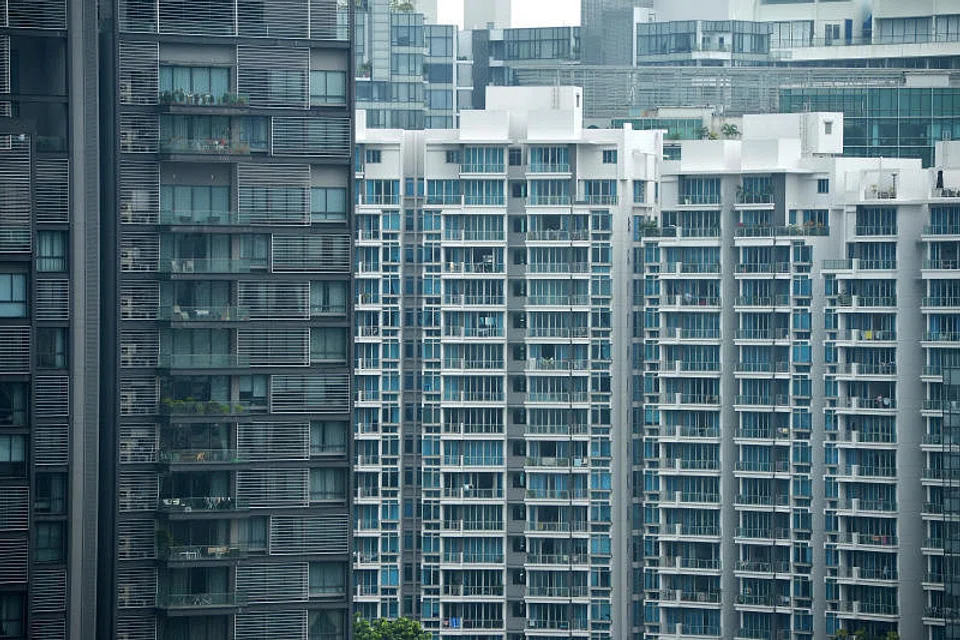
BUILDING residential properties that are more environmentally friendly is expected to deliver paltry returns for real estate developers in Singapore, according to the findings of a survey.
This will make it difficult to incentivise the private sector to strive for higher tiers of the Green Mark certification, if the costs are not lowered and property buyers remain reluctant to pay higher prices, said Lee Nai Jia, deputy director at the Institute of Real Estate and Urban Studies (IREUS).
For its Q2 2021 poll, the National University of Singapore Real Estate (NUS+RE) surveyed 46 senior executives in Singapore's real estate sector, with developers making up 24 of them. NUS+RE represents IREUS and the Department of Real Estate.
While all new residential buildings with a gross floor area (GFA) of 2,000 square metres or more must be at least Green Mark Certified, the higher ratings - Gold, Gold Plus and Platinum - may not pique prospective homebuyers' interest significantly.
The Building and Construction Authority's (BCA) scheme assesses criteria such as climatic responsive design, energy and water efficiency, and sustainable construction.
Only 28 per cent of the senior executives saw the upper tiers as "strong" selling points and 2 per cent viewed them as "very strong" selling points.
About 14 per cent noted that higher Green Mark ratings would be "weak" or "quite weak" selling points for a residential project. More than half responded with "neutral".
"The findings imply that the economic returns of investing beyond the Green Mark certification may not be feasible in the immediate term, as they may not be sufficient for developers," Dr Lee told The Business Times (BT).
An overwhelming majority of the respondents - 91 per cent - said prospective buyers would only be willing to pay a meagre 0-5 per cent premium for residential projects awarded Green Mark Gold or higher, compared with those with just the minimum certification.
However, it would cost 11-20 per cent more to build a Green Mark Gold or higher-rated development based on current rates, according to more than half of those surveyed.
About 11 per cent of the executives estimated the additional costs to attain the upper tiers to be 21-30 per cent, while the remaining one-third said it could cost 0-10 per cent more.
"Developing residential projects with higher tiers is expensive due to the lack of economies of scale," Dr Lee said.
At the same time, homebuyers may not be aware of what the other ratings entail compared to the basic Green Mark certification, and hence they will have little incentive to pay more, he added.
Tax and monetary incentives could help offset the greater outlay in making homes greener, a quarter of the respondents suggested.
About four in 10 also recommended that developments with better ratings could be awarded bonus GFAs or higher plot ratios, as an indirect incentive.
BCA has said it is reviewing the expired Green Mark GFA Incentive Scheme, which encouraged the private sector to develop buildings to clinch a Platinum or Gold Plus award.
Other ideas floated included relaxing the GFA definitions for non-saleable areas to give more flexibility in designing a sustainable residential development, and not subjecting bonus GFA to land betterment charge.
One respondent proposed that any incentives should be pegged not only to the overall Green Mark rating attained, but also the individual criteria met.
Meanwhile, to incentivise buyers to purchase units in projects with higher Green Mark levels, some executives suggested offering property tax rebates.
This would be analogous to the tax incentives to promote the adoption of electric cars, Dr Lee said.
Given the high costs of achieving Green Mark Platinum or Gold Plus, subsidies and incentives could be necessary at this nascent stage to nudge the private sector to go beyond the minimum, he added.
"At the broader level, more needs to be done to target the supply chain, both upstream and downstream. In addition to creating green developments, a framework is needed to encourage landlords and occupiers to go greener and to reduce waste and overreliance on air-conditioning."
The Covid-19 crisis has highlighted the impact of construction on the environment and how over-consumption accelerates climate change, NUS+RE noted.
In its poll, a third of the real estate executives said they observed prospective homebuyers paying more attention to sustainable design in their purchase decisions now, compared to before the pandemic.
However, about 65 per cent responded that the pandemic did not appear to have any impact on buyers' level of interest in sustainable design.
READ MORE:
TRENDING NOW

Knight Frank’s Tan Tee Khoon leaves firm, Nicholas Keong takes over auction business
Keppel Energy, Sembcorp Utilities and Tuas Power to supply biomethane in pilot project
GovTech retrenches another 38 staff in second round of layoffs
Take-up of new private homes dives 45% in Q3 as prices accelerate with 1.4% rise

