

'Mispriced' UK retail parks win favour with Savills IM, John Lim's family office
'Overlooked and oversold' asset class has stayed resilient to structural headwinds, amid steady occupier demand and dwindling supply of available stock, they say


Singapore
A BRIGHT spot in the form of out-of-town, big-box retail parks in the United Kingdom may have been overshadowed by the gloom in the broader retail landscape, but a group of Singapore-based investors and Savills Investment Management (Savills IM) are paying attention.
In a joint interview, the real estate investment manager told The Business Times (BT) that the "overlooked and oversold" asset class has stayed resilient to structural headwinds, amid steady occupier demand and dwindling supply of available stock.
Savills IM in October announced a "contrarian" UK retail park strategy with a target capital raise of £360 million (S$653 million). Its head of UK, Harry de Ferry Foster, will manage the fund, to tap into the sub-sector's high yields and low vacancy rates.
The cornerstone investors are Mainboard-listed The Straits Trading Company's subsidiary Straits Real Estate, as well as The Land Managers (TLM), the real estate investment arm of JL Family Office (JLFO).
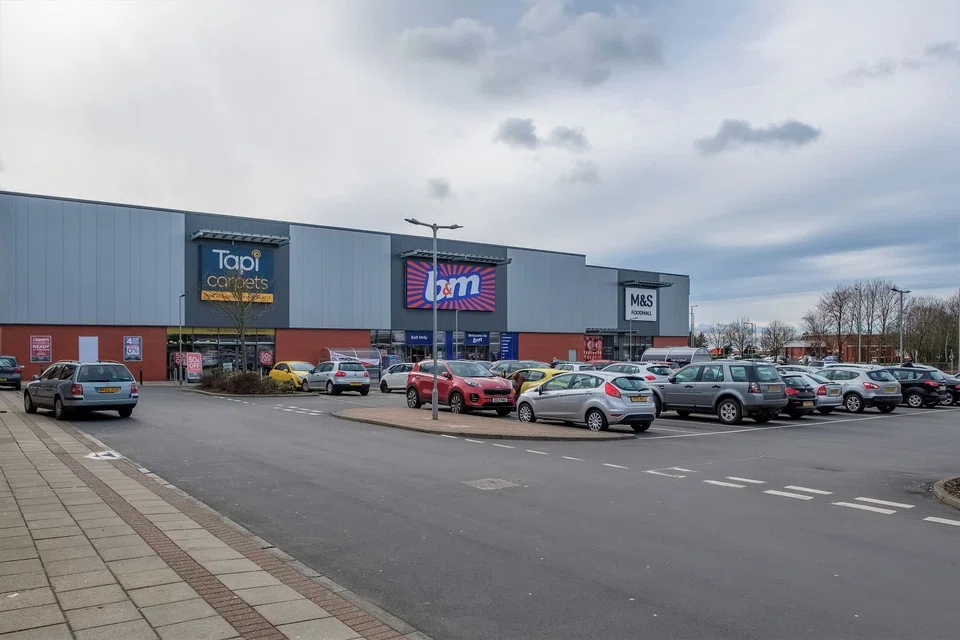
Retail parks are low-rise shopping centres typically situated in the outskirts or city fringes, serving the immediate neighbourhoods and offering free parking near the entrance. Their large, open floor plates attract big household chain stores, food and beverage (F&B) operators and supermarkets as key tenants.
De Ferry Foster likened these properties to "a cross between retail and logistics", given that many tenants carry substantial amounts of stock on-site. That also enables retailers to fulfil click-and-collect orders, whereby customers go in-store to pick up their online purchases.
Michael Flynn, Savills IM's global head of product development and head of Singapore and South-east Asia, described retail parks as "mispriced" as he spoke of the opportunities in the segment.
"We think these assets are too cheap at the moment because they have the operating qualities of logistics properties but are available at a very different pricing," Flynn told BT in the interview. Low rents, low vacancy rates, long leases and high-quality "Internet-proof" tenants are some of the similarities retail parks and logistics assets share.
For the new fund, Savills IM is looking to acquire assets with strong tenants, at prices reflecting net operating income yields of about 7 to 9.5 per cent. De Ferry Foster noted that such yields, made possible due to the decreasing prices of retail parks, are roughly double the logistics sector's estimated yields of 3 to 4 per cent. "The risk-return dynamic doesn't suggest there should be this gap in pricing," he added.
Part of this stemmed from investors tending to put retail parks in the same box as the rest of the beleaguered sector, particularly the high street and shopping centre subsectors, which have had a torrid time over the last 5 years. Savills IM wrote in an October 2021 research report that there is "an oversimplification of the perceived death of UK retail", even though not all retail formats are suffering to the same extent.
Against this backdrop, the retail park segment has been oversold by investors "because it was just being marked down as retail", de Ferry Foster said.
Andy Lim, group chief executive of JLFO and founder of Singapore-based TLM, also sees an inflation hedge in retail parks. That will be the icing on the cake, with high inflation looming. "When things get more expensive, spending habits will shift towards discount or bargain hunting," he said in the interview.
The family office manages the family wealth of John Lim, the Asia-Pacific real estate veteran known for co-founding ARA Asset Management, via investments in various sectors as well as philanthropic activities.
The latest fund will mark TLM's first investment into the UK, which the younger Lim noted is recovering rapidly and at "an inflection point". Highlighting the "perfect" timing of the retail park strategy, he said the UK economy is bouncing back from the pandemic while Brexit has also been in effect for nearly a year. "There's finally a chance for the UK to have some lift-off," he added.
Despite the growing popularity of online shopping, the retail park segment has largely held its own, thanks to affordable items and daily necessities making up the lion's share of sales, Savills IM noted. These include groceries, cleaning products, furniture, pet supplies and home-improvement tools.
Consumers prefer to buy low-value, low-margin everyday goods - like deodorant and shampoo - at brick-and-mortar outlets or simply click and collect, as these items are "often uneconomical for online sale" due to delivery fees making them relatively expensive, Savills IM wrote.
As for some high-value products such as homeware, customers usually want to see, touch and try them before making a purchase, the research team added.
TLM's Lim likewise said this "bread and butter retail" has been overlooked. "There's a limitation to how much the e-commerce story can be pushed. At the end of the day, people need to buy food (and other necessities), and certain demographics can't just rely on e-commerce."
At the height of the Covid-19 crisis, many retail park tenants were also deemed essential businesses and did not have to close during lockdown, which helped buoy sales.
De Ferry Foster foresees vacancy rates - now close to 5 per cent - staying "very, very low" as the supply of retail park space tightens further and demand stays robust.
"No one's building retail parks anymore because values have fallen to a level where it's not economical to build new ones," he said. Besides, a number of existing retail parks are being converted into residential properties or logistics facilities, while others are likely to be downsized.
At the same time, more retail park tenants have been expanding their real estate footprint.
TLM's Lim said: "It's not all doom and gloom. Once you're there, on the ground, you can see people shopping at retail parks, (some) streets are crowded, and the mood is very good."
For individual parks, de Ferry Foster told BT the plan is to acquire them at about £10-50 million each. Slightly larger or smaller deals would appeal, too - especially if there is an opportunity to buy a few assets from the same seller.
"But we probably won't look at very, very big parks because we don't want the concentration risk of such a large asset in the fund," he added.
Preferred tenants include food anchors; discount retailers such as B&M, Home Bargains and The Food Warehouse; and do-it-yourself (DIY) home improvement stores like B&Q.
However, Savills IM will avoid fashion-oriented parks because fashion retailers typically pay higher rents, which may still be at unsustainable levels given the impact of e-commerce on that market.
De Ferry Foster said there is no "desperate need" to buy assets in large population centres like Glasgow or London. "They can be in very small towns, as long as the provision of the park is fit for the town and it's the only one serving the population, so that supply and demand is balanced."
Savills IM is expecting a weighted average lease expiry of between 6 and 10 years for the portfolio.
Current retail park rents are relatively low at around £13-14 per square foot per year, de Ferry Foster estimated. This tenant affordability is expected to drive occupier demand for retail park space, and provide some downside protection to investors' income streams as the rents are sustainable for the retailers.
Still, as rents appear to have declined to stable levels, he sees room for them to increase in the next couple of years, when more retailers compete for space amid rising inflation.
READ MORE:
TRENDING NOW

Once staunchly pro-China, Malaysian Chinese businesses are now distancing themselves from Beijing

Looking beyond looming CEO succession, should UOB potentially pursue a transformative merger?

Could stablecoins be the future of money?

Grab CEO’s wife Chloe Tong on life with Anthony Tan and finding her purpose

