More gains ahead in private home prices; Q3 up for sixth straight quarter
Lisa Kriwangko
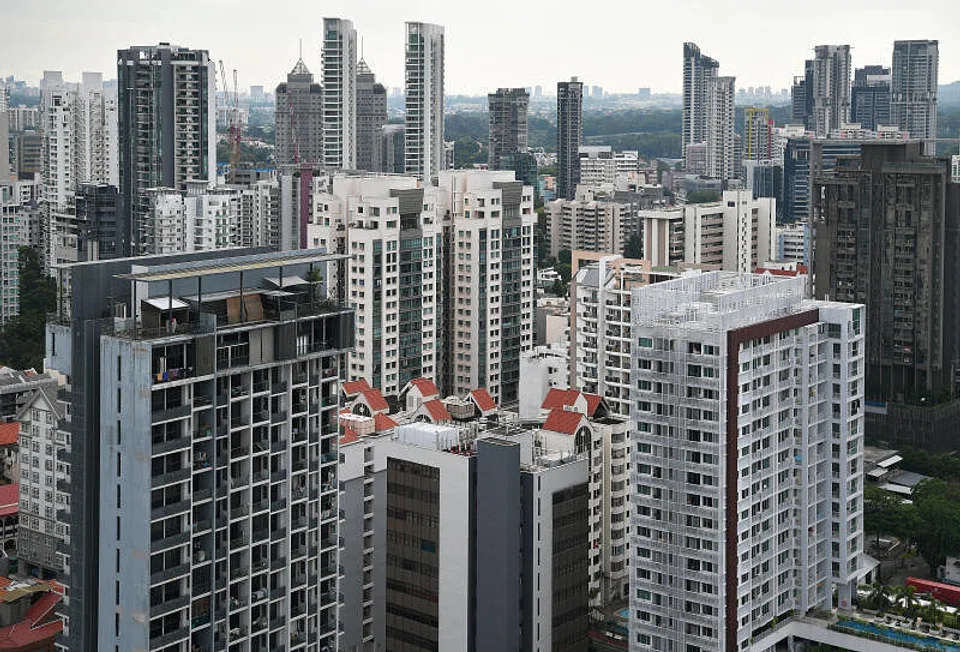
PROPERTY analysts expect Singapore's private home prices to continue its growth trajectory for the rest of the year, after it rose for the sixth straight quarter in Q3.
Based on the Urban Redevelopment Authority's (URA) flash estimates, the overall price index for private homes grew 0.9 per cent over the preceding quarter.
The gain is similar to that in Q2 2021, which saw a 0.8 per cent rise quarter on quarter.
According to Christine Sun, senior vice-president of research and analytics at OrangeTee & Tie, the "modest" growth could be attributed to the viewing restrictions under Phase 2 (Heightened Alert), which took place from July 22 to Aug 18.
"Moreover, resale and mass-market homes formed a bigger proportion of the total sales last quarter. These homes are typically sold at lower prices when compared to other market segments, thus lowering the overall average price for the entire market," she added.
Ms Sun also noted that there were fewer launches in the quarter, while sales activities typically slow down during the Hungry Ghost month.
The three months also saw a 0.5 per cent quarter-on-quarter rise in non-landed private property prices after gaining 1.1 per cent in Q2.
Bucking the trend, prices in the suburbs or outside central region (OCR) eased 0.2 per cent, after climbing 1.9 per cent in the previous quarter.
Nicholas Mak, head of research and consultancy at ERA, said: "According to the reported number of units sold, the best-selling project of Q3 2021 was Pasir Ris 8. While some might have the impression that the units at Pasir Ris 8 were sold at as high as S$2,000 per square foot (psf), such units were in the minority."
He noted that Pasir Ris 8, which had six rounds of price increases over its launch weekend in July, saw a median transaction price of S$1,627 psf in Q3.
"The overall median new sales price in OCR for non-landed properties, excluding ECs (executive condominiums), from July to September 2021 was S$1,617 psf," he added.
In the prime areas or core central region (CCR), prices also fell 0.6 per cent in Q3, following the second quarter's 1.1 per cent rise.
According to Mr Mak, some luxury condominium developers could have lowered their prices to attract local buyers amidst the border restrictions, leading to lower prices in the submarket.
Meanwhile, Mark Yip, chief executive of Huttons Asia, said that the luxury segment "continued the hot streak from Q2 2021".
Several of the quarter's notable deals in the area include 15 Holland Hill, which sold nine units above S$5 million in July and August, and a 6,049 sq ft unit at Les Maison Nassim, which sold for S$35 million or S$5,786 psf in August.
The latter took the crown for largest quantum and highest psf price in the quarter, noted Mr Yip.
He added that some 16 per cent of purchases in CCR during the months of July and August 2021 were by foreigners, doubling the 8 per cent seen in Q2.
"Foreigners are finding value in Singapore's luxury market which may be seen as a steal compared to other international financial centres," he noted.
That said, the slips in the two segments were offset by the city fringe or rest of central region (RCR), which saw prices advance 2.2 per cent, steeper than the 0.1 per cent increase in Q2.
This could be fuelled by price hikes in some projects, according to Mr Mak.
He noted that the median transacted prices of some condominiums in the RCR, such as Normanton Park, Ki Residences at Brookvale and Avenue South Residences increased in Q3 2021 compared to the second quarter.
"Since these condominiums were also some of the top-selling projects in Q3 2021, they would have influence on the RCR non-landed price index," Mr Mak said.
The URA also reported on Friday that prices of landed properties rose 2.5 per cent quarter on quarter in Q3, after slipping 0.3 per cent in Q2.
According to Mr Yip, this could be driven by chief executives in the tech sector, who are "making a statement" in the Good Class Bungalow (GCB) market.
He noted TikTok and Razer executives scooped up a Queen Astrid GCB for S$86 million and a Third Avenue GCB for S$52.8 million, respectively.
"The luxury market may get a boost when more Vaccinated Travel Lanes are set-up and foreigners are able to travel to Singapore," added Mr Yip, who expects private home prices to grow between 6 and 6.5 per cent this year.
He noted that prices have increased 5.1 per cent so far in 2021. This is also equivalent to a 8.1 per cent rise since the circuit breaker in Q2 2020 and 20.8 per cent since the bottom in Q2 2017.
To compare, prices grew 2.2 per cent in 2020 and 2.7 per cent in 2019, according to Ms Sun.
She estimated that overall prices may rise 5 to 6 per cent this year, on the back of new launches.
Meanwhile, Mr Mak predicted annual growth rate to reach between 5 and 7 per cent.
He said: "In 2022, property prices could continue to increase, partly driven by cost factors, such as higher land cost and construction cost. As a result, developers would have to launch their new projects at higher prices. This would also have an inflationary influence on the prices of resale properties."
The flash estimates are compiled based on transaction prices given in contracts submitted for stamp duty payment and data on units sold by developers up till mid-September.
The statistics will be updated on Oct 22 when the URA releases its full set of real estate numbers for Q3 2021.
READ MORE:
- Should there be more transparency around pricing at property launches?
- PropertyGuru to bet on fintech, S-E Asia markets as it gears up for SPAC listing
- Shake-up of China's property sector could deliver opportunities for CapitaLand
- Changing hands: Major GCB sales in the past
- Singapore new private home sales down 24% to 1,211 units in August
- Buyers unfazed by Hungry Ghost month as condo resale volumes, prices rise