

Tighter rules for future prime HDB flats will weigh on windfalls from them
Expect government policies to continue to favour owner occupiers over investors

SINGAPORE'S public housing is the envy of many countries. Provision of good quality affordable public housing has helped the nation achieve a high level of home ownership, thereby giving Singaporeans a stake in the nation's prosperity.
Public housing estates are racially integrated. Typically, they are well maintained, well served by public transport and boast an array of amenities catering to all ages. Periodically, the estates benefit from upgrading programmes.
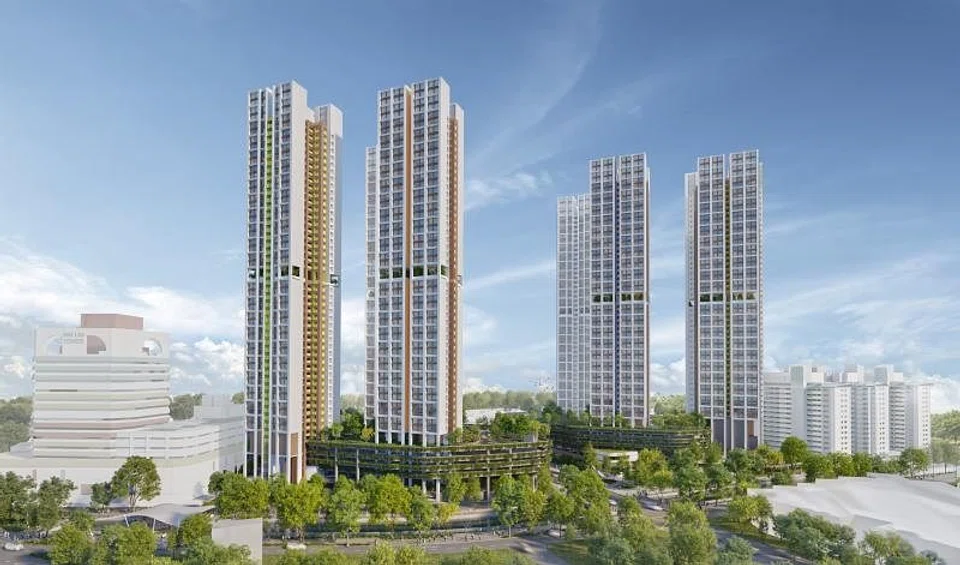
Still, public housing policies are not immune from refreshing. On Oct 27, 2021, the Ministry of National Development (MND) and the Housing Board (HDB) announced details of the prime location public housing (PLH) model to keep public housing in prime locations, such as the city centre and surrounding areas, including the Greater Southern Waterfront, affordable, accessible and inclusive for Singaporeans.
Near-term, this new PLH model will not dampen the HDB resale market, where prices as at Q3 2021 are up 12.5 per cent year on year.
Those who desire owning a HDB flat in a prime location and are worried about being able to afford such a unit will cheer the PLH model. Also, the prices of resale HDB flats in locations like the Greater Southern Waterfront will be kept affordable by limiting the pool of potential buyers and removing those with greater spending power.
But no model can please everyone. Those who are ineligible to buy a prime flat in the resale market under the PLH model such as singles, Singaporean couples with a household income exceeding S$14,000 per month, and permanent resident households, may be unhappy that their choice of HDB flats in the resale market will be curtailed. Those who want to move from a private home to a resale HDB unit in the Greater Southern Waterfront will find it cumbersome to execute such a move.
The new PLH model will not apply to existing HDB flats in prime locations such as Pinnacle@Duxton, where some flats have been sold for over a million dollars each in the resale market. Homeowners of Pinnacle@Duxton may be inadvertent winners as they will not need to compete with new PLH flats for certain groups of potential buyers and tenants.
Also, some potential buyers of prime resale HDB flats may be driven to look for pricier private properties instead.
However, in the longer term, the private home market could be adversely affected by the PLH model.
In Singapore, demand for private homes is supported not just by job creation and household income growth but also by buyers upgrading from HDB flats.
Profits made from selling HDB flats, especially if these are windfall gains from selling prime HDB flats, can be deployed to fund the purchase of a dream private abode. Such potential gains may be rather limited for future prime HDB flat owners and hence less liquidity will flow into the private home market.
The first project to be launched under the PLH model will be at Rochor, with the offer for sale of 960 units of 3-room and 4-room flats in the build-to-order (BTO) sales exercise in November.
As new flats in prime locations would naturally command higher market values, new PLH flats will be priced with additional subsidies, on top of the substantial subsidies already provided for BTO flats today. Flat owners of PLH flats will pay a percentage of the resale price of the flat to HDB, as a means to recover the additional subsidies.
The minimum occupation period (MOP) of PLH flats will be extended to 10 years, compared with the current 5 years for other HDB flats. Even after the MOP period, owners of the PLH flats will not be allowed to rent out their whole flat.
The resale of PLH flats will be ring fenced for buyers who meet the prevailing eligibility conditions for the purchase of flats directly from HDB.
These include having at least one applicant who is a Singapore citizen, meeting the monthly household income ceiling of S$14,000 and not holding a private property or having sold any in the last 30 months.
Singles above 35 years old will not be allowed to buy the PLH flats. This is in contrast to current rules that do not restrict singles above the age of 35 from buying resale HDB flats.
Some of the conditions under the PLH model can be rather onerous. Having to hold a new prime flat that one bought from the HDB for at least 10 years is a fairly long time. A family's circumstances can change leading to some who may desire to sell their unit sooner than they had anticipated. For example, some may want to move overseas to pursue work or business opportunities, some may be facing financial difficulties, and some may want to move to be near a new school or work place.
The PLH model was designed by MND and HDB after taking into account public feedback from more than 7,500 Singaporeans.
The implications of the new PLH model may go beyond acting against powerful social and economic forces that drive stratification and segregation by making attractive areas expensive and exclusive locations, with housing that only the well-to-do can afford.
Taken together with various measures such as the introduction of seller's stamp duty and additional buyer's stamp duty on residential property transactions in 2010 and 2011 respectively, policy changes are making homes less attractive as investment instruments. And the risk is that policy wise, amid the need to raise more taxes and strengthen inclusiveness, more measures may be unveiled that act against the interest of those seeking to invest in homes for recurring income and capital gains.
Perhaps, policies will be refined to emphasise the HDB flat being a home rather than an investment.
Could the clawing back of subsidies on the first resale of a PLH flat be laying a precedent of sorts for the government to get a cut of profit on other resale transactions in the public or private housing market?
Living in Singapore, luck can determine if a child secures a spot in a popular primary school or if a couple gets a BTO flat of choice. For those who meet the eligibility criteria, luck may still be needed but the odds of securing a unit in Rochor or the Greater Southern Waterfront have improved.
With the unveiling of the PLH model, the government continues to show that it can listen to feedback and act to help achieve key social objectives in the housing market. May we develop prime areas in Singapore as inclusive ones that are not out of bounds to the less well-off.
Home prices here are supported by economic growth, low interest rates and political stability.
Prices can rise in a sustainable manner when there is social cohesion but a government in pursuing social cohesion can hurt the investment returns of homeowners. Expect policies to continue on the path of favouring owner occupiers and being less hospitable to investors.
READ MORE: With new rules for prime HDB flats, analysts don't see immediate impact on private market
TRENDING NOW

Government to bring forward raising of retirement age, give employers more financial support to create flexi-load jobs

Indonesia stocks suffer worst plunge in nearly 30 years as MSCI proposes standalone status

If Europe goes to war, the fallout will be felt in East Asia
Natural gas to stay for the long haul beyond 2050: Singapore International Energy Week panellists

